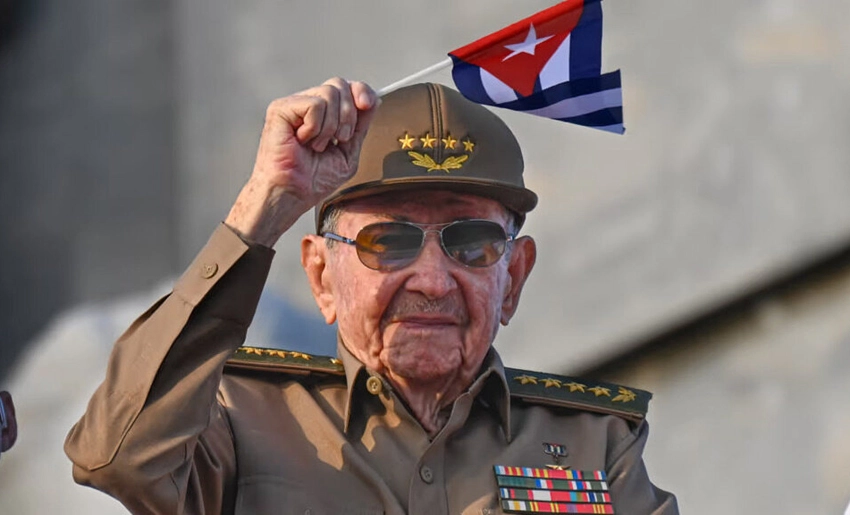
On the 95th anniversary of the Cuban Revolution’s leader, Raúl Castro. His legacy gains even greater relevance in a context marked by economic and social transformations in the island nation.
The younger brother of the Revolution’s historic leader, Fidel Castro, and one of the most prominent figures in contemporary Cuban history. Raúl actively participated in the triumph of the Cuban Revolution in 1959. Holding military and political positions during the overthrow of Fulgencio Batista’s government.
After the revolutionary victory, he assumed various responsibilities in the military and governmental spheres. Including the leadership of the Revolutionary Armed Forces. Also where his administration was characterized by the continuity of policies established after 1959 and institutional discipline.
In 2008, following Fidel Castro’s resignation for health reasons. He assumed the presidency of Cuba, a position he held until 2018. In 2021, he stepped down as leader of the Communist Party of Cuba.
During his presidency, he promoted a series of economic reforms. Such as expanding self-employment and opening certain sectors to trade and investment, without altering the socialist political system.
He also played a significant role in Cuban foreign policy. Participating in dialogue processes with the United States and strengthening relations with countries in Latin America and other regions.
For decades, he has been one of the leading figures associated with the Cuban state. During a period that spanned various stages of national life.
Currently, his presence in institutional life is less pronounced. Although he continues to be frequently mentioned in official, historical, and media accounts.
His name is associated with processes of change that impacted the economic organization and daily life, especially during his time as president.
In various social sectors, his administration is remembered for the expansion of self-employment. The opening of small private businesses, and adjustments in economic management. Which influenced access to job opportunities, the dynamics of domestic trade, and the organization of family incomes.
At the same time, his leadership was marked by decisions related to institutional reorganization. With effects on the administrative structure and the functioning of several state sectors. Assessments of his work among the Cuban population are diverse. Furthermore they depend on personal experiences, generational contexts, and economic conditions, but all recognize his legacy.
After leaving his main positions of responsibility in the State and the Party, his public presence has diminished. Although he remains a point of reference for a recent period in national history with an impact on the current reality.
On this anniversary, his name gains even more prominence in the media. As a reference point for a political era whose effects are still visible in various aspects of the country’s economic and social life.
With information from Prensa Latina

- UN Warns of Climate Catastrophe - 2 de September de 2026
- Ministry of Higher Education Evaluates Preparations for the New Academic Year at the University of Holguin - 2 de September de 2026
- Cuba Registers Sharp Drop in International Travelers - 2 de September de 2026