

Welcome once again to our weekly appointment on “The Psychiatrist and You.” Today I want to talk about a topic that sooner or later knocks on the door of our lives: adversity. I don’t know anyone who has lived a full life without encountering it. But what if I told you that adversity, when managed well, can be the crucible where our personal growth is forged?
Join me in this reflection where I will not only analyze what it is and why it arises. I will also offer you practical, evidence-based tools to face it and learn to navigate its turbulent waters.
What do we understand by adversity?
In my daily practice, I hear phrases like: “Doctor, I can’t take it anymore,” “This is too much for me,” or “Why me?”. Behind each of these lies a story of misfortune. From a psychological and psychiatric perspective, adversity is defined as any event, situation, or circumstance that poses a significant threat or challenge. To a person’s physical, emotional, or social well-being. It is an experience that tests our resources and forces us out of our comfort zone.
An everyday setback is not the same as a major adversity. We speak of the latter when we face situations. Such as the loss of a loved one, a serious medical diagnosis, job loss, a traumatic breakup, natural disasters. Or having been a victim of violence or abuse, among other situations.
Why does it affect us so much? A look at its causes
To address a problem, we must first understand it. Adversity doesn’t affect us simply because “something bad” happens, but because of how our brain and body interpret it. When we perceive a threat, our internal alarm system is activated: the hypothalamic-pituitary-adrenal axis. This releases hormones like cortisol and adrenaline, preparing us for fight or flight. This mechanism is useful in the face of immediate danger, but if it becomes chronic, it turns toxic.
The reasons why a situation becomes an insurmountable adversity lie not only in the event itself, but in the interaction of several factors:
- The magnitude of the event: A delay in a project is not the same as losing your job unexpectedly.
- Prior personal resources: Our life history, self-esteem, problem-solving skills, and coping style determine the initial impact.
- The social context: Having a strong support network (family, friends, neighbors, coworkers) is a crucial buffer. Loneliness and isolation magnify the pain.
- The meaning we give it: Herein lies one of the keys. If we interpret adversity as a punishment, a personal failure, or a sign of our inadequacy, the suffering multiplies. If, on the other hand, we value it as a challenge from which we can learn, the outlook changes radically.
The Danger of Dysfunctional Beliefs
Often, what hurts us most is not the problem itself, but the internal dialogue we establish with it. Phrases like, “This is unbearable,” “I’ll never be able to overcome it.” Or “I have no control over anything” are automatic thoughts that paralyze us. These are cognitive distortions, and they constitute an enemy to be fought. In my practice, I see how these ideas become self-fulfilling prophecies, leading to anxiety, depression, and hopelessness.
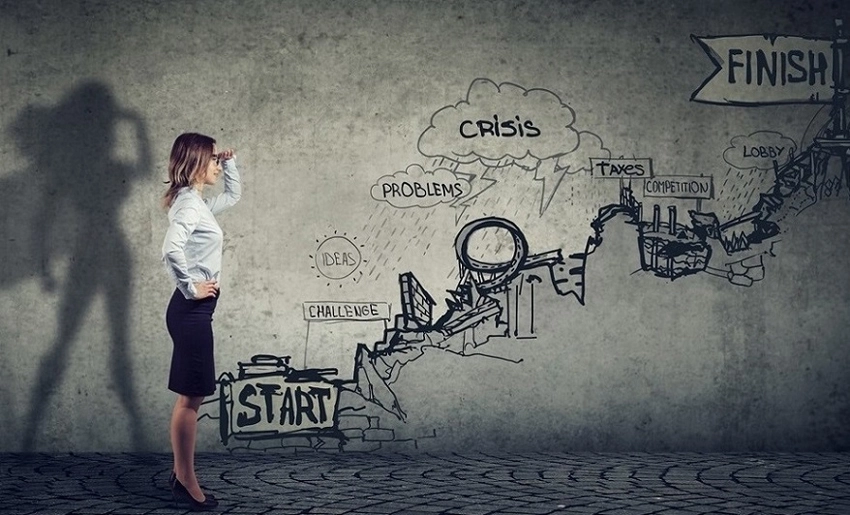
Understanding the problem isn’t enough: we need an action plan. Here, based on my clinical experience, I offer ten strategies that have proven effective in facing adversity.
- Radical acceptance. This is the first step. I’m not referring to passive resignation, but to the active acceptance of reality. Repeating “this shouldn’t be happening” only anchors us to suffering. Saying “this is happening, how can I handle it?” opens the door to action. It’s the famous “serenity to accept the things I cannot change. Courage to change the things I can, and wisdom to know the difference.”
- Restructure your internal dialogue. Pay attention to what you tell yourself. When you detect a catastrophic thought, stop it and question it. Ask yourself: What evidence do I have that this is true? Is there a more realistic and hopeful interpretation? Change “I can’t” to “I don’t know how yet, but I can learn.”
- The Power of Mindfulness. Adversity projects us into the future with fear or into the past with guilt. Mindfulness anchors us in the present. Practice simple exercises: focus on your breathing for 5 minutes.Feel the contact of your feet with the ground, observe the sounds around you. This reduces anxiety and restores your sense of control.
- Break the Problem Down into Manageable Parts. When faced with overwhelming adversity, our brains shut down. Don’t try to solve everything at once. Ask yourself: What is the first step I can take today? Celebrate every small achievement, no matter how insignificant it may seem. Life is faced one day at a time.
- Connect with Your Support Network. Don’t do it alone. Isolation is the worst advisor. Talking to someone you trust is not a sign of weakness, but of emotional intelligence. Sharing the burden lightens it. If you feel your support network isn’t enough.Seeking a support group or a mental health professional is an act of courage and self-care.
- Take care of your body to take care of your mind. I always emphasize this point. Regular physical exercise is a natural antidepressant. Maintaining a sleep schedule and a balanced diet are the foundation of our emotional stability. When the body is exhausted, the mind has no resources to fight.
- Analyze and reframe. Try to find the learning in the experience. Ask yourself: What is this situation teaching me? What strengths am I discovering within myself? Many people, after going through great adversity, report post-traumatic growth: they value life more, improve their relationships, and discover a renewed purpose.
- Establish a routine. In the midst of chaos, a structured routine provides you with a firm foundation. Get up at the same time, set schedules for eating, working, and resting. Predictability calms anxiety.
- Practice self-compassion. Treat yourself with the same kindness and understanding you would show a dear friend who is suffering. Allow yourself to feel sadness, anger, or fear. Don’t judge yourself for having “negative emotions”—they are human and necessary. Think, “I’m doing the best I can with what I have.”
- Seek professional help promptly. This is a tool you should always keep in mind. If you notice that your distress is persistent, that it interferes with your sleep, appetite, work, or relationships, if you feel hopelessness creeping in, don’t wait. See a psychologist or psychiatrist. Cognitive behavioral therapy and, sometimes, medication are effective resources that can make the difference between surviving and starting to live again.

It’s not about being invulnerable, but about being resilient. And resilience, like a muscle, is trained. Every time you choose one of these tools, every time you get up after a fall, you are strengthening that muscle.
Remember that you are not alone on this journey. My commitment in this column is to build a bridge of knowledge and hope for you. The storm always passes, and after it, not only does the wet landscape remain. Also the opportunity to see the rainbow and, with it, a new perspective on our own strength.
Until next week, and always remember to take care of your mind and your heart.

- Aging well: the art of adding years with health, meaning and joy - 19 de October de 2026
- Schizophrenia: More Than a Diagnosis, a Human Story that Worth Understanding - 12 de October de 2026
- Facing Adversity: Keys to Transforming Pain into Strength - 31 de August de 2026