

Surely, at some point at the end of the day, you’ve experienced this feeling. You’re physically at home, perhaps having dinner or watching television, but your mind is still stuck on the conversation you had with your boss that morning. Or on the message you sent that hasn’t yet been answered. As you try to fall asleep, your brain decides to replay, like an old cassette tape. An argument you had with someone, rehearsing responses you never gave. Or imagining catastrophic future scenarios that, in all likelihood, will never happen.
This phenomenon, which we colloquially know as “overthinking” or “dwelling on something,” has a name in psychopathology: rumination. Rumination is a cognitive process that can become a serious risk factor for our mental health. This mental habit drains people’s vital energy, fueling anxiety and depression.
So today, on The Psychiatrist and You, I invite you to join me in analyzing what rumination really is. Why it occurs, how it affects us, and what tools we have to break this mental loop.
It’s important to make an initial distinction. Not all deep reflection is rumination. Human beings are endowed with executive function. Which allows us to plan, solve problems, and learn from our mistakes. This is adaptive.
Rumination, however, is a repetitive, passive, and self-referential thought process. As defined by psychologist Susan Nolen-Hoeksema in the 1990s. It’s the tendency to obsessively focus on the symptoms of distress, their possible causes, and their consequences, rather than on solutions. It’s the difference between asking yourself, “What can I do to solve this work problem?” and asking yourself, “Why is this happening to me? What’s wrong with me that they didn’t reply to my message?”
In essence, rumination is a failed attempt at control. Our brain senses a threat (real or imagined), which it tries to resolve through thought. The problem is that, without a physical action to accompany that thought, the mind enters a loop: the infamous negative “autopilot.” Also where one idea latches onto another, fueling a state of constant alert.
Why does our mind get stuck?

The million-dollar question is why some people are more prone to this phenomenon. As a psychiatrist, I like to explain it from a biopsychosocial perspective.
- Neurobiological factors. Our brain has an “alarm circuit” (the amygdala) and an “executive control center” (the prefrontal cortex). In rumination, the amygdala is overactive, while the prefrontal cortex, responsible for putting on the brakes and shifting our focus, is overwhelmed. Neuroimaging studies show that ruminators have hyperconnectivity in the default mode network.The one that activates when we’re not doing anything specific and get lost in our thoughts.
- Psychological factors. Low tolerance for uncertainty is a strong predictor. Those who need to have all the answers now are more prone to rumination. Beliefs about one’s own thinking also play a role.Such as the mistaken belief that “if I think about it a lot, I’ll avoid danger,” or extreme perfectionism where any mistake is magnified.
- Social and cultural factors. We live in a culture that demands productivity and constant self-improvement. Often, “being mentally busy” is confused with “being responsible.” This, coupled with digital hyperconnectivity, bombards us with stimuli that prevent us from disconnecting, encouraging us to take work or problems to bed.
The price of overthinking
Underestimating the power of rumination is a common mistake. Some people believe it’s simply their “way of being” and accept it. Unaware that they are subjecting their minds to unnecessary strain.
- Link to Depression: Rumination is one of the strongest predictors of depressive episodes. By focusing on negative thoughts (“I’m a failure,” “I’m worthless”), we reinforce negative cognitive patterns and sink into a state of hopelessness.
- Fuel for Anxiety: Think of anxiety as a fire. Rumination is the kindling. If you’re in a conversation.Afterward, you mentally review each of your answers, labeling them “horrible,” you’re feeding your social anxiety and your fear of future failure.
- Insomnia: Difficulty “switching off” at bedtime is one of the most frequent complaints in therapy. Without external stimuli, the brain focuses on internal ones, raising cortisol levels and heart rate.Which makes it difficult to fall asleep or causes early awakenings.
- Somatic Disorders: Mental overexertion has physical consequences: muscle tension, tension headaches, gastrointestinal problems, and chronic fatigue.
Rumination, in essence, steal us of the present. It prevents us from enjoying the here and now. Keeping us prisoners of a past we cannot change or a future that has not yet arrived.
Management and Strategies: How to Break the Loop
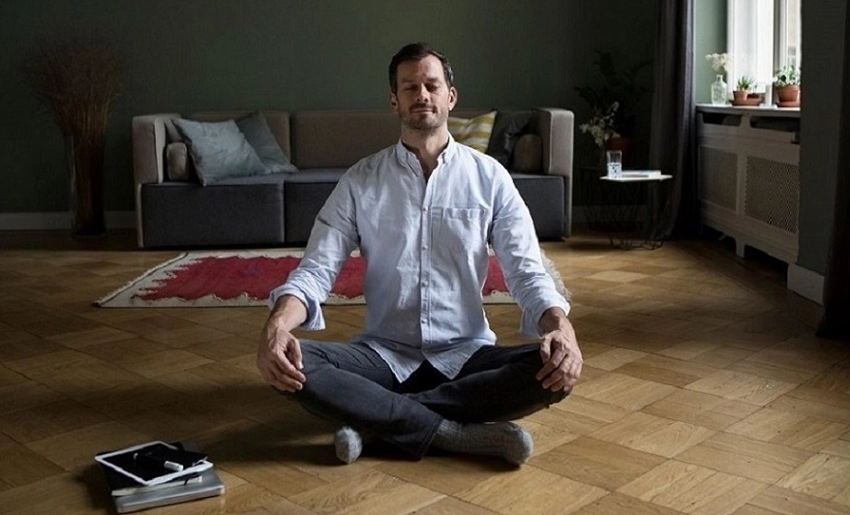
What can we do? The good news is that, although rumination has a strong automatic component, we can train our brains to break free from it. Here are some strategies I recommend to my patients:
- The “Toolbox” Technique (Detection): The first step is awareness. Rumination is often so automatic that we don’t even notice it. Name your thoughts. When you notice you’re in a loop, tell yourself, “I’m ruminating; this isn’t helpful.” Keep a “worry log” where you write down the trigger, the ruminative thought, and the emotion you felt. This will help you gain perspective.
- The “Worry Circle” (Worry Time Technique): This is a tool from Cognitive Behavioral Therapy. Choose a specific place and dedicate just 15 or 20 minutes a day to actively overthinking. Write down everything that worries you. When rumination arises outside of that time, think, “This is important; I’ll save it for my worry time.” This trains the brain not to worry at any time.
- Opposite Action: When ruminative thinking dominates us, inaction freezes us. Do the opposite. If your mind tells you to hide, go for a 5-minute walk. If it tells you you’re exhausted, perform a simple, concrete task. Physical action interrupts the mental circuit.
- Mindfulness and Acceptance: It’s not about eliminating thoughts (that’s impossible), but about changing our relationship with them. Practice mindfulness exercises. Observe yourself like a scientist watching a cloud pass by. You are the observer, not the cloud. Using guided meditation apps at the beginning can be very helpful.
- Cognitive Restructuring (The Advocate’s Trial): Test the evidence for your thinking. If you believe that “everything will go wrong,” act as your own defense attorney: What real evidence is there that it will go wrong? Is there any evidence that it could go right? Learning to be flexible in your thinking is key.
- Be Mindful of Habits: Sleeping well, exercising regularly, and maintaining a balanced diet aren’t just old wives’ tales. Physical activity is a powerful natural anxiolytic that reduces cortisol and “cleanses” the mind. Overcoming overthinking isn’t an unattainable goal; it’s a process of daily practice. Learning to manage rumination is, ultimately, learning to manage our vital energy.
If you feel overwhelmed by these thoughts and they affect your daily functioning, don’t hesitate: seek help from a mental health professional. Psychological therapy (especially Cognitive Behavioral Therapy or Acceptance and Commitment Therapy) is designed to equip you with specific tools. In some cases, medication can help deactivate that mental alarm so you can work on your thoughts with greater clarity.
Remember that your mind is a home. Don’t let the ghosts of rumination take up residence there. It’s time to inhabit the present. As always, I’m here to accompany you on this journey. Until our next meeting between The Psychiatrist and You.

- Facing Adversity: Keys to Transforming Pain into Strength - 31 de August de 2026
- The Mind on a Loop: When Overthinking Becomes a Trap - 24 de August de 2026
- Navigating the Uncertainty of Our Times - 18 de August de 2026