
The Ministry of Education (MINED) presented the general guidelines for the start of the 2026-2027 school year, scheduled for September 1st. Amidst a scenario marked by energy, transportation, fuel, and resource limitations. Exacerbated by the intensification of the United States’ economic blockade against Cuba.
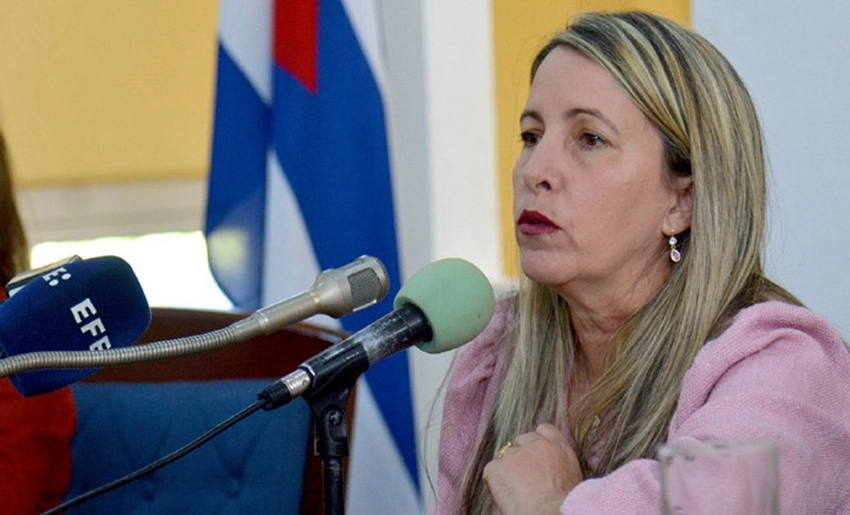
At a press conference, Minister Naima Trujillo Barreto detailed the specifics for adapting the academic calendar to the territorial and local context. Prioritizing as much in-person learning as possible and maintaining students’ connection with their schools and faculty.
The use of half-day programs, double sessions, and in-person attendance schedules. It will correspond to the specific possibilities of each region, Trujillo Barreto explained.
She further specified that an intensive introductory program will be implemented between September 1st and October 3rd. Which will include enhanced instruction, reinforcement of the previous year’s material, individualized curriculum planning for each student. And special support for those transitioning to a new educational level.
The official in charge of the sector noted that teacher staffing is one of the main challenges. With only 73 percent of teachers nationwide holding teaching qualifications. The most complex situations are concentrated in Havana and other western provinces. While the eastern region presents more favorable indicators.
Also to address this situation, multiple strategies will be implemented. Including the mobilization of university students, the incorporation of professionals from other sectors such as culture, science, and industry. As well as the application of Resolution 10 to redistribute teaching loads and allow a teacher to teach at more than one institution.
Regarding supplies, the production of school uniforms presents one of the greatest difficulties.
In Special Education, priority will be given to the internal regulations of schools for students with behavioral disorders. The three regional schools for students with physical and motor disabilities will be maintained. Maximum in-person attendance will be guaranteed in schools for students with intellectual disabilities.
In Early Childhood Education, childcare centers and preschools will operate under the usual schedules. With reduced sessions and days. Community-based programs will be organized by People’s Councils to support families involved in essential activities.
For Technical and Vocational Education (TVE) and teacher training colleges, a reorganization is planned. Taking into account the integration of subjects and alignment with the training profiles of polytechnics in the territories. The awarding of first-year credits will also be reoriented based on alignment with the planning for the skilled workforce.
Paid employment will be encouraged as a complement to training, where deemed advisable.
The guidelines include the organization of institutional projects with half-sessions. Also well-structured complementary programs for the other half-session. Contextualized and individualized for each group and student.
She assured that these include patriotic education, environmental protection, combating drug use and teenage pregnancy. A support for people in vulnerable situations, science and innovation, sports, and artistic and cultural creation.
A novel element is the active involvement of community movements in the educational response. Such as the Community Youth Network and the My Neighborhood for the Homeland Movement. These movements will have specific tasks. Such as hiring for direct teaching, developing complementary programs, nurturing talent, supporting minors in vulnerable situations, organizing review camps. Providing English language preparation, and recovering school furniture and materials, among others.
Trujillo Barrero concluded with a call for unity and confidence in the Cuban education system.
“We are going to begin the school year with all the difficulties. But with the certainty that education is an inalienable human right. Cuban children and adolescents will be in school. We will work to ensure that no student is left behind,” she emphasized.
With information from CNA

- Living Memory Against Terrorism - 12 de October de 2026
- Boca de Sama: Where Terrorism Shattered the Calm - 12 de October de 2026
- Virtual Health Innovation Event Held in Holguin - 12 de October de 2026