
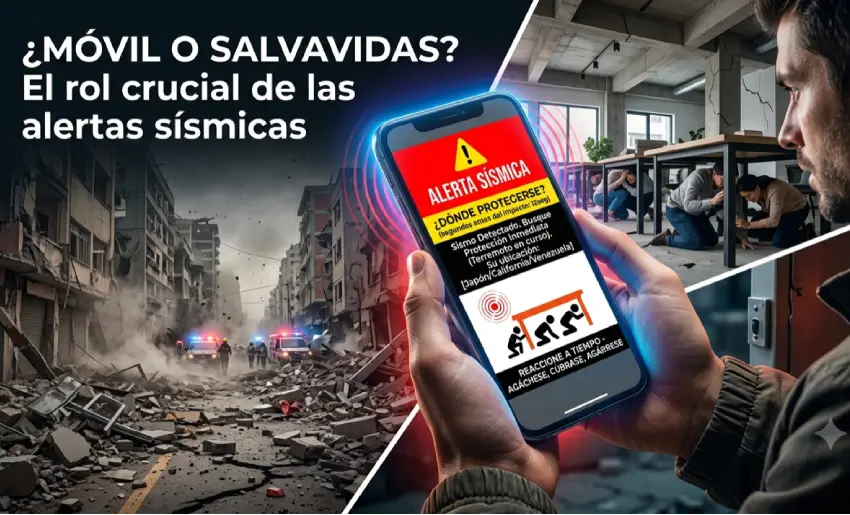
In recent days, seismic activity in California, Venezuela, and Japan triggered early warning systems. That sent alerts via cell phones to millions of users seconds before the tremors began. This brief warning allowed many people to react in time and seek shelter.
On Wednesday night, two earthquakes struck Venezuela. Leaving fatalities and generating concern in the region. The event also caused a perceptible tremor on the northern coast of Japan.
Earlier in the week, a moderate earthquake affected California. While in the Philippines, an earthquake in early June killed 37 people near Mindanao.
Faced with these scenarios, early warning systems, now via mobile phones, are becoming a key tool for risk reduction.
Countries with advanced seismic infrastructure have networks capable of detecting the first waves of an earthquake. Issuing warnings before the strongest impact arrives. Even in areas where these systems are not fully developed, apps like Android Earthquake Alerts allow for automatic warnings to be sent to mobile phones.
Although the reaction time is usually just a few seconds. Also experts agree that this difference can be crucial. In a context of increasing exposure to natural disasters. So the mobile phone is beginning to assume a new role: that of an ally in protecting lives.
By: Miguel David Bruzón Hernández

- Trump’s measures against Cuba: another step toward strangulation - 1 de October de 2026
- Cuba prioritizes respect and care for older adults - 1 de October de 2026
- Tragic case of poisoning from sodium nitrate consumption in Holguin - 1 de October de 2026