
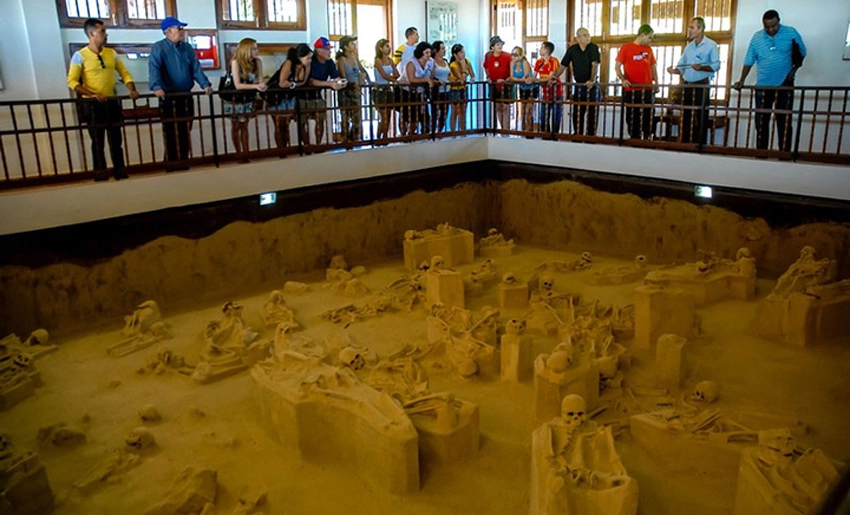
The Central Eastern Department of Archaeology, based in the province of Holguin, is strengthening heritage protection in that region of Cuba. Through research and the creation of replicas of aboriginal artifacts.
Since its founding on August 18th, 1977, the institution has been a leading center for the study of pre-Columbian cultures across the Caribbean islands. Betty Juan Almanza, a communications specialist, told CNA.
She noted that topics such as evidence of Indo-Hispanic contact. Also the way of life of Cuban indigenous peoples, tools, and ornaments are prominent in the research areas.
These contributions, she emphasized, support the detailed cataloging of museum collections, the development of multimedia applications. Aimed at promoting the discipline’s values among new generations, and the dissemination of heritage in this field.
Moreover she noted that in the face of the current fuel crisis, the institution is promoting the creation of archaeological replicas for commercial sale. A strategy that emphasizes historical value and the indigenous worldview through educational tools.
The history of the Central Eastern Department of Archaeology is marked by the work of Dr. José Manuel Guarch Delmonte (1931-2001). Also who founded the department in 1977, and Caridad Rodríguez Cullel (1932-2018). A prominent archaeologist and sculptor who bequeathed the design of the Taíno Village in Banes and oversaw the restoration of the Punta del Este cave, in addition to other important figures.
This institution’s mission is to develop, direct, and execute scientific research projects and scientific-technical services. Related to the discipline, with a sustained commitment to science, history, and Cuban identity.

- 7.6-Magnitude Earthquake Shakes Panama - 10 de October de 2026
- Etecsa completes work to modify its energy mix in Antilla - 10 de October de 2026
- Cooking with charcoal and firewood: the visible face of the energy blockade - 10 de October de 2026