

When life subjects us to painful situations, the mind deploys a series of silent, automatic, and unconscious resources. Like a shield that activates without our asking, these resources protect us from what is too difficult to bear. These are the ego’s defense mechanisms. One of the most fascinating and lasting contributions of Sigmund Freud, and his daughter Anna, to the understanding of mental life.
To understand defense mechanisms, it is necessary to know their creator. Sigmund Freud (1856-1939) was an Austrian neurologist. Considered the father of psychoanalysis and one of the most influential intellectual figures of the 20th century.
Freud was born on May 6th, 1856, in Freiberg, Moravia (now the Czech Republic), into a Jewish family. He studied medicine at the University of Vienna, graduating in 1881. What began as a career focused on neurology gradually shifted toward the study of mental illnesses. Stemming from his clinical work with hysterical patients alongside Joseph Breuer.
Freud postulated that much of our mental life occurs outside of our conscious awareness. He proposed that the human mind is structured on three levels: the conscious (that of which we are aware). The preconscious (contents that we can easily retrieve), and the unconscious (repressed desires, painful memories, and internal conflicts inaccessible directly). Later, in 1923, he reformulated his theory and described the structure of personality in three parts:
- The Id: the most primitive part, governed by the pleasure principle and instinctual drives.
- The Ego: the executive instance that negotiates between the demands of the Id, the demands of the Superego, and external reality.
- The Superego: the internalized moral conscience, which represents the norms and values learned from parents and society.
Within this model, the Ego has the difficult task of maintaining psychic equilibrium. And to accomplish this, it has an arsenal of tools: the Ego’s defense mechanisms.
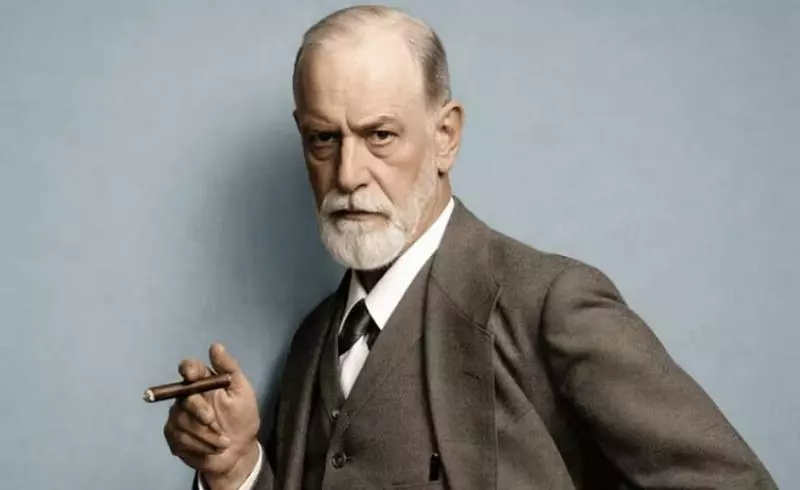
What are defense mechanisms?
Sigmund Freud first used the term “defense mechanism” in 1894. Referring to them as “defensive formations for coping with ideas and affects that we find painful and unbearable.” These are psychological processes that operate unconsciously and involuntarily to protect us from anxiety, guilt, or the conflict that arises between our internal demands and external reality.
Imagine our mind as a fortress. Inside, the Ego tries to govern while the Id exerts pressure with its impulses and the Superego judges it relentlessly. When the tension becomes unbearable, the Ego erects barriers. Some are healthy and flexible; others are rigid and blind.
It was his daughter, Anna Freud (1895-1982), who deepened and organized this knowledge in a seminal book: The Ego and the Mechanisms of Defense (1936). Where she described each of these strategies and their manifestations in great detail. This book deals with the “typical protective resources used by children, adolescents, and adults. In their pursuit of pleasure and avoidance of fear and anxiety, which sometimes lead to illness.”
Anna demonstrated that defense mechanisms are not pathological in themselves; they are natural and normal. Defense mechanisms become problematic when used excessively, rigidly, or inappropriately. Hindering contact with reality and psychological growth.
The main defense mechanisms and everyday examples:
-Repression: Expelling painful thoughts or memories from consciousness. A person who experienced a traumatic accident “doesn’t remember” anything that happened.
-Denial: Rejecting a painful reality; acting as if it doesn’t exist. A smoker with lung cancer who continues to smoke, denying the diagnosis.
-Projection: Attributing our own unacceptable thoughts or emotions to others. Someone attracted to another person accuses their partner of infidelity.
-Rationalization: Constructing logical explanations to justify irrational behavior. After failing an exam, the person says, “That subject is useless anyway.”
-Displacement: Unloading an emotion onto a less threatening object or person. An employee scolds their children after their boss humiliated them at work.
-Reaction formation: Adopting an attitude contrary to one’s true impulses. Someone who feels deep resentment toward a family member behaves in an excessively affectionate manner.
-Regression: Returning to earlier developmental stages, typical of childhood. In the face of a crisis, an adult may cry uncontrollably or refuse to speak.
-Sublimation: Channeling unacceptable impulses into socially valued activities. A person with aggressive tendencies becomes a successful surgeon.
-Intellectualization: Separating emotions from thoughts, coldly analyzing what happened. After a breakup, the person only talks about divorce statistics.
-Emotional withdrawal: Separating an idea from the feeling that accompanies it. A medical student dissects an animal without showing any emotion.
The ego’s defense mechanisms, I reiterate, are not inherently bad. They help us cope with losses, failures, and threats. Without them, any frustration would be devastating. The problem arises from excess or rigidity. When a person always uses the same mechanism, or when they employ it for realities that can be faced, it generates long-term suffering.
For example, denial can be lifesaving in an acute crisis, but if it persists for months, it prevents seeking necessary help.
One of the central goals of psychotherapy is to identify maladaptive defenses and replace them with more flexible ones. Without completely eliminating their protective capacity.
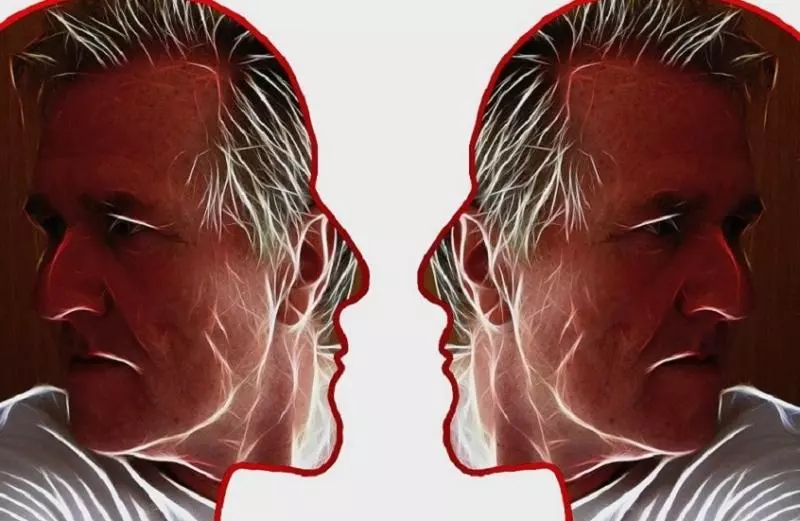
Every day, without realizing it, we use these mechanisms:
When we’re late for work and blame the traffic (projection), when we forget an awkward appointment (repression), or when we turn sadness into a joke (reaction formation), we’re putting these strategies into practice.
True self-awareness involves recognizing when we’re using defenses. Simple questions like, “What am I avoiding feeling?”, “Why did I react with so much anger?”, or “What part of reality don’t I want to see?” can help deactivate these automatic responses and gain psychological freedom.
The ego’s defense mechanisms are essential tools for our mental health. They function as a shield that protects us from pain, but they can also become a prison when used rigidly.
Understanding them is the first step toward becoming aware of our automatic reactions. As Anna Freud wrote, these resources are used to avoid fear and anxiety, but it is only through self-knowledge and professional help, when needed, that we can learn to manage them without them managing us.

- Aging well: the art of adding years with health, meaning and joy - 19 de October de 2026
- Schizophrenia: More Than a Diagnosis, a Human Story that Worth Understanding - 12 de October de 2026
- Facing Adversity: Keys to Transforming Pain into Strength - 31 de August de 2026