
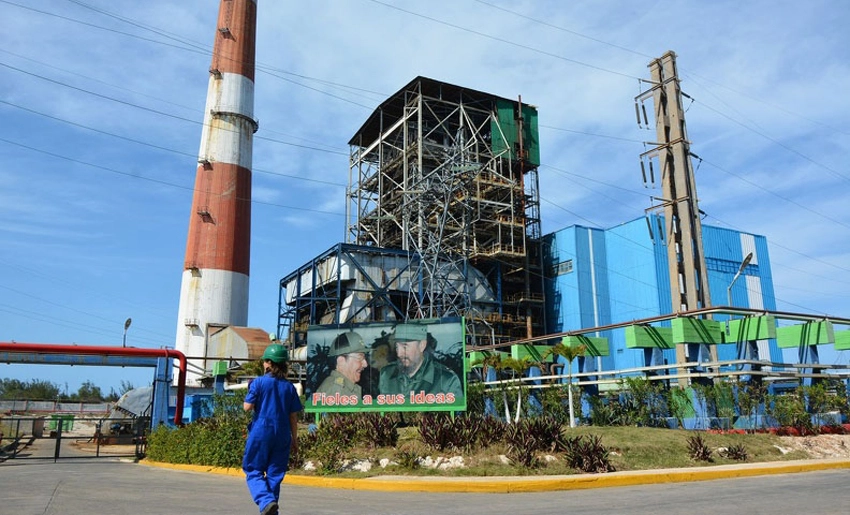
The Antonio Guiteras Thermoelectric Power Plant (CTE) is waiting for the boiler area to cool down to more accurately assess the leak in the economizer. That caused it to once again disconnect from the National Electric System (SEN). The plant will also reinforce diagnostic procedures to identify other potentially vulnerable areas.
Román Pérez Castañeda, the CTE’s general manager, explained that around 9:40 p.m. last Friday, it was necessary to halt power generation. Due to excessive water consumption. He emphasized that although similar situations have occurred several times in May. The breakdowns have been in different areas of the complex system, ruling out errors in the repairs.
Also this is a 38-year-old plant that requires major maintenance. Which has not been possible due to the challenging circumstances facing the country. This time, more time will be dedicated to diagnosis. Testing will be intensified to proactively identify other vulnerable areas and extend the time between shutdowns.
Among the country’s power plants, Guiteras stands out as one of the industries most affected by the United States’ blockade policy against Cuba. More than a decade ago, the French company that designed, built, and assembled the plant was acquired by a U.S. multinational. Complicating the management and acquisition of parts and components for maintenance and repairs.
When the breakdown was detected, the unit was contributing 204 megawatts of power to the National Electric System (SEN). Due to the unforeseen problem in the boiler area, cooling was required for approximately 36 hours to access the plant, assess the damage, design a solution, proceed with the repair, and conduct the necessary tests. After obtaining satisfactory results, the plant could then be restarted.
Since January 29th, Cuba has stopped receiving fuel for refining, representing a shortfall of between 1,300 and 1,400 MW. Or more than 50% of the country’s nighttime power generation.
Faced with this situation, the country has been limited to generating power solely with:
- Domestic crude oil in thermal power plants
- Accompanying gas in Energas plants
- Renewable sources, primarily solar photovoltaics
Distributed generation—which includes the Moa and Mariel plants, the barges in Havana, and diesel generators throughout the country. It could previously contribute between 700 and 800 MW daily. That capacity is currently unavailable.
With information from CNA and Holguin Electric Company

- Russia Delivers 750 Tons of Vegetable Oil to Cuba - 17 de October de 2026
- Neurotic Anonymous Shows That Cinema in Cuba Is Alive and Shining - 17 de October de 2026
- Baseball: Alazanes and Gallos Storm the Eastern Summit - 17 de October de 2026