
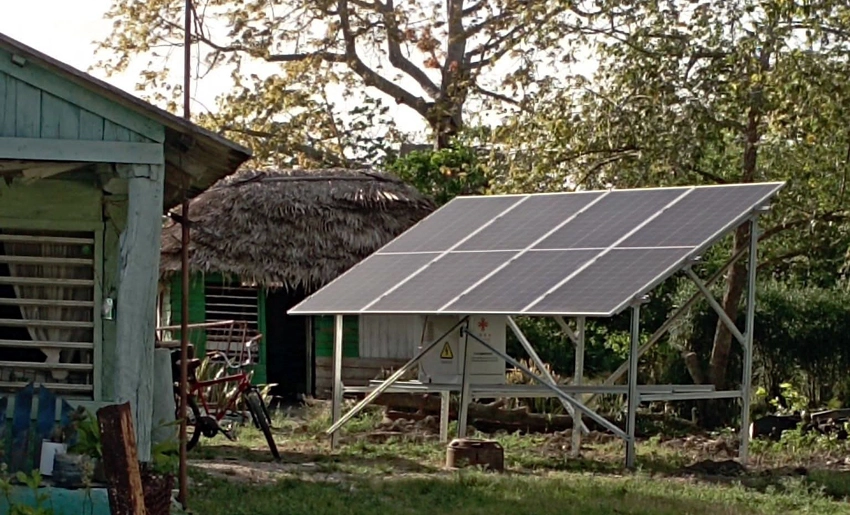
The coastal landscape of Boca de Tanamo, the intricate terrain of Calabaza de Sagua, and the remote plains of Limpio Chiquito share a common geography: difficult access. Historically, in these Holguin communities, nightfall dictated the end of the workday or forced reliance on noisy generators. However, in the last two months, a quiet revolution driven by photovoltaic energy and human effort is changing the social landscape of the province.
Through the national energy transition program toward renewable energy sources. A total of 213 Holguin households that never had a connection to the national electricity grid now have clean and constant light. Thanks to 2-kilowatt (kW) stand-alone photovoltaic systems.
Moreover the transformation has not been an easy task. In the midst of an extremely complex economic scenario. Aggravated by the tightening of the US embargo and the severe fuel shortage that paralyzes local infrastructure. Clean energy has emerged as an urgent solution for energy sovereignty and resilience.
Fernando Hechavarría Pupo, director of the Renewable Energy Sources Business Unit (UEB) of the Holguin Electric Company. He has visited each of these areas and emphasizes the value of what has been achieved:
“The challenge in the mountainous regions is enormous. Transporting the panels, structures, and heavy lithium batteries is done literally on shoulders. In oxcarts, or on the backs of mules. This is only possible thanks to an unbreakable alliance between the technical brigades and the local residents themselves.”
So far, the tangible impacts have translated into smiles and long-awaited basic comforts.
In the community of Boca de Tanamo, in the municipality of Frank País, some 27 homes now have electricity. Thanks to close collaboration that included a prior sociodemographic study by the Social Observatory of the University of Holguin.
In another part of the Cacocum region, in Limpio Chiquito, 88 families are already benefiting. Previously, they depended on generators that remained offline for months at a time due to fuel shortages.
Another 19 solar panels have already been installed in the most rugged areas of eastern Cuba. In Calabaza de Sagua, in the coffee-growing region of Sagua de Tanamo.
The goal doesn’t stop here. Before the end of June, another 122 families in the province will receive similar systems. These are part of a solidarity donation of 5,000 solar panels delivered to Cuba by the People’s Republic of China. Intended to support the most vulnerable households and basic services during critical periods for the National Electric System (SEN).
Alongside the electrification of homes—with the community of La Uvilla in Rafael Freyre poised to be the next to be completed. Holguin is experiencing a comprehensive rollout of solar energy. Sources in the sector confirm that the province has received an influx of these 2 kW systems. Also intended for high-impact social projects: the nine stations of the Holguin radio network (including the main station of Radio Angulo), bank branches, rural medical clinics, maternity homes, and nursing homes are gradually implementing fixed photovoltaic systems. Or portable stations to safeguard their emergency services.
For the inhabitants of rural Holguin, access to electricity through these solar panels means more than just turning on a light bulb or watching television. It means the possibility of having cold water, preserving food, powering vital medical equipment, and narrowing the gap of geographical inequality.
When the sun sets today over the Holguin mountains, life in hundreds of homes will no longer be plunged into darkness.
By: Daimy Peña Guillén

- Boca de Sama: Where Terrorism Shattered the Calm - 12 de October de 2026
- Virtual Health Innovation Event Held in Holguin - 12 de October de 2026
- 7.6-Magnitude Earthquake Shakes Panama - 10 de October de 2026