
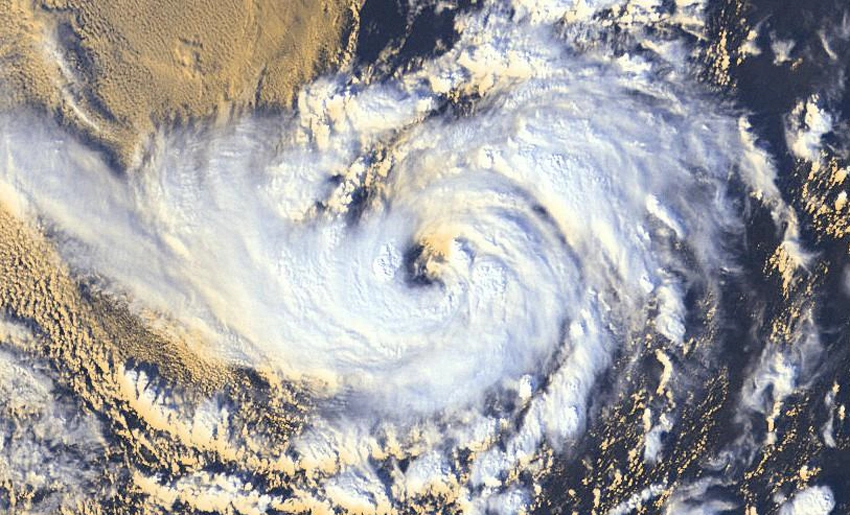
This June 1st, Cuba officially begins a new hurricane season in the North Atlantic, the Gulf of Mexico, and the Caribbean Sea. For Cuban families, this date is not just a reminder on the calendar. It is an annual call to remember, prepare, and unite.
In the province of Holguin, this start of the weather season is experienced with particular sensitivity. As the eastern region still bears the fresh and deep scars of Hurricane Melissa.
It is necessary to analyze what science tells us. The Forecast Center of the Institute of Meteorology (INSMET). It has issued a moderately favorable forecast. A less active season than normal is expected.
According to specialists, the determining factor behind this behavior will be the development of the El Niño phenomenon. A climatic event that historically acts as a brake on hurricane activity in our region.
However, a less active season should never be interpreted as complete calm or complacency. The risk of Cuba being affected by at least one hurricane remains at 40%. A figure that exceeds the historical average of 35%. Consequently, this percentage is not an invitation to complacency. Rather an imperative mandate for preparation at home.
To understand the urgency of this call, one need only look at the history of our territory. Holguin is intimately familiar with the fury of nature. It is impossible to forget September 2008. Also when the gigantic Hurricane Ike, a Category 4 storm with winds of 230 kilometers per hour. Lashed the area near Punta Lucrecia, leaving severe material damage and the tragic loss of four lives in eastern Cuba.
In 2012, Hurricane Sandy viciously struck municipalities. Such as Mayari, Cueto, Antilla, Banes, Urbano Noris, Baguanos, and Rafael Freyre.
The most recent and painful wound was suffered on October 29th, 2015, with the impact of Hurricane Melissa. That night, the powerful cyclone swept through Santiago de Cuba and Holguin. Causing massive flooding, landslides in our mountains, and the collapse of vulnerable infrastructure. Hundreds of homes in Holguin were submerged.
Also the social impact was devastating. More than 193 schools suffered structural damage in municipalities. Such as Holguin, Cacocum, Gibara, Baguanos, Mayari, and Sagua de Tanamo.
Another 100 healthcare facilities required reconstruction. While our doctors battled in the post-disaster phase to contain outbreaks of arboviruses and diarrheal diseases.
The island’s historical memory connects us to great tragedies. From the catastrophic hurricane of Santa Cruz del Sur in 1932 (with its nearly 3,000 deaths). Also the slow and erratic Flora in 1963—with which many compare the devastation of Melissa—to the destructive Irma in 2017. Names that, ultimately, represent pain, but also the capacity to rise again.
Furthermore the World Meteorological Organization has already defined the list of names for the 2026 hurricane season (headed by Arthur, Bertha, and Cristobal). The true story will be written by nature, bove all, by our capacity to respond. During the first half of June, the main danger is concentrated in the western Caribbean Sea. Traditionally threatening the western region and the Isle of Youth.
Consequently, the alert is general. Faced with this scenario, Cuba’s main shield is not luck, but its people organized through Civil Defense. Faced with the threat of Hurricane Melissa. The timely evacuation of more than 700,000 people in just 48 hours demonstrated why our system is recognized globally by the UN.
Today’s call is for family and community action. It is time to check roofs, secure drains, protect water tanks, prepare flashlights, batteries, essential medications, and safeguard personal documents. It is crucial to maintain information discipline: stay informed exclusively through official reports from our meteorologists and public media outlets. Ignoring malicious rumors on social media.
Holguin knows the sound of the wind and the smell of floodwaters rushing down from the mountains. It also knows the strength of the helping hand that rebuilds. This June 1st, the 2026 hurricane season finds us alert, prepared, and united. Because in Cuba, the greatest certainty in the face of danger remains the organization of its people.
By: Daimy Peña Guillén

- Russia Delivers 750 Tons of Vegetable Oil to Cuba - 17 de October de 2026
- Neurotic Anonymous Shows That Cinema in Cuba Is Alive and Shining - 17 de October de 2026
- Baseball: Alazanes and Gallos Storm the Eastern Summit - 17 de October de 2026