The Gibara International Festival of Low-Budget Cinema (FICGibara 2026) is preparing for its twentieth edition. With an animation selection that reflects the diversity of the Global South.
Fourteen works from eight countries comprise the official animation selection for the twentieth edition of FICGibara. Which will be held from July 14th to 18th in this coastal city in Holguin province.
The selection reflects a broad representation from the Global South. In keeping with the founding philosophy of this event dedicated to low-budget cinema of high aesthetic value.
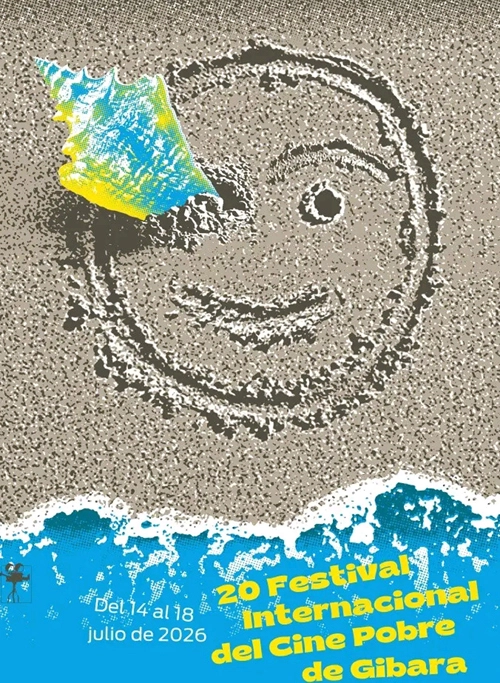
The organizing committee confirmed that the date change—originally scheduled for April. It is due to the complex energy and fuel situation facing the country. Seeking to ensure the logistical conditions and quality that distinguish the festival.
In the animation competition, Cuba will be represented by four pieces: “Adagio,” by David and Daniel Zamora. “The Girl and the Sea,” by Ray Ortega. “Titoverse: Genesis,” by Daniel Martín. And “Three Three Three,” by Aldo Daniel Luberta. Brazil leads the international participation with the same number of titles: “The Monster of Fear,” “Full,” “For What It Was,” and “State Dolls in Plastic Blows.”
Completing the section are works from Mexico, “A Walk Through the City”. Spain, “In Half”; Chile, “The Crypt”. Argentina, “Garbage Island”; Colombia, “Parallel 48”; and Peru, “Sana.”
This edition, which marks a return to the roots of the Poor Cinema movement. It will pay tribute to the legacy of its founder, the master Humberto Solás, and to more than two decades of promoting independent audiovisual works.
Also the event was founded in April 2003 by the renowned Cuban filmmaker Humberto Solás, creator of classics such as “Lucía.” Its purpose was to establish an alternative platform for works made with limited resources. Less than $300,000 USD—but with a strong auteurist vocation.
Solás wrote the Manifesto of Poor Cinema, where he made it clear that “poor” did not refer to a lack of quality. Rather to a cinema of restricted budgets that breaks with cultural elitism and democratizes production through accessible technologies. The choice of Gibara as the venue was not accidental: the filmmaker maintained an emotional connection. With this city since filming scenes there for his iconic film.
After Solás’s death in 2008, the Festival adopted his name as a tribute. Under the direction of fellow filmmaker Jorge Perugorría, between 2015 and 2017. It broadened its focus and became known as the Gibara International Film Festival. Although in recent editions it has reverted to its original name.
In 2024, the 18th edition brought together 83 works from 25 countries. While in 2025 more than 500 pieces from 35 nations participated, confirming the festival’s vitality.
The Festival includes categories for feature and short films. In fiction, documentary, animation, and experimental cinema. The main awards are the Lucía Awards. A name that once again evokes Solás’s masterpiece.
One of its distinctive features is its grassroots character. Conceived as “a people’s festival.” The screenings and parallel activities—concerts, exhibitions, workshops, and theoretical discussions. Actively involve the inhabitants of Gibara, a town with modest infrastructure but immense cultural heritage.
With this twentieth edition, FICGibara reaffirms its commitment to cultural convergence and exchange among filmmakers in the region. Despite the material limitations imposed by the current context.
By: Daimy Peña Guillén

- 7.6-Magnitude Earthquake Shakes Panama - 10 de October de 2026
- Etecsa completes work to modify its energy mix in Antilla - 10 de October de 2026
- Cooking with charcoal and firewood: the visible face of the energy blockade - 10 de October de 2026