
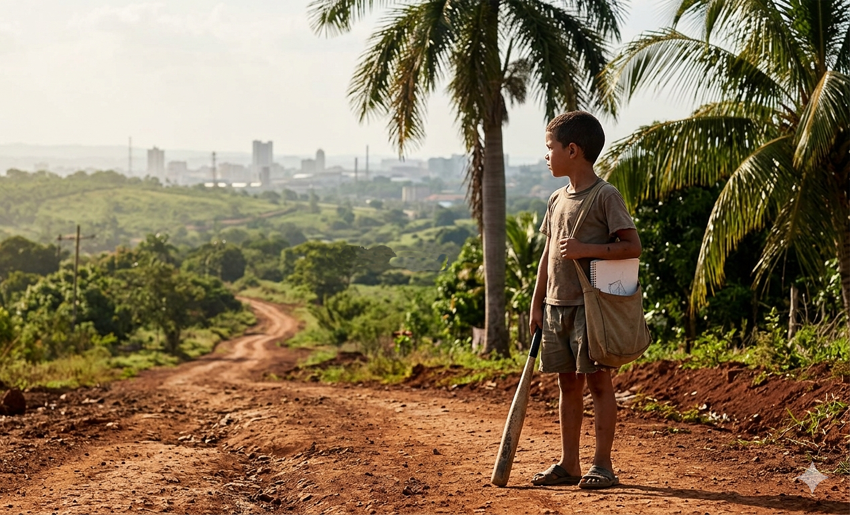
In Cuba, the randomness of birth often draws an invisible but implacable line. It’s not just about the province or municipality. It’s about the exact geography of one’s home. While for a child in Vedado, Havana, or in downtown Holguin. Access to an art academy or a sports facility is a matter of public transportation. For a child deep in the Turquino Plan or in a remote batey. That same dream seems to belong to another country.
The wall of scarcity
The so-called “geographical fatalism” has intensified under the weight of the current economic and social crisis. Fuel shortages and the deterioration of transportation not only move goods, they also paralyze aspirations. When travel becomes an odyssey. The possibilities for advancement are reduced to the range of one’s feet or a patched-up bicycle.
Access to Art: While the city offers galleries and conservatories, the countryside often has to rely on the heroic efforts of an art instructor who lacks basic materials.
High-Performance Sport: Talent born in rural areas risks never being discovered. Simply because sports infrastructure is centralized and resources for identifying talent in remote areas have drastically diminished.
The Culture of the Environment: The Weight of the Everyday
Beyond the material, there is a subjective barrier: social culture. In urban environments, stimulation is constant. The city “forces” children to interact with modernity and diversity. In contrast, in many rural areas, the crisis has led to a “culture of immediacy” and subsistence.
In these areas, support for agricultural or domestic work is often prioritized over extracurricular activities that seem “distant” or “impractical.” The lack of digital connectivity in rural Cuba further entrenches this isolation. Leaving rural children at a technological disadvantage compared to their urban peers.
The Urgency of Breaking the Barrier
We cannot allow a child’s postal code to be the ceiling of their intelligence. Equity, a historical banner of our social system, cracks when talent depends on location.
Breaking down these barriers is not just a logistical task. It is an ethical imperative. It requires:
Decentralizing cultural and sports management: Bringing resources to where the children are. Instead of waiting for them to come to the resources.
Real incentives for professionals: Ensuring that teachers and coaches in rural areas have the necessary conditions to stem the exodus to the cities.
Promoting connectivity: Digital literacy is the fastest way to overcome mountains and poor roads. Geography should not be a destiny. The son of a farmer deep in the mountains should have the same right to dream of becoming a concert pianist or Olympic champion. As the son of someone living in the shadow of a Havana theater. Cuba’s future cannot afford to lose a single talent simply because they were born “too far away.”
By: Alvaro Raúl Suárez Leyva

- Putin states that BRICS has generated over 40 percent of global GDP - 12 de September de 2026
- Between the wind of the tenths and bottled art - 12 de September de 2026
- ETECSA Holguin Hosts Science and Technology Forum - 12 de September de 2026