
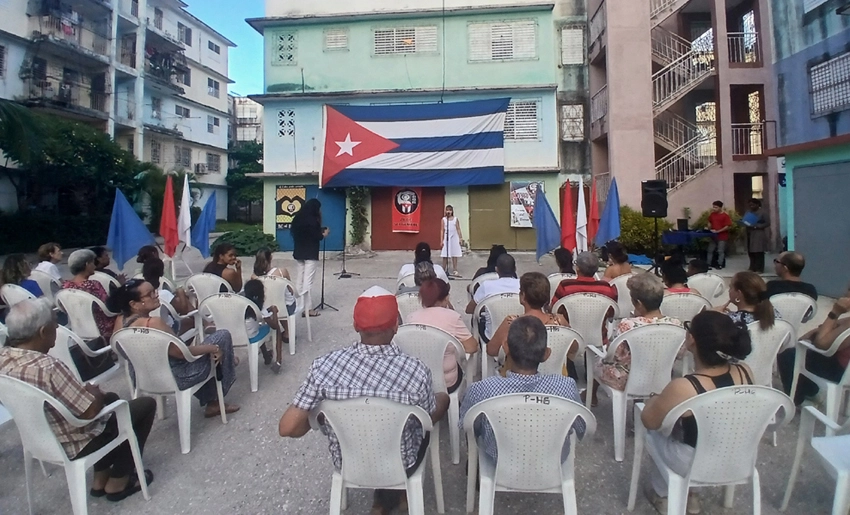
Residents of the Villa Nueva 3 neighborhood, in the city of Holguin, called for strengthening unity and solidarity. As essential tools for confronting the impact of the economic, commercial, and financial blockade imposed on Cuba by the United States.
During the gathering, residents agreed that daily resistance requires new ways of thinking and collective action. Maritza Salas emphasized the need to seek alternatives in the face of material limitations.
“We must continue to create; we must keep looking for alternatives to solve our problems,” Maritza stated.
Salas underscored children’s right to a future and the duty to build a better world—a legacy passed down from previous generations.
The figures regarding economic damage were alarming to those present. Salas noted that, in the period between March 2025 and February 2026, the harm has intensified. “We have had to overcome all the limitations that arise from lacking those resources and that funding,” Salas added. While reaffirming her loyalty to the path chosen by Commander-in-Chief Fidel Castro.
Meanwhile, Diana Alis Ricardo, coordinator of the Committees for the Defense of the Revolution (CDR) in the province. She insisted that solidarity must be translated into practical action. “Today, more than ever, we must strengthen solidarity among neighbors by sharing what we have. Safeguarding resources, combating illegal activities, addressing social indiscipline, and working with greater efficiency,” she declared.
The historical context of the blockade was also a recurring theme in the remarks made by those in attendance. Guillermo Caralero, a resident of the Villa Nueva 3 neighborhood in Holguin, described U.S. policy as an unprecedented act of genocide. “There is no precedent for such a brutal blockade,” Caralero stated. He explained that financial persecution hinders trade and access to credit. Affecting both banks and individuals who attempt to engage with the island. “Anyone who tries to trade with us gets fined,” he denounced.
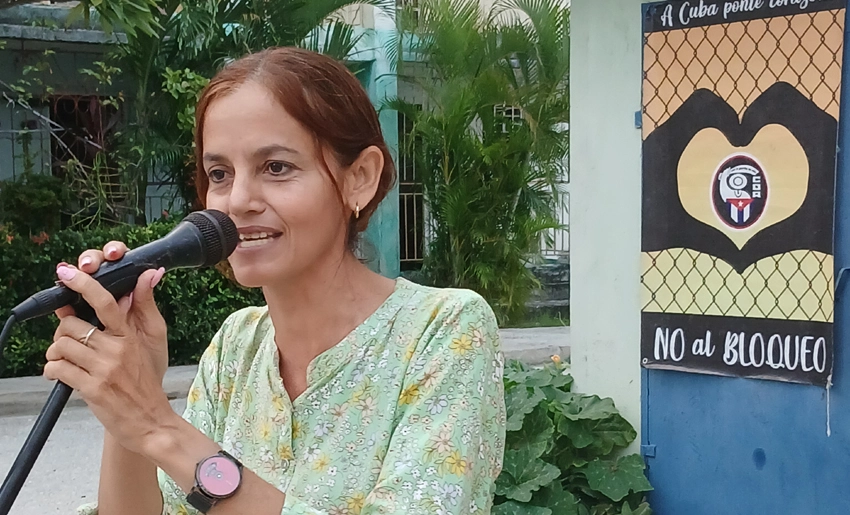
Drawing from her personal experience, Nayla Marieta Leyva recounted the human impact of the sanctions. Having spent 52 days in the hospital, Leyva emphasized that the people’s resilience is sustained by their compassion and humanism. “We are capable of feeling the pain of a child who needs a medicine but cannot get it,” she remarked. She pointed to the difficulties in securing food and essential nutrients for households. Challenges she attributed directly to the shortages caused by the blockade.
Moreover the gathering in Villa Nueva 3 concluded with a commitment to maintain mutual support and remain vigilant in the face of these hardships. The community in Holguin reaffirmed that dignity and resilience are the response to economic adversity.
The history of Cuba is, in large part, a history of sustained resistance against a siege that seems to have no end. Yet, as Spanish journalist Ignacio Ramonet noted when analyzing social processes. A nation’s strength lies not only in its capacity to endure a blow. But in its ability to weave networks of affection and mutual support amidst scarcity.
In Villa Nueva 3, unity is a daily practice of survival and humanity. In the face of the imperialist blockade. Which seeks to isolate and force submission through hunger, the response of these neighbors is solidarity: sharing what little they have. Cherishing what they hold dear, and leaving no one behind. It is, perhaps, the most genuine way to triumph.
- Sharing a little, safeguarding what remains, and ensuring no one is left behind in the face of the U.S. blockade - 4 de November de 2026
- Progress in Watershed Protection Through “Life Task” in Holguin - 4 de November de 2026
- Medano Implements Productive Transformations in Holguin - 29 de October de 2026