
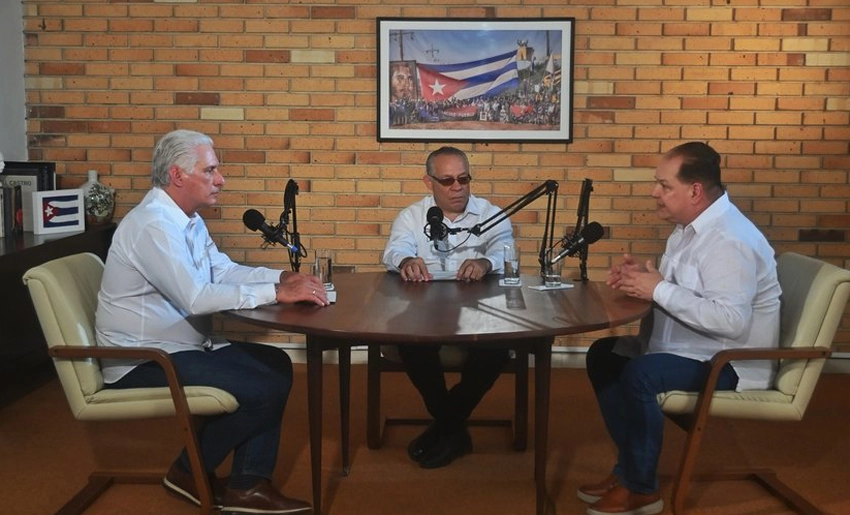
Because the Revolution is rooted in inclusion and it is impossible to speak of socialism without it. The latest episode of the podcast *Desde la Presidencia* (From the Presidency), hosted by President Miguel Díaz-Canel Bermúdez. Focused on strategies for supporting the most vulnerable individuals and families. The discussion covered social assistance policies and programs championed by the nation. As well as initiatives currently underway to care for those with the greatest needs.
During the broadcast, the Head of State reflected on a “historic, intense day—a Cuban victory against the empire.” Marking the 34th consecutive time that the vast majority of the international community. Within the UN General Assembly, has rejected and condemned the United States’ blockade against Cuba.
Analyzing this latest victory for Cuba and the world’s peoples at the UN. Also where the U.S. government’s criminal economic, commercial, and financial blockade against our country was overwhelmingly condemned. Díaz-Canel emphasized that the support of 130 nations “is, above all—and I want to stress this—a recognition of the courage. Heroism, creative resistance, and resilience of the heroic and compassionate Cuban people, to whom we are all proud to belong.”
Protecting the Most Vulnerable and Ensuring Social Well-being
In this new episode of *Desde la Presidencia*, which examines the Revolution’s policies and measures designed to protect the most vulnerable. The First Secretary of the Party’s Central Committee and President of the Republic was joined by the Minister of Labor and Social Security, Jesús Otamendiz Campos. And Dr. Enrique Alemán, leader of the sociocultural project *Quisicuaba*.
Moreover the principle of leaving no one behind, an inviolable tenet of the Cuban Revolution was reaffirmed during the discussion. Which took place against a backdrop defined by a tightened, criminal blockade and an energy squeeze that directly impacts the country’s population.
The Minister of Labor and Social Security reported that over 1.3 million families facing various forms of vulnerability have already been visited. The process is guided by the principle of assessing the specific circumstances of each group, applying a tailored approach. To date, 883,426 individuals have been identified as vulnerable.
Otamendiz Campos also provided an update on food assistance being delivered to a large number of people through local ration stores. This effort is bolstered by international solidarity. Including donations from various countries and contributions from institutions such as the World Food Programme.
During the discussion, Díaz-Canel described vulnerability as a multidimensional category that necessitates a multidisciplinary approach. He reaffirmed that supporting families and individuals in vulnerable situations “will remain a permanent, high-priority issue for as long as the problem persists.”
Regarding social assistance, the country has allocated over 6 billion pesos in its 2026 budget.
The Minister of Labor and Social Security noted that 174,511 family units are currently covered by social assistance. Emphasizing that more than 3 billion pesos from the state budget have been disbursed in the form of temporary cash benefits.
Quisicuaba: A Deeply Humanistic Community Project
At the President’s request, Dr. Enrique Alemán—leader of the sociocultural and religious project *Quisicuaba*. Which is historically based in the Havana neighborhood of Los Sitios. He discussed social welfare efforts from the perspective of the organization he heads.
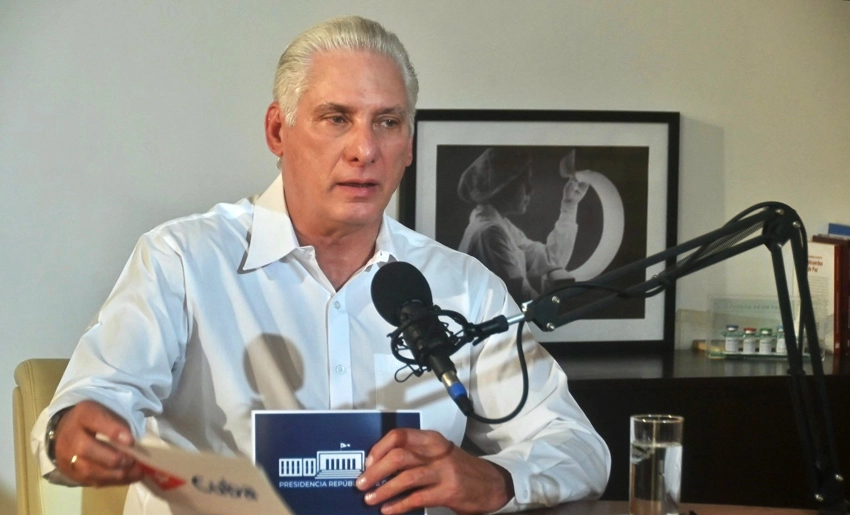
After explaining a series of initiatives undertaken by Quisicuaba—ranging from direct care for vulnerable individuals to the development of projects rooted in science and innovation. Dr. Alemán reiterated that addressing the multidimensional problem of vulnerability requires more than just providing food, offering financial assistance, or raising wages.
In this regard, he explained, we must be able to recognize other social determinants at play in contemporary Cuba. Within a context that makes facing the challenges of daily life particularly difficult. Therefore, he noted, the sensitivity with which this issue is approached. Also the profound sense of humanism applied is essential to the Revolution’s policy of leaving no one behind.
Reviewing the points discussed in this latest episode of his podcast, Díaz-Canel emphasized:
“The data presented here today is indispensable for assessing both setbacks and progress. What has been accomplished and what remains to be done. Yet, one must always interpret these figures with the awareness that behind every number lies a human being in need of care. The Revolution, as a supreme act of social justice, must address their needs with both sensitivity and efficiency. This is what we learned in the school of Fidel, Raúl, Celia, Vilma, Haydée, Camilo, Che. And all those who gave their lives to transform the deeply unequal and unjust society of the capitalist past.”
With information from the Presidency of Cuba and Radio Rebelde

- Revolution Means Inclusion: From the Presidency Podcast Explores the Concept - 30 de October de 2026
- 4th Gathering of Paper Artists Concludes in Holguin - 30 de October de 2026
- What should you do when mobile phones automatically change their time this November 1st? - 30 de October de 2026