
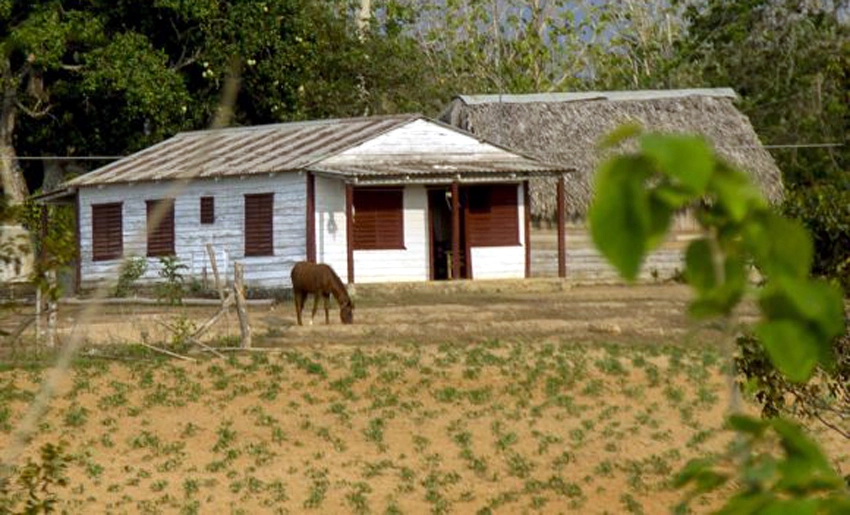
For a long time, the Cuban countryside was synonymous with food, work, and hope. Wherever a root vegetable, a garden crop, or a fruit was planted, there was also the potential to support a family and contribute to the nation’s food supply. Today, however, the reality in many rural communities is defined by hardship and the uncertainty of harvests.
It is paradoxical that, at times, produce can be found more easily—and at a better price—in city markets than in the very fields where it is grown. What appears to be a contradiction actually points to deeper issues: difficulties in marketing and distribution, a lack of incentives, high costs, shortages of essential inputs, fuel, and transport. Along with a distribution system that does not always benefit those who live and work in rural areas.
Farmers can plant crops, but they require seeds, fertilizers, tools, fuel, security for their produce, and prices that make their efforts profitable. If, after months of labor, the returns barely cover expenses. Or if a large portion of the harvest is shipped directly to wholesale markets in the city. It is understandable that the motivation to produce would decline. No one can indefinitely sustain an activity that does not allow them to live with dignity.
Agriculture is not strengthened merely by calls to plant crops. It is strengthened when the concrete conditions to do so are in place. Producers need to feel that their work is valued, that they have access to essential resources. So that they can sell their harvest without facing excessive obstacles or losses along the way.
They also require basic services—passable roads, electricity, and opportunities—so that young people do not view the countryside as a place they must necessarily leave.
It is true that any individual can cultivate a piece of land, a backyard, or a small family garden. Every plot of land counts, and every harvest helps. But we must not mistake individual initiative for the solution to a structural problem.
A significant shift could now come through the new Law on Agricultural and Forestry Land. Which offers opportunities to reclaim idle land, provide incentives for producers, improve infrastructure, strengthen cooperatives, ensure transparent markets, and bring food closer to the communities where it is produced.
It is unreasonable for farmers to struggle to access the very goods they produce. The countryside should first feed its own inhabitants while simultaneously contributing. In an organized manner, to supplying the cities. The commercialization process must not become a chain that drives up product prices while leaving both the producer and the consumer at a disadvantage.
Cuba must not forget that its greatest potential for food security lies in agriculture. The country’s history shows that the rural sector has sustained the nation during its most difficult times. Yet, this capacity is neither automatic nor infinite. It requires investment, respect for agricultural labor, and decisions that place food production among the nation’s true priorities.
Today, discussing the Cuban countryside is a matter of national urgency. It is not enough to demand further sacrifices from those already working under difficult conditions. We must create an environment where farming is once again a dignified, profitable, and rewarding pursuit. Because when the countryside ceases to provide food, the crisis does not remain confined to rural areas—it eventually reaches everyone’s table.
By: Álvaro Raúl Suárez Leyva

- UHo Debate About New Features of the Draft Education Law - 16 de October de 2026
- When the Countryside Stops Providing Food - 16 de October de 2026
- Evaluated in Holguin for Boosting Foreign Investment - 15 de October de 2026