
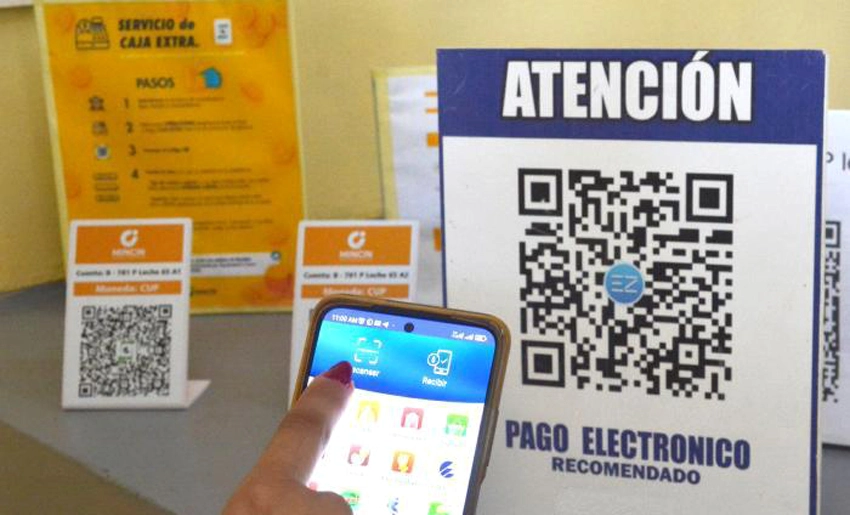
Banking and the promotion of electronic payment channels emerged in Cuba as strategic priorities to revitalize the national economy. However, when observing daily life in the province of Holguin, the enthusiasm for the policy clashes with a complex reality: the rules intended to regulate commerce seem to put the most pressure on the last link in the commercial chain.
This disconnect is evident at the counter of any small local business. From the provincial capital to municipalities like Banes or Mayari. Retailers are strictly required to guarantee payment by transfer in Cuban pesos (CUP). A measure designed to make life easier for consumers. However, the paradox arises when that same retailer tries to restock their merchandise. Since the supply chain that sustains their business does not operate under the same rules.
To keep their shelves stocked, local businesses depend on large suppliers, importers, and players. Operating in key hubs like the Mariel Special Development Zone. The problem is that these initial links in the chain don’t accept the CUP transfers the retailer has just received. Instead, they demand payments in foreign currency (USD) or cash. This leaves the merchant trapped in a dead end: they accumulate a digital balance in the national banking system that is useless for acquiring the products the population demands.
Also the situation becomes even more critical when accessing the financial system. If the merchant tries to withdraw their own legitimately deposited funds in cash to operate in the informal market. Or to obtain supplies wherever possible, they encounter the severe liquidity constraints plaguing the banks. Unable to freely access their money or convert it into the currency their suppliers demand, cash flow is disrupted. Business grinds to a halt, and the supply of goods to the people suffers.
Adding to this predicament is the inequality in purchasing options available to citizens. It is contradictory to demand strict compliance with digital payments in Cuban pesos from small vendors. While at the same time businesses and entities that operate exclusively in foreign currency proliferate. Beyond the reach of the average salary in national currency. This duality demonstrates that oversight is not exercised with the same severity toward large companies, importers, or even banking institutions themselves when they fail to meet their obligations to their customers.
For financial inclusion to consolidate as a transformative process in Holguin and throughout the country. So the rules of the game cannot rest solely on the shoulders of the small retailer. An equitable economic policy demands systemic coherence. That payment requirements, fiscal control, and operational responsibility be applied with the same rigor from large importers to the corner store counter. Only when all actors in the chain respond under the same conditions will the law cease to be broken at its weakest link.

- Holguin Health Sector Strengthens Ties with Adolescents and Youth - 1 de October de 2026
- Trump’s measures against Cuba: another step toward strangulation - 1 de October de 2026
- Cuba prioritizes respect and care for older adults - 1 de October de 2026