
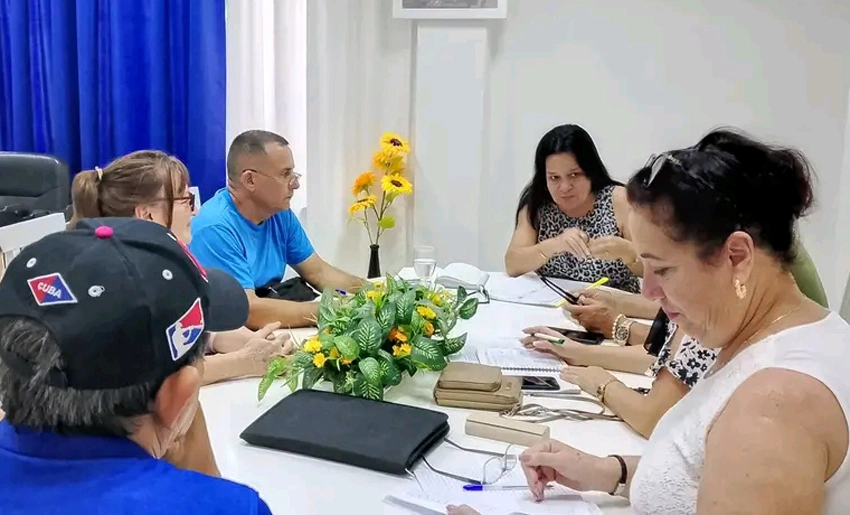
With the aim of consolidating municipal autonomy and revitalizing local economies. The Vice Governor of Holguin Province, Yunia Pérez Hernández, presided over a working meeting. Focused on evaluating the progress of General Objective Number Five of the Government’s Economic and Social Program for 2026. “Advancing the improvement of strategic management for territorial development.”
The exchange, characterized by analytical debate, provided an opportune space to examine the current challenges. Facing the province regarding the decentralization of powers and the optimal use of each locality’s own resources.
During the session, Pérez Hernández emphasized the importance of coordinating concrete and transformative actions from each of the entities involved. Overcoming bureaucratic obstacles to achieve a much more efficient public administration that is closer to community needs.
“The synergy among all these actors is key to correcting territorial imbalances and accelerating the endogenous development of our municipalities,” the vice-governor stated. After emphasizing that the province’s progress cannot be viewed in a fragmented way. Rather as a mechanism where the development of one territory drives and complements that of its neighbors.
Moreover this integrated vision was faithfully reflected in the multisectoral composition of the convened working group. The meeting brought together directors and specialists. From the Departments of Territorial Development, Finance and Prices, and Economy and Planning. Along with representatives from the National Tax Administration Office (ONAT) and Foreign Trade.
The coordination of these areas is vital for developing public policies. That directly link budget planning with tax revenue collection and the identification of new exportable products from the communities.
Furthermore, the discussion reaffirmed the role of academia and innovation as drivers of change in the current Cuban context. The active participation of the Ministry of Science, Technology and Environment (CITMA) and the region’s research centers. It reflects the state policy of basing government decisions on scientific evidence. Ensuring that local development projects are implemented under rigorous criteria of environmental sustainability and resilience to climate change.
The meeting highlighted that no economic transformation will be sustainable without strengthening institutional capacities. In this regard, the analyses provided by the Personnel and Organization and Planning departments of the Provincial Government. Demonstrated that the success of the goals set for 2026 depends directly on the suitability and preparedness of local leaders. As well as a flexible organizational structure capable of successfully managing the new strategic management models in eastern Cuba.
By: Daimy Peña Guillén

- 7.6-Magnitude Earthquake Shakes Panama - 10 de October de 2026
- Etecsa completes work to modify its energy mix in Antilla - 10 de October de 2026
- Cooking with charcoal and firewood: the visible face of the energy blockade - 10 de October de 2026