
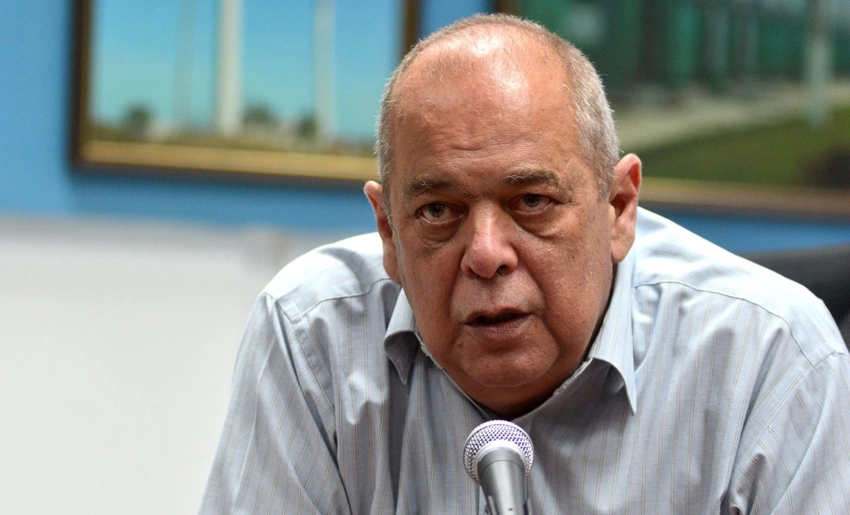
In a press conference held this Wednesday, the Minister of Energy and Mines, Vicente de la O Levy, provided an update on the “complex national electricity situation.” Which in recent weeks has seen a worsening of blackouts across the country.
Vicente de la O Levy asserted that the worsening electricity crisis is a consequence of the increased hostility of the United States government toward the island.
In his explanation, he referred to objective data that demonstrate the energy shortage. He noted that from December until just a few weeks ago, Cuba did not receive a single shipment of fuel. This, in his opinion, is “the main cause of the prolonged power outages.”
The only exception during that period was the arrival of a donation from the Russian Federation: some 100,000 tons of high-quality crude oil. However, the minister himself detailed the logistical complexity involved in utilizing it: the fuel had to be transferred. Transported to the Cienfuegos refinery, and processed to obtain fuel oil, diesel, and gasoline.
He added that this situation is compounded by the high temperatures of recent days and the outages due to breakdowns or maintenance at several generating units. Such as the Antonio Guiteras plant in Matanzas and the Lidio Ramón Pérez plant in Felton, Holguin. These factors create an extremely tense scenario, given that no more than 1,500 megawatts of installed generation capacity. Including generators and distributed generation, can be used.
Also he urged the sustainable use of renewable energy sources to avoid generation fluctuations. That could lead to a complete shutdown of the National Electric System (SEN).
According to the minister, the public’s discontent with the disruptions to the electricity service is understandable. At the same time, he affirmed that Cuban authorities are promoting the transformation of the energy matrix to meet domestic demand.
Amid this critical situation, Vicente de la O Levy dedicated significant time to explaining what the country is doing. So beyond the daily management of the blackouts, to build a sustainable solution. That solution has a name: energy transition.
In the final part of his remarks, he contextualized the current situation within the recent tightening of US measures against Cuba. Including presidential orders and decrees that seek to further restrict fuel deliveries to the island.
De la O Levy reiterated that Cuba, as a sovereign nation, has every right to manage and import its fuel. And that international oil markets also have the right to sell this resource to any sovereign nation. But the reality is different.
“The negotiations, the search, the monitoring of alternatives to get fuel to the country have not stopped,” he affirmed. At no point has the search for fuel negotiations of all kinds stopped. They haven’t stopped; negotiations continue, but under extremely different conditions of all kinds.
With information from Cubadebate, CNA, and Prensa Latina

- Holguin Health Sector Strengthens Ties with Adolescents and Youth - 1 de October de 2026
- Trump’s measures against Cuba: another step toward strangulation - 1 de October de 2026
- Cuba prioritizes respect and care for older adults - 1 de October de 2026