
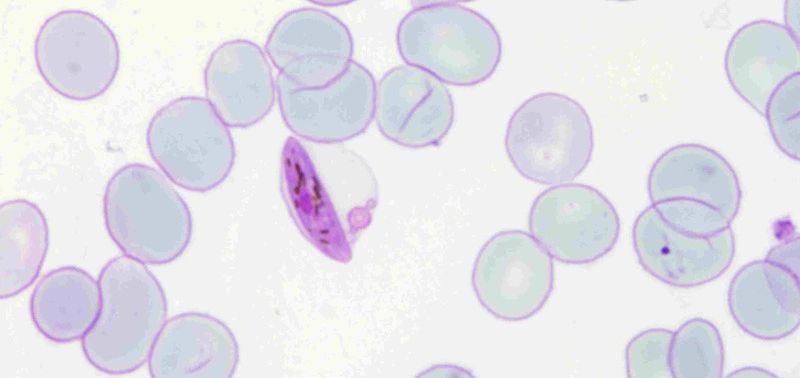
The pharmaceutical industry could benefit from the identification of a protein. Essential for the survival and transmission of the malaria parasite. Just as antimalarial drugs are most needed today.
The discovery centers on a molecule called Aurora-related kinase 1 (ARK1). According to experts from the University of Nottingham, the National Institute of Immunology in India. The University of Groningen (Netherlands), and the Francis Crick Institute.
Also the research revealed that ARK1 acts as a traffic controller. During the parasite’s unusual cell division and growth process. By deactivating ARK1 in the laboratory, the results were striking. As the parasite could no longer form proper spindles, leading to the failure of its replication.
The most important finding, according to scientists cited in the journal Nature Communications. It is that parasites lacking ARK1 could not complete their development in either the host or the mosquito. Effectively preventing disease transmission.
Unlike human cells, the malaria parasite divides and grows in a unique and atypical way. The research team discovered that ARK1 is responsible for organizing the spindle. Also the molecular machinery that breaks down genetic material to create new parasites.
Moreover this disease remains one of the world’s deadliest. Caused by Plasmodium parasites that replicate rapidly in humans and mosquitoes. Understanding how these parasites divide and multiply is crucial to halting this health crisis. Concluded the researchers, who see the study as a step forward in the production of antimalarial drugs.
With information from Prensa Latina

- Minister of Energy and Mines denounces effects of U.S. energy blockade against Cuba - 13 de October de 2026
- Living Memory Against Terrorism - 12 de October de 2026
- Boca de Sama: Where Terrorism Shattered the Calm - 12 de October de 2026