
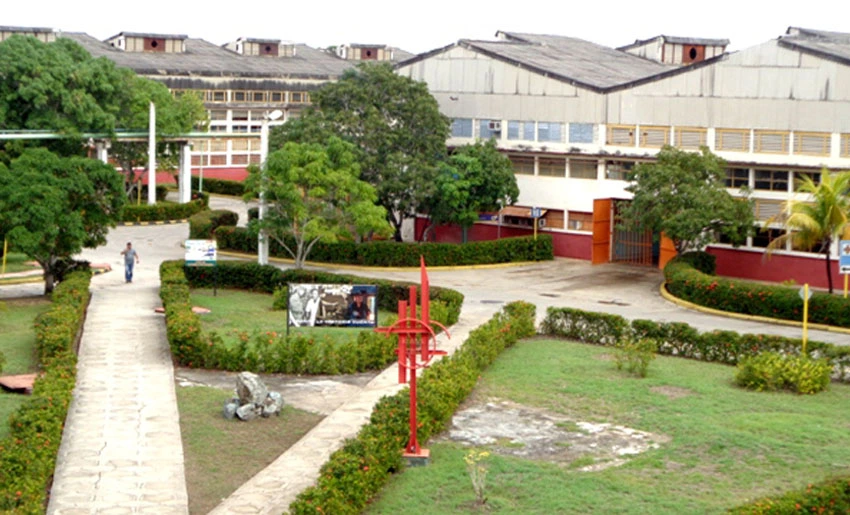
Amid severe energy restrictions and obstacles to the importation of raw materials. Challenges that define the current Cuban economic landscape, the “Heroes of July 26th” Iron and Mechanical Engineering Enterprise, located in Holguin, has turned to diversification and technical training. As a way to keep production running and retain its specialized workforce.
Traditionally focused on the manufacture of agricultural implements. The plant has recently begun assembling tractors. Expanding its product portfolio to generate revenue and meet market demands.
Moreover this transformation has required an intensive learning process for the operators. Such is the case for Wilber Pérez, one of the workers, who acquired these new skills during a technical exchange with Belarusian specialists. An experience he describes as a sharp transition, which was successfully navigated thanks to thorough preparation.
“The process has been complicated, but we are moving forward step by step. Assembling with care and precision to ensure the final product is of high quality and satisfies the customer,” the operator remarked.
Also the province’s capacity for industrial reconversion is also evident in the assembly and general mounting workshops of the iconic KTP “Sixtieth Anniversary of the October Revolution” sugarcane harvester factory. After ceasing the production of sugarcane harvesters, the entity has shifted its focus toward electromobility.
At these facilities, the first “Rutero” electric minibus is now fully completed and ready for service. With a capacity for 13 passengers, the vehicle was built entirely by local workers, engineers, and specialists. As part of a technology transfer from Sancti Spiritus.
Of an initial batch of 50 units, 40 are being assembled in Sancti Spiritus and 10 at the KTP factory in Holguin. The teams at these facilities already have the necessary kits for the first 10 vehicles. Along with the collective motivation to take on as many additional units as possible.
During an inspection visit, René Rodríguez Morales, a representative of the Minister of Transport, highlighted that this initiative aims to mitigate the complex transportation situation in Holguin. A city with nearly half a million permanent residents and thousands of transient visitors. While these electric shuttle vehicles will not solve the problem entirely, they will contribute significantly to alleviating it.
This production drive is aligned with the implementation of 176 economic measures approved by the National Assembly. Which are designed to grant greater autonomy to state-owned socialist enterprises, prioritize the workforce, and expand business opportunities.
Regarding wages, companies have begun adjusting pay based on efficiency and actual operating conditions. A strategy aimed at attracting back and retaining specialists who had previously migrated to higher-paying sectors.
Overcoming shortages of inputs has also compelled the industry to seek alternative suppliers and strengthen production linkages with other state-run entities.
For managers and workers, the current challenge lies in competing within a market-oriented economic landscape. Also where quality, timeliness, and early delivery are decisive factors.
With an industry now fully aware that falling behind is no longer an option. The experience in Holguin demonstrates how flexible management, technology transfer, and human commitment are creating new opportunities to revitalize Cuba’s state-run economy.
By: Daimy Peña Guillén

- Condemnation of the Blockade Against Cuba Ahead of the Ibero-American Summit in Madrid - 4 de November de 2026
- Holguin’s “Heroes of July 26th” Transforms Its Production Lines - 4 de November de 2026
- NASA compares The Boy events of 1997, 2015, and 2026, reaching an alarming conclusion - 3 de November de 2026