
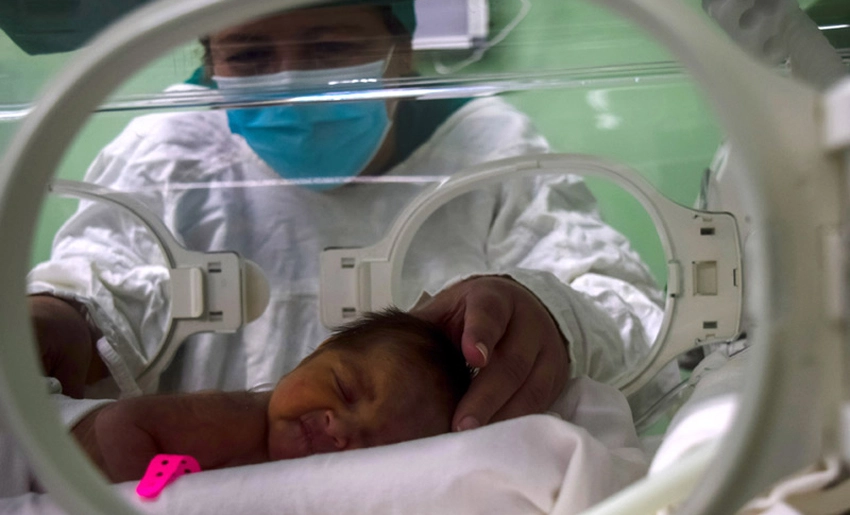
The maternity ward at the Vladimir Ilich Lenin University Teaching Hospital—one of the facilities with the highest number of annual births in the country. It is also suffering the impact of the United States’ economic, commercial, and financial blockade against Cuba.
Rubén Reynaldo Rojas, the service’s deputy director at the hospital, told the CNA that the protocol for treating critically ill expectant mothers should include around 50 types of antibiotics, yet only three are available.
The main issues involve shortages of broad-spectrum antibiotics, steroids, and spare parts. Components of U.S. origin are impossible to acquire due to the restrictions.
Furthermore the deputy director emphasized that the blockade limits the purchase of hydraulic parts for surgical tables and anesthesia machines. As well as the availability of sutures, lactated Ringer’s solution, and other supplies.
Added to this is the fuel shortage, which delays the timely arrival of products such as oxygen from Santiago de Cuba or Havana. Even though the hospital maintains a reserve for such cases, he noted.
The expert highlighted the Ministry of Public Health’s efforts to secure essential components for the care of mothers and newborns. Items acquired at high costs through third countries.
Also the Cuban healthcare sector is among the areas hardest hit by this genocidal policy. Which has been in place for over 60 years and also hinders services such as oncology, cochlear implants, and neurology.
Despite this situation, the island maintains first-world indicators regarding infant mortality rates, low birth weight, and survival rates following congenital malformations. A testament to the unwavering dedication of its professionals.
With information from CNA

- “Playing for the Argentine National Team was the best thing,” says Messi in farewell - 7 de October de 2026
- Blockade Against Cuba Affects Maternity Ward in Holguin - 7 de October de 2026
- UN High Commissioner Warns of AI Risks - 7 de October de 2026