
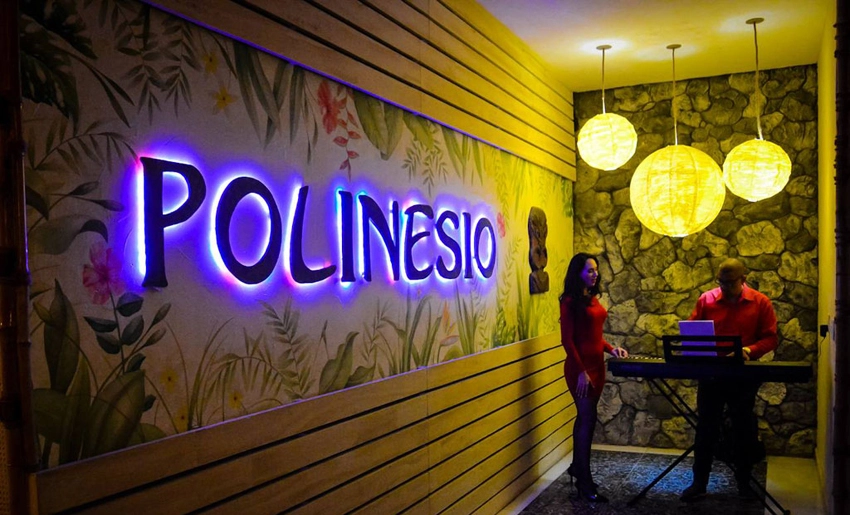
In the memories of Holguin’s culinary culture, there are names that need no introduction. One of them works at the Polinesio Restaurant.
Behind its history, its full tables, and its mystique of service, is Maritza Rodríguez Moro. A woman who has grown up alongside the establishment, becoming an essential part of its identity.
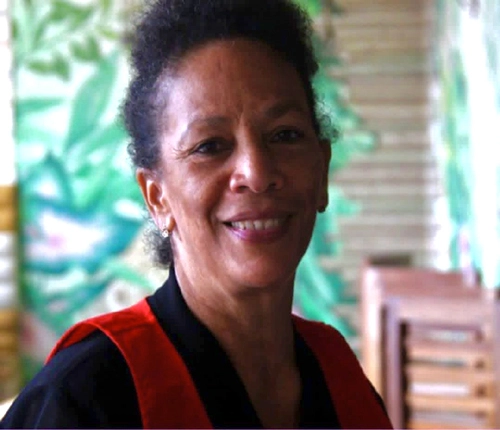
Maritza has not only witnessed the changes in the Polinesio’s design. But she has lived them firsthand. She started working there at just 17 years old, on February 16th, 1984. And hasn’t left the restaurant since, which she now considers her second home.
“I started when I was practically a teenager,” she recalls. I started as a cleaning assistant, but from the beginning they told me I could improve. They sent me to courses. I learned, and little by little I moved through various positions until I became a server.”
That direct contact with the diners shaped her vocation. She never wanted to be behind a bar. Her thing was the dining room, the people, the brief conversations between courses.
“I liked serving, I liked that connection with the customer, and that’s where I stayed,” she says matter-of-factly.
Over more than four decades, Maritza has seen the restaurant transform. In its dishes, its ambiance, its clientele. However, there is something she insists on not changing.
“The service has always been the same,” she affirms. “Since we started, we have provided attentive service. The dishes may vary, but the love and dedication remain the same.”
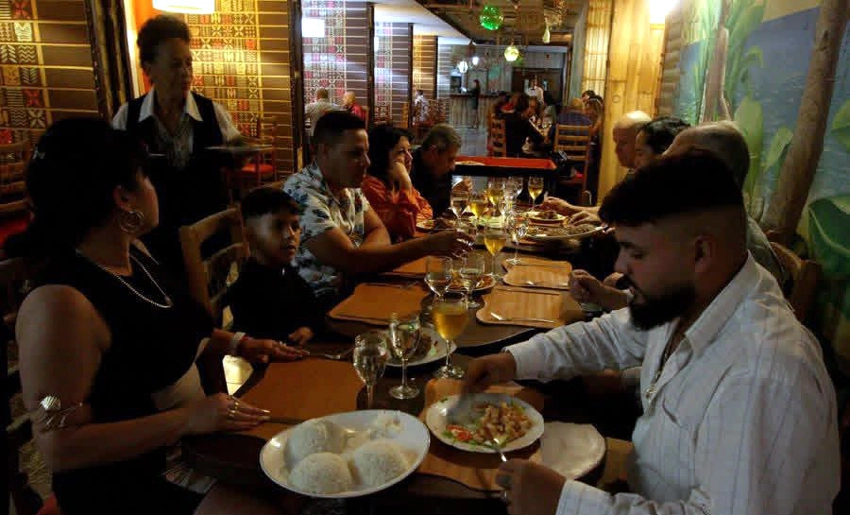
For years, El Polinesio was a unique establishment within Holguin’s culinary scene. Not only for its exotic aesthetic, but also for culinary offerings that couldn’t be found elsewhere. That uniqueness is precisely what they’re trying to revive today.
Among the most anticipated specialty dishes, by regular customers, she mentions some that are part of the restaurant’s collective memory. The famous Polynesian basket, the tocinillo del cielo (a type of flan), the Chinese butterfly fritters, the grilled meat, and the popular “chonguitos” (a type of small, sweet pastry).
“The commensals always ask for those dishes. They’re part of the restaurant’s history,” she says.
But it’s not all about the food. Maritza also recalls a time when the Polinesio was distinguished by its elegance. The dress code was part of the spectacle: women in elegant gowns, and men in guayaberas or suits.
“The restaurant looked beautiful with that well-dressed staff. We shouldn’t lose that,” she says with a touch of nostalgia.
Today, amidst a new chapter marked by reopenings and efforts to recapture the essence of the place. Maritza’s expectations remain unchanged: to see the restaurant full again and customers satisfied.
“I want it to have the same flow of customers as before. Also to be packed, and for everyone to leave happy,” she affirms.
She recently received the Medal for over 10 years of service. Awarded by the Union of Workers in Commerce, Gastronomy, and Services. The recognition comes as a culmination of a career marked by loyalty and dedication.
At almost sixty years old, with more than 40 dedicated to Polinesio, Maritza doesn’t speak of retirement or rest. She speaks of continuity, and with every service, she continues to strive for the same thing that made her stay from day one: the love of serving.
By: Miguel David Bruzón Hernández

- Cuba: Private and State Sectors Advance with New Regulations - 4 de September de 2026
- Marco Rubio Signs Weekly Round of Measures Against Cuba - 4 de September de 2026
- Yamarex Garments Makes Progress in Finishing School Uniforms - 4 de September de 2026