
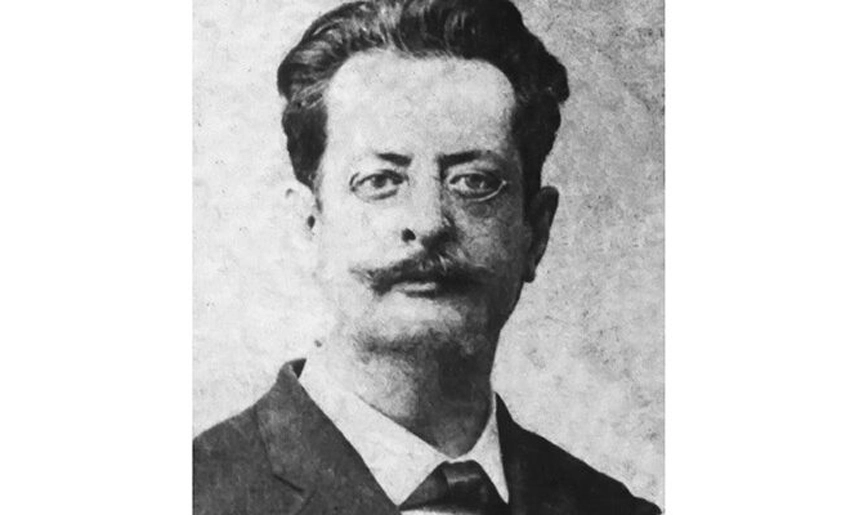
There was no national mourning, no procession of funeral wreaths, no speeches at the Capitol. Instead, a handful of men gathered in a modest room in Vedado to bid farewell to the man who was, perhaps, José Martí’s most faithful friend. On June 13th, 1910, Fermín Valdés Domínguez ceased walking the streets he loved so much. With him, one of the last lights of the generation that dreamed of a free and just Cuba was extinguished.
Born in Havana into a well-to-do family with pro-independence ideals. Fermín possessed from a young age the gift of quiet loyalty. It was under the tutelage of Rafael María de Mendive that his destiny became forever intertwined with that of a thin boy with fiery eyes and a precocious eloquence: José Julián Martí Pérez. Together they were outraged by the injustice of colonialism, and together, at the age of 17, they paid with imprisonment for the crime of finding an accusatory letter against a comrade.
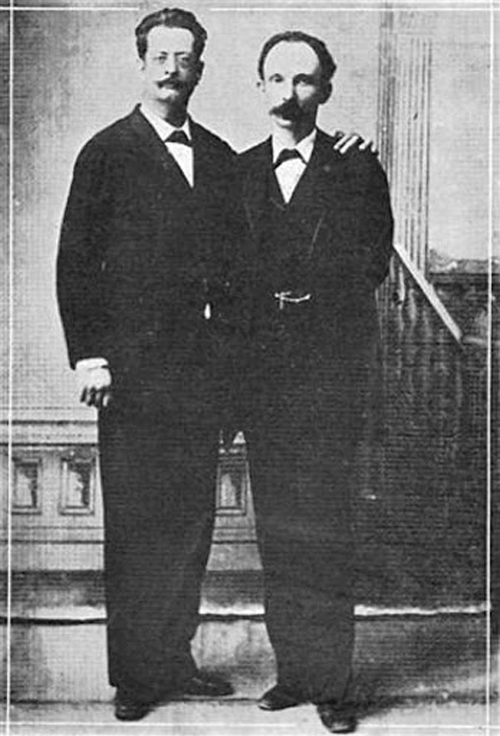
But history, sometimes unjust, has relegated Valdés Domínguez to the background. While Martí’s light grew to become a resplendent star, Fermín chose the shadows. A doctor in body and soul, he dedicated his medical skills to the poor, the Mambí soldiers, and the dispossessed. During the Ten Years’ War, and later in the War of 1895. He tended to the wounded, stopped bleeding, and relieved fevers. While the Apostle ignited hearts with his words. There was no resentment or rivalry.
His greatest legacy, however, lies not in his mortal remains but in the yellowed paper he guarded with the zeal of a librarian. Upon Martí’s death in Dos Ríos on May 19th, 1895, Fermín became the guardian of his memory. It was he who, along with Gonzalo de Quesada, organized, transcribed, and saved from oblivion thousands of the hero’s letters, drafts, and verses. And it was he who, with infinite sorrow, wrote that beautiful and heartbreaking letter to Martí’s mother, Doña Leonor Pérez, recounting the last days of her absent son.
During the republican years, while some fought over the Apostle’s remains or lucrative positions, Fermín withdrew to his practice and his books. He rejected ministerial posts, ambassadorships, and honors. He preferred the small, everyday acts of consistency. Tending to his neighbor, teaching underprivileged youth, quietly recalling the verses Martí had dedicated to him in political prison. He needed no statues; his statue was the friendship he had forged over four decades.
With his passing, Cuba lost a man from another century. One who could have lived off the glory of public acclaim but chose the nobility of unsung work. The morning papers barely dedicated a few lines to the event. But those who know, those who have read the campaign notebooks or perused Martí’s letters. Understand that without Fermín Valdés Domínguez, Martí’s figure would be less human, less warm, less believable.
His example remains: that of the friend who did not betray. The doctor who did not bargain with suffering, the patriot who needed no speeches. His written testimony remains. And above all, there remains that image of two young men from Havana, hand in hand, facing an uncertain future. One would die with his boots on, a legend. The other departed in silence, with no sound but the affection of a few. Perhaps that was his wish. For there are loyalties that can only be measured in the shadows. And Fermín Valdés Domínguez was, until his last breath, the loyal shadow of that immense sun.

- Social Media: A Mirror of Our Humanity - 30 de June de 2026
- The Legacy of Vilma Espín, 19 Years Since Her Passing - 20 de June de 2026
- Aging with Dignity: A Call to Awareness Regarding Elder Abuse - 15 de June de 2026