
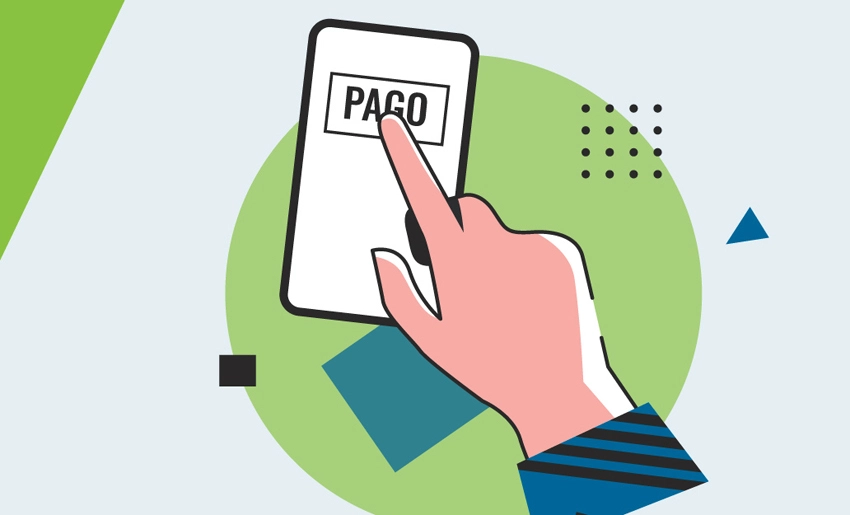
Illness never gives warning, and when it strikes, it not only cripples the patient’s health but also the entire family’s finances. In Cuba, where public healthcare is a championed and free achievement of the Revolution. The true cost of being sick today is paid outside the hospital wards. It’s paid on the sidewalks, in doorways, and at the surrounding kiosks. Where the pockets of working Cubans suffer a constant drain. An ordeal when banking fails.
A hospital stay—long or short—disrupts any household planning. The dilemma is exacerbated for family members and caregivers. Amidst physical and emotional exhaustion, must provide juices, snacks, and meals to keep going and, often, to supplement the patient’s own diet.
It is undeniable that the proliferation of micro, small, and medium-sized enterprises (MSMEs) and self-employed workers has filled a necessary gap in supply. However, what should have been a relief has turned into a financial obstacle course. Due to a resistance as illegal as it is blatant: the refusal of electronic payments.
A snapshot of the deception in Holguin
The scene outside the Lucía Íñiguez Landín Clinical Surgical Hospital, in the provincial capital of Holguin, perfectly illustrates this contradiction. The visual design complies with the norm: the kiosks proudly display their Transfermóvil or EnZona QR codes. It would seem that modernity and access to banking have triumphed. But the charade collapses when the customer, cell phone in hand, asks: “Can I pay by transfer?” The almost unanimous and rehearsed answer is a resounding “no.”
The excuses range from the supposed “platform down” to lack of connection, to the blatant demand for cash. For a family member whose stay exceeds five days, this refusal is not a mere commercial setback. It is a direct attack on psychological and economic stability. And by extension, a hindrance to the recovery of the patient waiting for that juice or snack.
Banking is not a digital whim; it is a state policy designed to organize national finances and protect the consumer. Evading it is not “local cunning,” it is a violation of the people’s rights.
Also this issue is not new. It has debated, analyzed, and criticized in numerous interventions by the highest levels of the Government and the Party in the province of Holguin. Directives have been issued, appeals to conscience have been made, and audits have been announced. However, the reality at the doors of the “Lucía Íñiguez” hospital demonstrates that the measures are still not being enforced with the rigor that the moment demands.
What good is the design of an economic policy if the control mechanism lacks teeth? The lack of timely enforcement and exemplary sanctions generates a sense of impunity. Where the merchant imposes his rules and the ordinary citizen is left completely defenseless.
The question echoing in hospital corridors and in kiosk lines remains the same and brooks no further delay: How long will the working population, those who live on state salaries, have to continue suffering these distortions?
We can no longer speak blithely about financial inclusion in assemblies and meetings while the everyday economy on the street demonstrates that the system. As it is being apply (or allow to be apply), does not work for the majority. Cash cannot continue to be a fetish for speculation by a few at the expense of workers’ sacrifice.
Enforcing the law in hospital settings is not just an economic task. It is an act of basic human and revolutionary sensitivity. Those who profit from a family’s need in the midst of illness, while also violating the country’s regulations, are not engaging in commerce: they are abusing their power. It is up to local authorities to move from words to decisive action before the cost of their insensitivity becomes unbearable.
By: Daimy Peña Guillén

- Russia registers Cuban medicine for tumor treatment - 20 de October de 2026
- Visual Arts Exhibition Honors Fidel in Holguin - 20 de October de 2026
- Holguin Electric Utility Takes On Transformer Repairs - 20 de October de 2026