
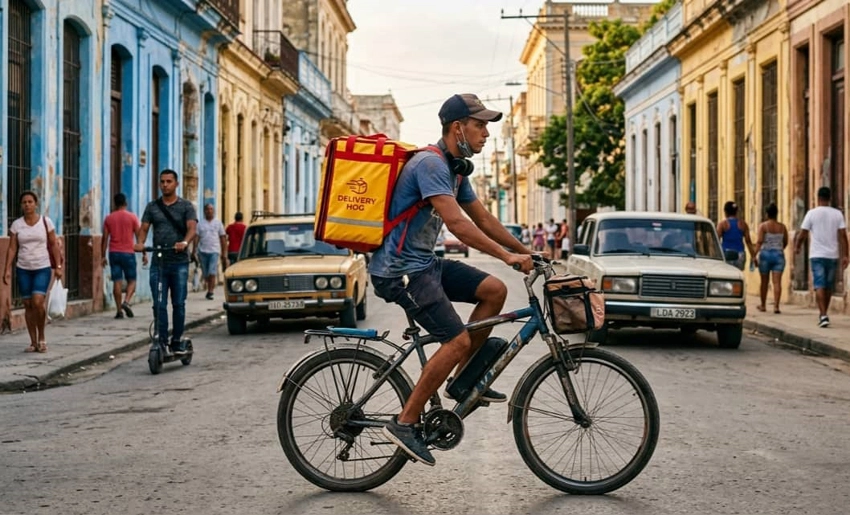
The face of our streets has changed. A few years ago, shopping inevitably meant the ordeal of walking blocks under the sun. Standing in endless lines, or visiting several stores hoping to “catch” what was needed. Today, a new dynamic is gaining ground in daily life in Cuba: home delivery.
What began as a tentative alternative or an occasional luxury has firmly established itself in everyday life. Today, a considerable portion of the population prefers. Whenever their budget and resources allow—to click, make a call, or send a WhatsApp message rather than venture out. The phenomenon transcends mere convenience. Amid the profound crisis we are experiencing, staying home and waiting for the product has become a strategy for emotional survival and time optimization. Going out is exhausting and draining; home delivery, on the other hand, simplifies daily life.
However, behind that box of food, that package of clothing. Or that essential item that arrives intact at your doorstep. There’s a story of effort that often goes unseen. It’s time to focus on the faces behind this logistics: the delivery workers.
We often see them speeding by and assume their job is easy, but the reality is quite different. There are those who travel by motorcycle, dodging potholes and navigating traffic. Even if they use electric motorcycles or battery-powered bikes—a vital alternative in the face of fuel shortages—. Keeping those vehicles running is a feat. Batteries run out, tires wear down, and spare parts reach astronomical prices in today’s market. Each trip wears down a means of transport that is, at the same time, their only source of income.
And then there are the most vulnerable and tenacious: those who travel by bicycle. Those who, braving the high temperatures of our climate and the steep inclines of the urban landscape. Deliver orders powered solely by the strength of their legs. A tremendous physical effort that deserves profound respect and fair compensation. Amidst current hardships, cycling kilometers to fulfill a customer’s order is a job of tremendous dignity.
Home delivery is here to stay because it fills a void, connects supply with need, and eases the burden on households. But for this system to function fairly, society must learn to value those who sustain it. They are not just delivery drivers. They are workers who bear the physical and material strain and the risks of the streets so that others can have a break. The next time the doorbell rings and we receive our order. Let’s not forget that what reaches our hands is propelled by the sweat, the pedaling, and the dedication of someone who deserves much more than a simple “thank you.”
By: Alvaro Raúl Suárez Leyva

- Social transformations analyzed during meeting with Minister of Labor in Holguin - 9 de October de 2026
- Tradition and Color at Iberoart Fair in Holguin - 9 de October de 2026
- Japanese delegation inspects startup of Caletones desalination plant - 9 de October de 2026