
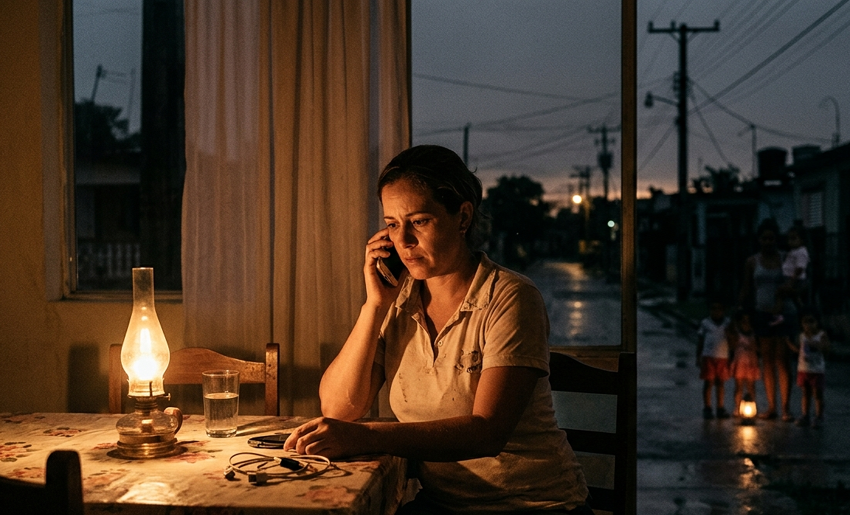
In the 21st century, talking about long-distance communication is not referring to a technological luxury or social media entertainment. It is a vital infrastructure for human survival. In today’s Cuba, however, the energy crisis, exacerbated by the United States’ economic harassment of the island. It has brought with it a peripheral but equally devastating shadow: the communications blackout.
When the electricity goes out for endless hours, it takes with it much more than fresh air or food refrigeration. It also takes away the possibility of knowing if our loved ones are safe.
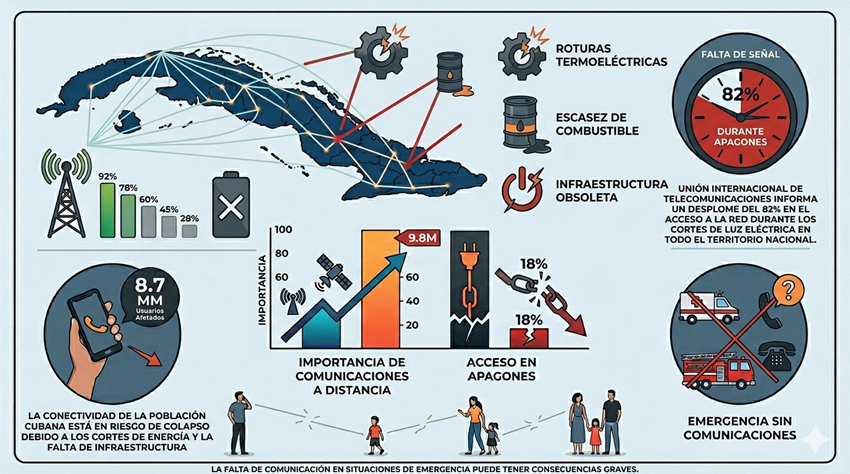
The impact on daily life is stark. The country’s mobile phone base stations depend, inevitably, on electricity, which is currently at record lows. When they are deprived of power, coverage collapses. The result is a deathly silence that fractures family ties just when geographical distance. With emigration scattering Cuban families across the globe. It makes daily contact the only balm against uncertainty.
Entire families spend days in absolute isolation. Unable to send a “I’m okay” message or receive moral or financial support from their loved ones abroad.
Moreover the real danger of this scenario lies not in the daily lack of communication, but in their vulnerability in emergencies. What happens when a household accident occurs in the middle of the night and the phone signal bars are at zero? How do you report a heart attack, premature birth, or a fire if landlines and cell phones are down?
The lack of connectivity transforms unforeseen health or safety emergencies into potential life-or-death situations. Society is left helpless, deprived of the most basic safety net that modernity should guarantee: the ability to call for help.
So this forced isolation deeply affects the collective psyche. Living with the constant anxiety of not knowing what’s happening on the other end of the phone generates a silent dread that erodes the social fabric. It disconnects us from reality, traps us in an informational limbo. And paralyzes work, education, and commerce, which today depend entirely on digital technology.
Communication is the nervous system of any modern society. The US oil embargo currently deprives Cubans of it. Condemning them to an isolation that not only sets them back but also leaves them vulnerable.
Electricity may be unavailable, but the guarantee of a means of communication in emergencies and the right to stay connected with loved ones should never be a variable that can be dispensed with.
By: Álvaro Raúl Suárez Leyva

- Holguin Honors Victims of the Barbados Bombing - 6 de October de 2026
- Gratitude Project: A Community Support Initiative in Antilla (+ Photos) - 6 de October de 2026
- PNR in Holguin Tackles Criminal Activity - 6 de October de 2026