
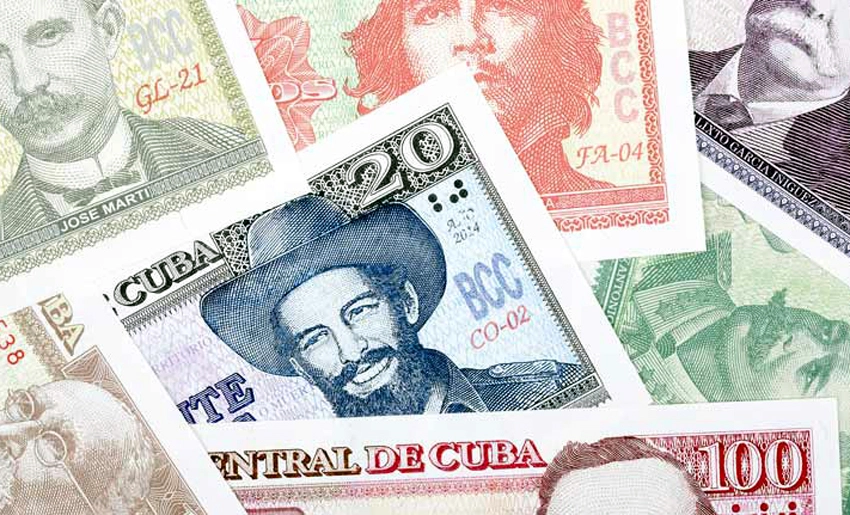
The daily life of Holguin residents has become an obstacle course where household finances face a complicated reality day after day. Constant power outages, the economic crisis, monetary inflation, and the growing informal market are daily realities.
To understand what is happening, we must describe the situation. In the main streets of Holguin, specifically in areas like Real Street in the Pueblo Nuevo neighborhood, buying food not only hits the wallet hard due to high prices. Also now diminishes the purchasing power and dignity of many due to mistreatment and social indiscipline.
In this area, an open-air parallel market has taken root on both sides of the street. There, dozens of people offer food and personal hygiene products. Most, as any regular passerby will recognize, lack licenses or legal permits to sell goods. It is reselling in its purest form, tolerated and even invisible.
But let’s put this into context. An ordinary citizen, after navigating ATM lines, withdrawal limits. And digital banking glitches, manages to withdraw their salary. But the relief is short-lived: the bills they receive are, increasingly, 20, 50, and 100 peso notes. Low denominations, yes, but legal tender. With that money in hand, they leave, convinced they can at least buy a package of chicken.
However, their satisfaction is short-lived; their money is not accepted. With the justification that small and medium-sized businesses (SMEs) do not accept bills of denominations lower than 100 pesos.
First of all, it is alarming how the rejection of low-denomination bills by private and illegal vendors has become normalized. Although the Central Bank of Cuba guarantees the validity of all currency in circulation. In practice, 20, 50, and 100 peso bills are viewed with disdain in the informal market. This arbitrary system leaves workers, who receive their salaries on a digital card. And then face obstacles in accessing them, completely defenseless.
Furthermore, the problem transcends the economic sphere, entering the realm of ethical coexistence.
One must ask: Where are the authorities whose social responsibility it is to ensure and enforce the laws in Holguin? Isn’t it their duty to verify that street vendors have the required permits? Shouldn’t they be monitoring prices to prevent price gouging and ensuring that vendors don’t arbitrarily decide which bills to accept?
How can we understand that the National Bank of Cuba keeps 20, 50, and 100 peso bills in circulation. So yet merchants—both formal and informal—reject them? The bank cannot wash its hands of this. If its currency lacks real acceptance in everyday transactions. Then the Cuban financial system is fundamentally failing.
Meanwhile, citizens are trapped: they can’t pay by card because online banking is a labyrinth. And they can’t pay with cash either because the bills they receive are “undesirable” to illegal vendors.
The economic blockade imposed by the United States exacerbates the crisis, but it doesn’t explain everything. Inflation, shortages, and an increasingly weakened economy form the backdrop.
Banking is a necessary step toward modernization, but as long as cash remains the primary means of exchange on the street. Also the informal market cannot be allowed to dictate its own financial rules. The State has a responsibility to protect ordinary citizens from these abuses that occur in broad daylight.
Cubans already live a daily ordeal. They don’t need unlicensed resellers to decide which bills are valid and which are not. Ultimately, the most profound question is not just what is happening in Holguin, but how long citizens will have to navigate this situation alone. Because if the cycle continues with aggression and rejected banknotes. All that grows is the vacuum of authority, the lack of protection, and a loneliness that hurts more than hunger.
By: Daimy Peña Guillén

- Putin states that BRICS has generated over 40 percent of global GDP - 12 de September de 2026
- Between the wind of the tenths and bottled art - 12 de September de 2026
- ETECSA Holguin Hosts Science and Technology Forum - 12 de September de 2026