
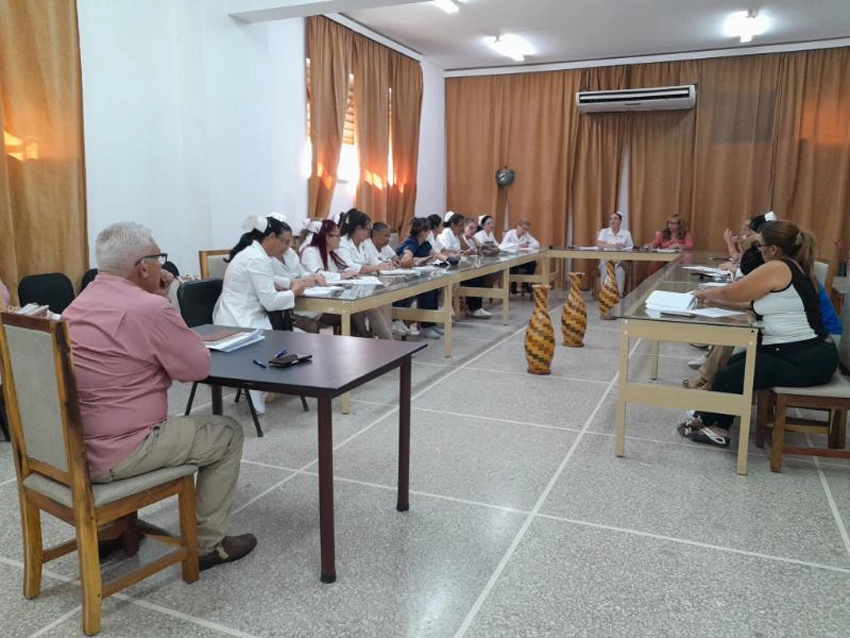
Medical and nursing staff face numerous obstacles daily that hinder their work. The current energy crisis in the country has had a significant impact on important processes in the healthcare sector. Such as the sterilization of instruments and other patient care activities.
Elizabeth Chacón Hernández, Master of Science in Comprehensive Child Care She explains that, given this situation, nursing staff are constantly seeking strategies and alternatives through training. “As part of the training and updates, our goal is to address the energy crisis,” she stated.
During the month of March, an update was held that brought together nurses from different levels of care. As well as heads of sterilization centers, epidemiologists, and heads of pediatric and adult intensive care units. The purpose of this meeting was to reach a consensus on the disinfection policy. That will be implemented in the healthcare system.
“With the tightening of the blockade and the energy crisis, the resources needed for safe and effective sterilization are becoming increasingly scarce,” Chacón commented. The difficulty in acquiring essential, imported decontaminants and disinfectants has further complicated the process. “Today, products like chlorine bleach, hypochlorite, and detergents are hard to obtain because of the blockade,” she added.
Furthermore the situation is even more complex in areas like Neonatology. Also where a critically ill, ventilated patient requires constant decontamination of vital equipment. Such as incubators, ventilators, the tubing connecting that equipment to the patient, infusion syringes, and infusion pumps. “All of this requires a decontamination process that has become more expensive in the country,” Chacón explained. Despite the limitations, the staff is looking for alternatives to ensure safe patient care.
These actions complement others taking place as part of the “April for Pediatrics” campaign. Which promotes various activities focused on maternal and child health. In this context, the Head of the Provincial Nursing Section of the General Directorate of Health highlighted other recent updates. Including training at the March 8th Maternity Home on the use of Magnesium Sulfate. A medication used in the treatment of preeclampsia and eclampsia.
“Previously, this product was only administered in secondary care settings, but thanks to the training provided to the institution’s professionals. So they can now begin administering it at the maternity home. This reduces risks for both the mother and the baby,” she concluded. Advance preparation ensures that, when labor begins, the baby is adequately mature. Significantly improving the quality of the process.
Furthermore, training was conducted on newborn care in the community to equip healthcare professionals. Including general practitioners and nurses, with the necessary knowledge to receive these babies. And provide the mother with the care she needs, should an out-of-hospital delivery become necessary.
All these activities are part of the Ministry of Public Health’s strategic plan for the Maternal and Child Health Program. Aimed at achieving a better infant mortality rate for children under one year old and a lower maternal mortality rate.
Despite current challenges, the commitment of nursing staff to providing quality care to their patients is the essential purpose of these actions.

- Warnings Issued Regarding Risks of “Shaka Mixer Energy Vodka” Consumption Among Youth - 19 de October de 2026
- Health authorities issue alert regarding the monitoring of fever in children under two years of age - 15 de October de 2026
- Lenin Hospital Announces Scientific Symposium in Honor of Its 61st Anniversary - 15 de October de 2026