
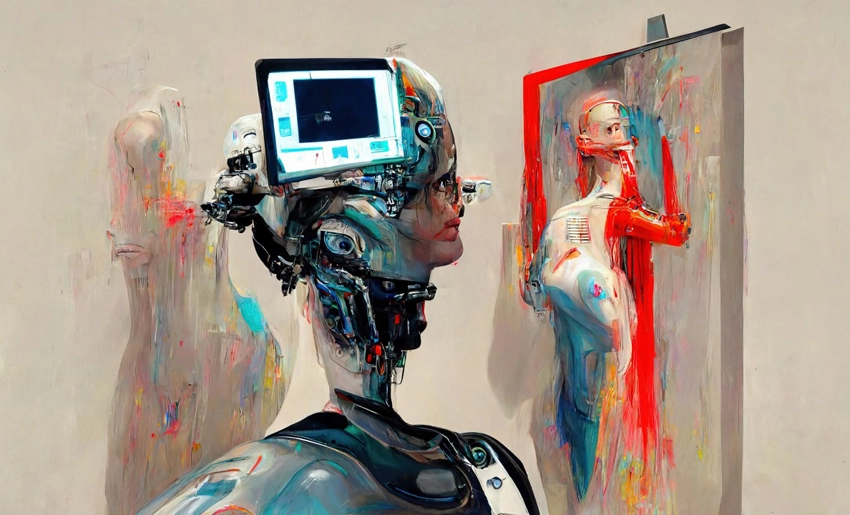
Can a machine create art or merely imitate what already exists? The irruption of Artificial Intelligence (AI) into the art world has blurred the lines between author, tool, and artwork. Forcing us to rethink what we truly understand by creation.
So-called “AI-generated art” consists of images, texts, music, or other expressions produced by algorithms trained on vast amounts of data. These systems analyze patterns, styles, and previous references. To generate new pieces based on human instructions. In other words, AI doesn’t “imagine” in the human sense, but rather reorganizes and combines existing information in novel ways.
Herein lies the point of contention: is this creation or imitation? From a technical perspective, it could be considered a form of advanced recreation. Since the machine relies on previous works to generate content. However, it also produces original results that didn’t exist before. Which opens the door to recognizing a certain degree of assisted creativity.
The key difference lies in intention and experience. While the human artist creates from emotion, lived experience, and interpretation of the world. Artificial intelligence operates from data and probabilities.
Moreover the impact on contemporary art is evident. On the one hand, AI has democratized artistic production. Allowing people without technical training to easily generate images or compositions. On the other, it has raised concerns about authenticity. The value of the creative process, and content saturation. When creation becomes instantaneous, the risk is that art loses depth and becomes just another fast-moving consumer product.
For artists who adhere to traditional principles, the challenge is twofold. They must not only compete with a tool that produces in seconds, but also defend the value of craftsmanship. The time invested, and the human experience behind each work.
However, there are also those who have chosen to integrate Artificial Intelligence as another resource. Expanding their creative possibilities instead of seeing it as a threat.
More than a definitive answer, the debate presents a necessary tension. AI doesn’t replace the artist, but it does redefine their role. In this new scenario, perhaps the question isn’t whether machines can create, but what it means for human beings today to continue creating.
By: Indira Vania López Samé
- When Screens Sell the Wrong Path - 18 de October de 2026
- Russia Delivers 750 Tons of Vegetable Oil to Cuba - 17 de October de 2026
- Neurotic Anonymous Shows That Cinema in Cuba Is Alive and Shining - 17 de October de 2026