
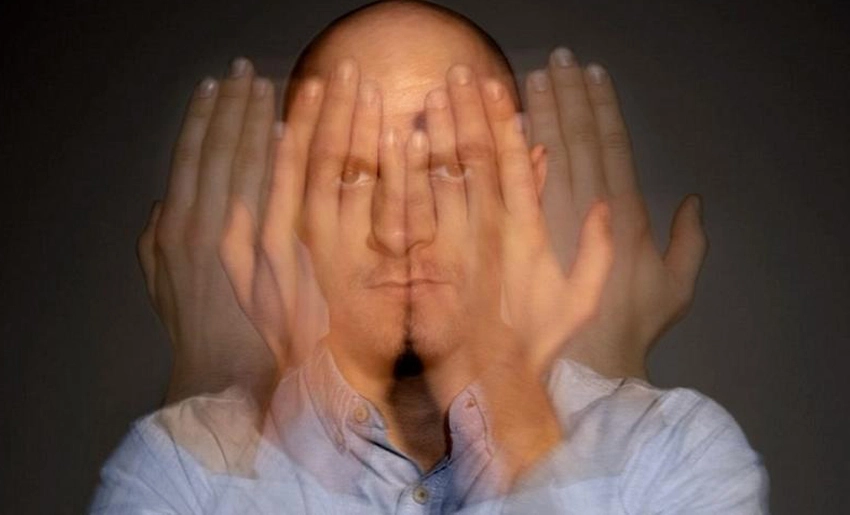
Let’s talk about psychosis. I know the word itself can be intimidating, and I also know that not everyone fully understands what it means. In my clinical practice, when I use this term for the first time, I can feel the atmosphere grow heavy. Often, the conversation comes to a halt, and I see a reflection of fear—fear of the unknown—in the eyes of the patient or their family members.
It is a fear colored by memories of films that portray madness as something inherently violent and unpredictable. That is why, today, I invite you to set aside your preconceptions. Let’s discuss psychosis for what it truly is: a complex, deeply human clinical phenomenon. One that has been part of the human experience for as long as we have records of our existence.
A bit of history to understand the present
To grasp what psychosis is today, we must look to the past. The term, as we know it, did not emerge yesterday. It was coined in the 19th century, yet it draws from much older roots. The *insania* of the Romans, the *alienation* described by French *alienistes*, or the *dementia* of the ancient Greeks. For a long time, psychiatry grappled with a fundamental question: was psychosis a single disease appearing in various guises (the so-called “unitary psychosis”), or was it a collection of distinct disorders? This is no trivial debate. Figures like Kraepelin sought to distinguish schizophrenia from manic-depressive psychosis.
While we now know that the reality is far more nuanced and complex, that original uncertainty persists within our diagnostic manuals. What we have learned is that psychosis is not an “all-or-nothing” condition. But rather a spectrum—one defined by the loss of that anchor we call reality. In clinical terms, psychosis is defined as a mental state characterized by a loss of contact with reality. But what does this look like in everyday life? Imagine that your brain suddenly begins to interpret the world in a way that others do not share. Psychiatrists assess this through five major symptomatic domains:
–Hallucinations: Perceiving things that are not actually there. The most common form is hearing voices (auditory hallucinations). But it can also involve seeing things (visual hallucinations) or feeling sensations on the skin (tactile hallucinations).
–Delusions: Firm, false beliefs that do not correspond to reality and remain unchanged despite evidence to the contrary. This is not merely “believing in something unlikely”. It is an unshakable conviction—for example, being convinced that someone is following you, that the television is sending you secret messages. Or that certain people intend to harm you and are therefore watching or pursuing you.
–Disorganized thinking: In many cases, speech becomes incoherent, jumping from one topic to another without any logical connection. It is as if the thread of thought has been severed.
–Disorganized or abnormal behavior: This ranges from catatonia—remaining motionless or assuming strange postures—to agitation that appears to have no clear purpose.
–Negative symptoms: In this category, nothing is “added”; rather, things are “taken away.” This includes a lack of motivation, affective flattening (a failure to express emotions). Apathy, impoverished speech, social withdrawal, a loss of interests and drive.
Making a diagnosis is not a quick process. It requires time, observation, and, above all, the exclusion of other potential causes. We cannot label someone as psychotic without first ensuring that the condition is not the result of substance use. A neurological issue, or a manic phase of bipolar disorder. It is a precise exercise that requires patience.
Not all psychoses are the same. The progression of symptoms over time is key to a differential diagnosis: Brief psychotic disorder: Think of it as a “short circuit.” Symptoms appear suddenly and disappear in less than a month, often following a stressful life event.
-Schizophreniform disorder: Similar to schizophrenia, but shorter in duration (lasting between one and six months). To put it simply, some describe it as “short-term schizophrenia.”
-Schizophrenia: This is the most well-known and chronic disorder. It requires the presence of symptoms for at least six months and typically leads to a deterioration in personality and social or occupational functioning.
-Delusional disorder: Here, the focus is on a false belief (sometimes a plausible one, such as the suspicion that one’s partner is unfaithful) that persists for at least a month. But without the hallucinations or disorganization characteristic of schizophrenia. The individual may otherwise function quite well outside of the scope of their delusion.
-Schizoaffective disorder: This is a hybrid condition. It involves symptoms of schizophrenia alongside distinct episodes of depression or mania.
Also we must consider secondary psychoses: those induced by substances (such as cannabis or stimulants) or by medical conditions (such as tumors, epilepsy, or infections).
Furthermore, we must consider secondary psychoses: those induced by substances (such as cannabis or stimulants) or by medical conditions (tumors, epilepsy, infections).

A window into the experience: the case of Javier
Let me share a story with you—one that, while fictional in its specific details, accurately reflects how psychosis can manifest. Javier is 23 years old; he arrived at my office accompanied by his mother. She was visibly distressed, while he remained silent and suspicious. According to his mother, Javier had been “fading away” for several months. He stopped seeing his friends, spent hours locked in his room, and spoke less and less.
What prompted the consultation was an incident that occurred a week earlier: Javier began claiming that the neighbors living upstairs were “sending him messages through thuds on the floor.” His mother tried to reason with him, pointing out that these were merely the typical sounds of a household. But Javier became increasingly irritable and remained convinced of his belief. He even went so far as to seal the gaps around his door with electrical tape, fearing that people were “reading his thoughts” through them.
During our interview, Javier spoke with wariness. He insisted that he was not crazy and that he “knew what he was hearing.” As we talked, I noticed him occasionally turning his head toward the window, as if listening to something I could not perceive. When he did speak, his thoughts jumped from one topic to another without any apparent connection. There was no aggression in him—only a profound sense of fear and immense loneliness.
The diagnosis was a brief psychotic disorder, likely triggered by a period of academic stress and social isolation. What happened to Javier is an example of how psychosis does not always manifest as the violent madness often depicted in films. It frequently begins quietly, with a withdrawal that might be mistaken for shyness, and a reinterpretation of the world that feels absolutely real to the person experiencing it. The adhesive tape on the door was not an act of aggression. But a desperate attempt to protect the privacy of his own mind. This is the human face of psychosis: the suffering of a mind that has lost its anchor to our shared reality.

Management: A Collaborative Path
Now, let’s address the most pressing question: is there a treatment? The answer is a resounding yes. The management of psychosis has evolved significantly; we are no longer in the era of asylums. The goal today is recovery and integration into the community. Helping the affected individual return to their everyday life.
During the acute phase, the cornerstone of treatment is the use of antipsychotic medication. These drugs do not simply “put the person to sleep”; rather, they block the dopaminergic hyperactivity that underlies “positive” symptoms. Such as delusions and hallucinations, allowing the mind to regain its clarity. It is crucial for the patient to understand that treatment is not a form of punishment. But a chemical tool that enables the brain to process reality once again, free from interference.
However, medication is not the whole story. Scientific evidence is clear: psychotherapy helps individuals understand their condition, manage stress, and recognize the early warning signs of a potential relapse. Family involvement is also vital. It is not about assigning blame, but rather about educating the family. So they can understand what their loved one is going through and learn how to provide support without being overprotective or stigmatizing.
Recovery is not a linear process; there will be good days and bad days. As a psychiatrist, my role goes beyond simply prescribing medication. It involves listening, providing psychoeducation, and offering guidance throughout the process of rebuilding the self. Because our ultimate goal is to help the individual regain control over their own life.

- Psychosis: A Frightening Term, a Humanizing Reality - 24 de November de 2026
- Major Depression: A ‘Silent Companion’ That Doesn’t Always Come with Tears or Obvious Sadness - 9 de November de 2026
- Aging well: the art of adding years with health, meaning and joy - 19 de October de 2026