
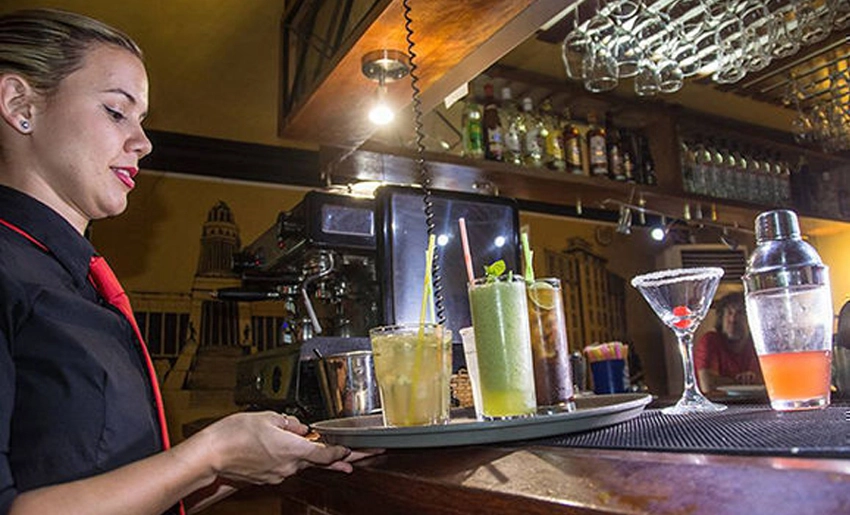
The private sector and some state-run entities continue to post job advertisements seeking young women who are “good-looking” and under the age of 30 for customer-facing roles. This practice, which has been documented by journalistic investigations for years. It stands in direct contradiction to the current Labor Code.
A study by SEMlac on job openings in Cuba found a recurring theme across classifieds websites: the demand for a “young woman with a good appearance.” The analysis noted that for customer-service positions in cafés and private businesses, employers specifically sought women “under the age of 30.”
Another investigation, published by IPS Cuba, documented that websites and both private and state-run enterprises in Havana frequently posted “sexist and racist job postings that violate the current Labor Code.” One cited example was a recruitment notice from TRD Caribe. Which required applicants to be under 35, possess a “suitable presence and good appearance,” and meet specific height requirements based on their gender.
The Cuban Labor Code itself—as noted by attorney Yamila González in that report—prohibits discriminatory criteria in hiring based on “skin color, gender, religious beliefs, or sexual orientation.” The law exists; the issue lies in its enforcement within this emerging sector.
When age does not serve as an entry filter, it functions as a determinant of one’s professional destination. Evidence points to clear occupational segregation: older women—or those who do not fit the “young and good-looking” mold—tend to be relegated to roles in areas such as housekeeping, kitchen work, cleaning, and organizational tasks.
Research on self-employment in Cuba has already noted that, in certain sectors. Such as cafeterias, restaurants, and bars—discriminatory attitudes are emerging toward women over the age of 30, Black women, and those who do not conform to the beauty standards dictated by a *sexist* culture.
The result is a twofold form of segmentation: on one hand, women are excluded from the sector. On the other, when they are included, they are relegated to service or support roles. Rather than management positions or roles that involve direct interaction with the public.
Moreover this dynamic reflects what economist Teresa Lara has accurately described as the “reproduction of the ‘woman-as-object’ assumption, deeply rooted in *sexist* culture.” This assumption has tangible, material consequences: women end up in positions with less visibility, a more limited capacity to generate their own income, and fewer opportunities for advancement.
The fact that informality in the private sector exceeds 20 percent further exacerbates these issues. A woman working in the kitchen or in cleaning services for a small or medium-sized enterprise (SME)—without a formal contract—not only earns lower wages. But also fails to accrue social security benefits, lacks maternity protection, and has no recourse to demand basic working conditions.
Previous research by SEMlac documented that many young women were working in the private sector without contracts. Rendering them “the most vulnerable group within the self-employed workforce.”
The new Labor Code, in effect since September 2026, expands protections against discrimination and prioritizes the hiring of young people and women. However, as one worker noted in an interview with IPS Cuba, the law “means nothing” if it is not effectively enforced. The gap between policy and practice is, perhaps, the weakest link in the entire chain.
Therefore, it is not enough to simply ask how many women are entering the private sector. We must also ask under what conditions they enter, for what types of positions, at what ages, and with what level of legal protection. The documented pattern—young women in customer-facing roles, older women in cleaning and cooking positions, all set against a backdrop of informality. It suggests that this emerging sector is not correcting the gender gaps found in the state sector; rather, it is reconfiguring them.
By: Daimy Peña Guillén

- The Age Filter: “Young Woman” as a Requirement - 24 de November de 2026
- Velázquez Reviews Belgian-Cuban Scientific Cooperation on Energy Solutions - 24 de November de 2026
- WHO General Director Has Busy Agenda in Cuba - 23 de November de 2026