
Faced with the urgent need to modernize infrastructure and alleviate persistent limitations in the electricity supply. The academic community in eastern Cuba is currently prioritizing applied science as a driver for everyday transformation.
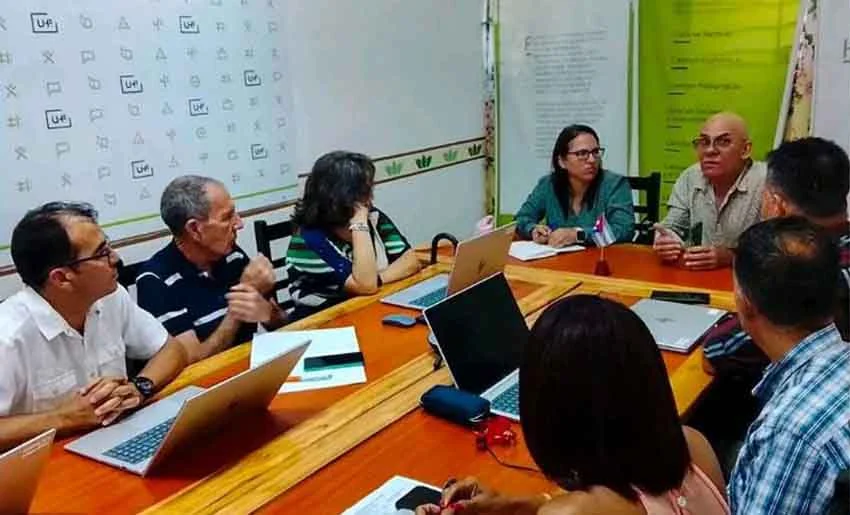
Cuba’s Deputy Minister of Higher Education, Reynaldo Velázquez, toured the facilities of the University of Holguín (UHo) to assess firsthand the tangible impact of the CRISSS project. An ambitious international partnership aimed at translating classroom knowledge into concrete technological solutions for the benefit of the population.
The working meeting provided an opportunity to review the progress of this initiative. Also the full name of which refers to the development of research and innovation capacities through the engineering of smart service solutions.
Accompanied by the university’s rector, Aniuska Ortiz, and coordinators of various research tracks. Velázquez examined how this joint effort successfully aligns university talent. With the real-world demands of the productive and service sectors in the Holguín region.
Driving this scientific endeavor is a robust international collaboration network. Financially supported by the Flemish Interuniversity Council (VLIR-UOS). Through this agreement, local researchers work side-by-side with prestigious Belgian academic institutions. Including KU Leuven, the Free University of Brussels (ULB/VUB), and Hasselt University.
Amid a complex landscape of economic restrictions facing the archipelago, this exchange—part of broader development programs for the Global South. It opens a vital window for accessing external funding and cutting-edge technologies. Beyond the laboratories, the true significance of the project lies in its focus on the energy sector and intelligent resource management. Two critical areas for the daily stability of Cuban families and businesses.
By prioritizing the development of homegrown tools and technology transfer, the initiative seeks not only to resolve immediate bottlenecks in energy generation and efficiency. But also to lay the groundwork for genuine technological sovereignty, reducing reliance on costly imports.
This government oversight visit further underscores the intention to turn the experience in Holguín into a replicable model for other provinces in the eastern region.
Moreover the development of highly qualified human capital serves as the cornerstone of this strategy. Ensuring that new generations of engineers and scientists possess the skills needed to sustain long-term innovation and establish the Holguín-based institution as an undisputed hub of excellence within the country.
Institutional support for such partnerships reaffirms a commitment to strengthening ties between higher education and regional development. Demonstrating that international academic cooperation can serve as a direct bridge to practical solutions with a lasting social impact.
By: Daimy Peña Guillén

- The Age Filter: “Young Woman” as a Requirement - 24 de November de 2026
- Velázquez Reviews Belgian-Cuban Scientific Cooperation on Energy Solutions - 24 de November de 2026
- WHO General Director Has Busy Agenda in Cuba - 23 de November de 2026