
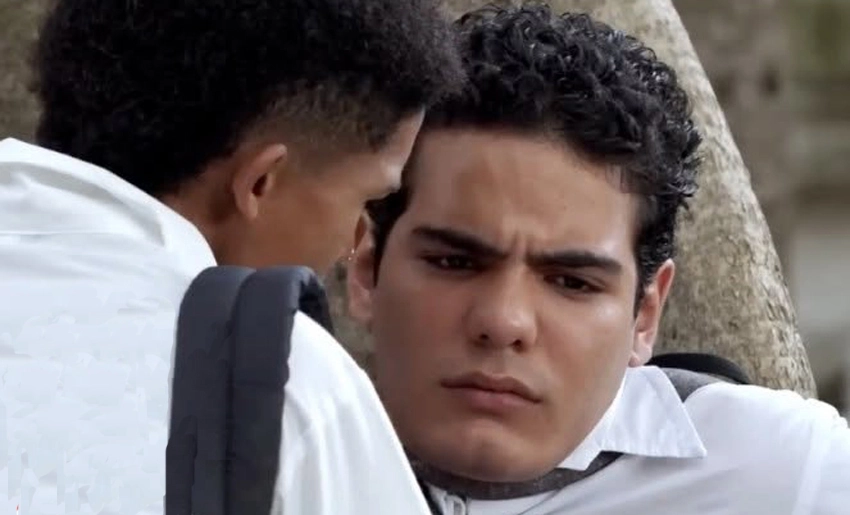
School bullying and cyberbullying are global phenomena. They transcend borders, educational systems, and socioeconomic levels. UNESCO marks an annual observance regarding these issues precisely because no society is immune.
In Cuba, however, the situation is unfolding at a different pace. As social media gains traction, the problem is growing exponentially. Connectivity arrived ahead of digital literacy. Virtual spaces have become territories devoid of clear rules, places where an insult travels faster than any thoughtful reflection.
And it is not just about technology. We have grown up with a social norm that treats offensive nicknames as commonplace. Labels based on physical flaws, skin color, manner of speech, or sexual orientation have become so normalized that they are no longer even perceived as violence. We laugh, we repeat the behavior, we share it. In doing so, without even realizing it, we become part of the problem.
This same logic drives a phenomenon that has become an everyday occurrence in Cuba. Videos of children and adolescents fighting—often while wearing their school uniforms. Recorded on mobile phones and then posted on social media as if they were a form of entertainment. Someone films it, someone uploads the clip, and others share it, offering casual, thoughtless commentary.
No one intervenes to break up the fight; no one alerts the school or the family. No one stops to ask what happened to the child or teenager before, during, or after the incident. Pain is transformed into content, aggression into a spectacle, and the victim into an anonymous face circulating online without their consent. Instead of offering help, correction, or support, the collective response is to record, post, and watch.
For years, we have been silent witnesses as students have assaulted or mistreated their peers. The silence of an observer becomes complicity. A chorus of laughter seals a pact of non-intervention. Such passivity is far from innocent—it compounds the harm. Especially when the incident is captured on a screen, available for anyone to watch over and over again, without limits or context.
When it comes to school bullying, laws are a necessary starting point. The Code for Children, Adolescents, and Youth recognizes the right of minors to grow up in protected environments. It mandates that schools safeguard them, and explicitly addresses cyberbullying, the non-consensual sharing of images, and online manipulation.
However, a law cannot delete a WhatsApp group, remove a video that has already been shared, or transform a culture that has tolerated insults for decades. The challenge is not merely legislative; it is a matter of perspective. We must stop viewing offenses as “jokes,” brutality as “entertainment,” silence as “prudence.” Bullying as a spectacle to be consumed from the safety of a screen.
Eradicating these issues is urgent; it is the only way to ensure our children grow up in safe environments. Places where they can learn without fear and build their own identities, free from the risk of becoming objects of mockery or digital consumption. Schools play a fundamental role: they must be spaces of protection, active listening, and education in coexistence. Capable of identifying problems early and acting according to clear protocols.
Yet, schools cannot do it alone. The primary influence lies within the family. It is at home that children learn to address others with respect, to refrain from mocking those who are different, to intervene when someone is being humiliated, and to resist the urge to record another person’s suffering just to gain a few seconds of attention. It is parents who, from an early age, can shape their children’s consciousness and teach them that complicit silence also causes harm.

- School Bullying and Cyberbullying: The Silence That Makes Us Complicit - 5 de November de 2026
- Holguin to Host Provincial “Pedagogy 2027” Event - 22 de October de 2026
- UHo Launches Doctoral School as Part of the International CRISS Project - 15 de October de 2026