
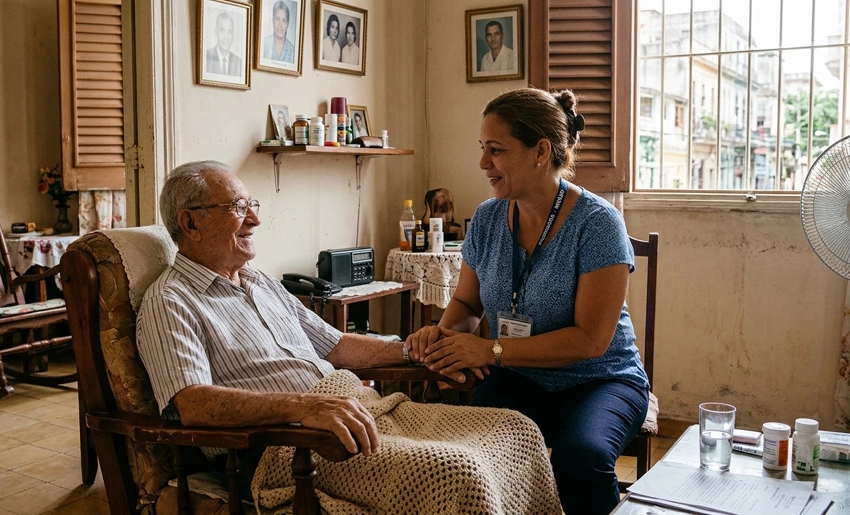
In many households in Holguin, caring for a chronically ill person or an elderly relative is a full-time commitment. One that comes with no formal contract, no salary, and no relief. The work performed by caregivers is monumental and deserves recognition. Even though it is often considered a duty. Such as children accompanying their parents through their final years, or a spouse caring for their partner until their very last breath.
This labor sustains lives, yet it often goes unnoticed in the public sphere. It is rarely reflected in statistics or discussed in everyday conversation.
It is for this reason that the International Day of Care and Support was established. An opportunity to look beyond the person receiving assistance. But who listens to, supports, and protects the caregiver? While affection may be the driving force behind taking on this role. It does not eliminate exhaustion, nor does it replace the necessary resources.
Caregiving often entails interrupted nights, physical exertion, constant worry, and difficult decision-making. Over time, a lack of rest can take a toll on the caregiver’s own health. The physical demands of moving or attending to someone can lead to injuries. When you add to this the stress, sadness, and potential isolation that can arise. Also the caregiver’s life becomes entirely defined by the needs of another person.
Although I have known caregivers of both genders, it is most often women who shoulder a disproportionate share of unpaid care work. A reality that impacts their employment, income, free time, and personal fulfillment. This is an essential contribution to society. Yet we have to fully address the inequalities that remain invisible precisely because they take place within the home.
Beyond the emotional burden, there are concrete challenges: learning about illnesses and treatments, coordinating medical appointments. Managing expenses, and making decisions without adequate guidance. Not all caregivers have access to formal training, family support, or local services. Asking for help can also trigger feelings of guilt, as if taking a break were the same as abandoning a loved one.
Yet, providing care should not require the sacrifice of one’s own health. Caregivers need access to reliable information, training, and opportunities for respite. The solution cannot rely solely on the individual will of each family. There is a need for policies that recognize, reduce, and redistribute caregiving responsibilities. Redistribution also means involving other family members and the broader community. So that caregiving is no longer a role almost exclusively assigned to women.
Valuing the importance of caregivers means acknowledging that daily life depends on a task that contributes to the common good.
In this context, the question should not only be how to better support those who need care. But also how to prevent those who provide that care from falling ill in silence. We cannot become a society that forces people to choose between protecting a loved one and safeguarding their own health.
Indeed, behind every person who is ill or dependent, there is someone reorganizing their daily life. Putting their own plans on hold, and learning how to provide care as they go. Alongside protecting those who need help, we must also look after those who provide that support. Caring for caregivers is not merely an optional gesture, it is a fundamental requirement for effective care.
October 29th the International Day of Care and Support, invites us to also consider those who shoulder this burden. Without relief, training, or professional support. Also the chronic fatigue, anxiety, isolation, physical health issues, and financial pressure can transform affection into sheer exhaustion.
Providing care should not mean suffering in silence or giving up one’s own life. Families require accessible services, respite, guidance, and medical and psychological support for caregivers. Meanwhile, governments must recognize and redistribute unpaid care work and invest in inclusive care systems.
A society that protects those in need of help must also ask itself who supports those who provide that help. Caring for caregivers is not merely an extra gesture. But a prerequisite for ensuring that care is both dignified and sustainable.

- Who Cares for the Caregivers? - 29 de October de 2026
- A Leadership Transition at Lucía Clinical-Surgical Hospital in Holguin - 28 de October de 2026
- Blockade of Cuba Hinders Study of Hereditary Ataxias - 23 de October de 2026