
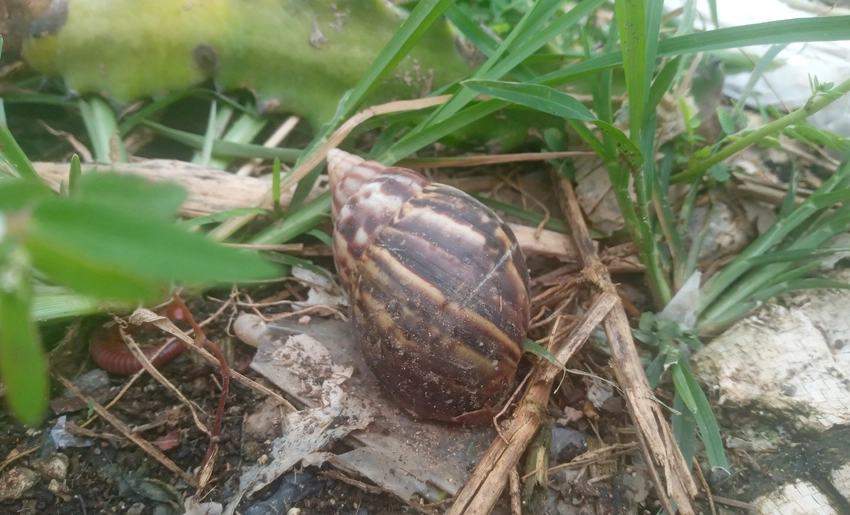
The appearance of several snails which, based on characteristics visible in photographs shared on social media, could be giant African snails. It has caused concern among the residents of the city of Holguin.
Social media users have reported sightings of these snails in various parts of the Holguin area. In addition to these reports, one snail was discovered at the Guajabales dump site. Near the exit toward the town of San Andrés. However, a definitive identification must be made by specialists from the relevant health and agricultural authorities.
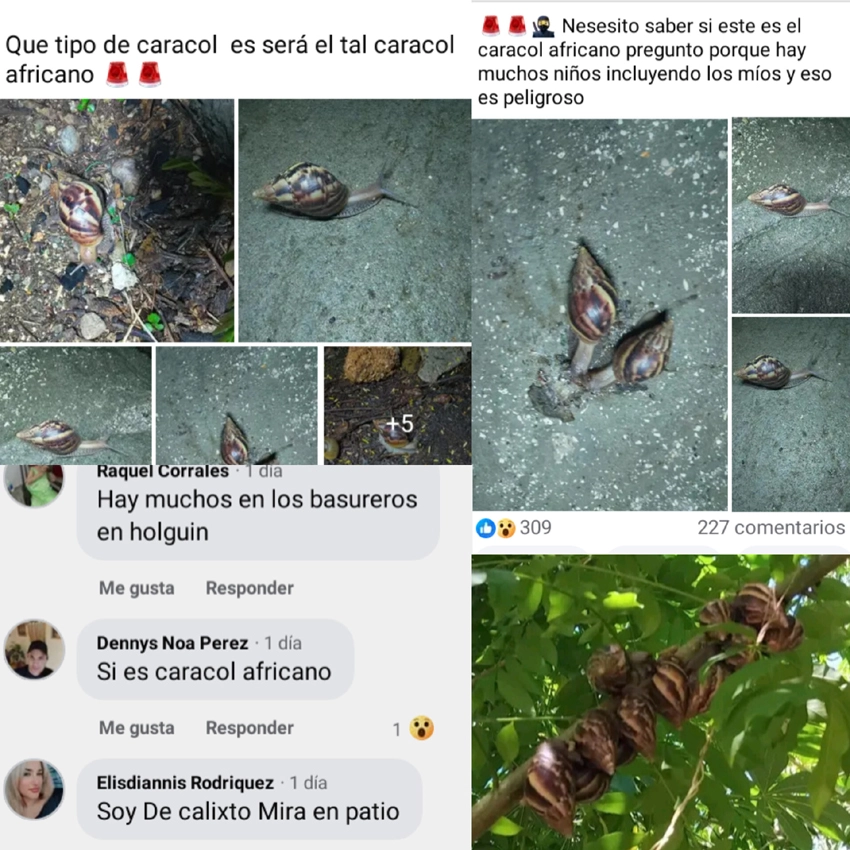
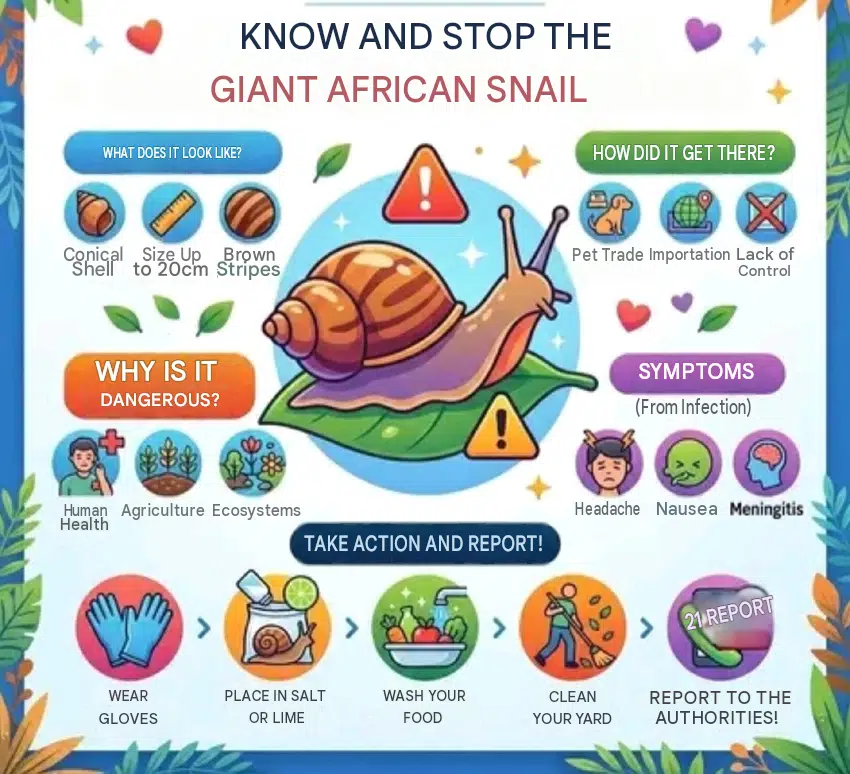
The giant African snail (*Lissachatina fulica*) is considered an invasive species with significant health and environmental implications. It can damage crops and plants, migrate into urban areas, and reproduce rapidly. Furthermore, it may carry microorganisms that pose a risk to human health. The primary danger arises from direct contact with the animal, or with surfaces and food contaminated by its secretions.
Given the potential presence of these snails, experts advise against touching them directly, crushing them, or moving them to other locations. Their eggs should also not be handled. If it becomes absolutely necessary to remove a snail, this should be done using thick gloves or a sturdy bag, followed by thorough hand-washing. Any food or utensils that have come into contact with a snail or its secretions must be properly cleaned.
Residents of Holguin have expressed concern regarding the appearance of these animals in urban areas, waste disposal sites, and locations near homes. Concern is growing due to the possibility that trash dumps. Also the accumulation of waste, and damp conditions could facilitate their spread.
Given this situation, it is necessary for public health, agriculture, and plant health authorities. Along with local governments, to coordinate efforts regarding inspection, identification, and control. It is also essential to improve waste collection, provide guidance to the public, and establish official channels for reporting new sightings.
Scientific confirmation of the species is an indispensable step in determining the appropriate measures to take. In the meantime, citizens are advised to observe the specimens from a distance, take photographs without handling them. And report their location including precise details to the authorities.
Prevention and a timely response are essential to ensure that a potential isolated occurrence does not escalate into a more significant problem for public health, agriculture, and the province’s environmental balance.
By: Álvaro Raúl Suárez Leyva

- Warning Issued Regarding Possible Presence of Giant African Snail in Holguin - 24 de October de 2026
- Lula Gains Ground While Bolsonaro Stagnates, According to Poll Ahead of Runoff - 23 de October de 2026
- Art School in Holguin Strengthens Support for Boarding Students - 23 de October de 2026