
Every October 7th in Cuba, we do not celebrate an empty date. We celebrate the men and women who, through ingenuity, effort, and knowledge, have turned problems into solutions and shortages into results.
I am speaking of the innovator and the rationalizer: the person who does not stand idly by. The one who measures, tests, adjusts, invents, and starts over again until the machine starts running, the crop grows, the patient improves, or the workshop produces.
I see them in the fields, where resistant varieties are obtained, biofertilizers are applied. Water is utilized through precision irrigation, and food is produced using fewer resources.
Also I see them in hospitals, where a restored piece of equipment once again provides diagnoses. Where a prosthesis restores mobility, and where a Cuban-made medicine saves a life.
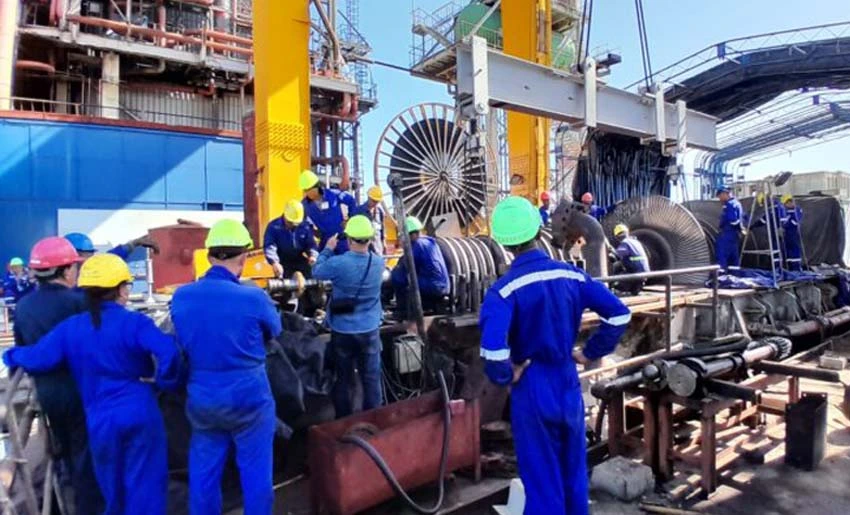
I see them in factories, where a domestically produced part replaces an imported one. Where energy is saved, and where a motor that seemed beyond repair is brought back to life.
And I see them in schools, laboratories, cooperatives, and neighborhood workshops.
Innovator and Rationalizer Day is not a celebration of improvisation. It is a recognition of a work culture that yields measurable results. Because innovating is not just about inventing a new device. It is also about rationalization. Making better use of what already exists, reducing waste, extending the lifespan of equipment. Improving a process, or conserving resources. And those results, however small they may seem, add up.
There is no shortage of examples. In agriculture, the innovation movement has made it possible to obtain higher-quality seeds, develop biopesticides. To produce organic fertilizers, introduce more efficient irrigation systems, and diversify livestock production. In the industrial sector, complex equipment has been restored, spare parts—previously requiring importation—have been manufactured. Production lines have been modified to boost efficiency, and software solutions have been created to organize and control processes.
In healthcare, Cuban ingenuity has made remarkable contributions. Medical equipment repaired or designed locally, diagnostic software, and medicines and vaccines that are currently benefiting the population and garnering international acclaim.
Behind each of these achievements stands a real person. There is the innovator who spent entire nights studying. There is the technician who proposed a process change that reduced raw material consumption. There is the worker who welded, filed, and adjusted parts until the machine was running again. There is the young person who programmed a solution to replace manual labor. There is the woman who found a way to produce more with less. They are not superheroes; they are ordinary Cubans who refused to give up in the face of adversity.
And the results are there, even if they do not always make the headlines. They appear in production statistics, cost-saving reports, export figures, improved services, and the satisfaction of those who benefit from a solution. They are found in the awards and recognition received at forums, exhibitions, and scientific and technical events. They exist in patents, registrations, and technical calculations. But above all, they are part of people’s daily lives.
This October 7th, we should speak less about what is missing and more about what has been achieved. Not to become complacent, but to learn from what works. For every successful outcome proves that Cuban talent can overcome limitations. And every solution that is adopted more widely multiplies its impact. What succeeded in one workshop can be useful in another.
What worked in a cooperative can be applied in a company. What was invented for one hospital can save lives in another. That is the true value of innovation: it ceases to be an individual achievement and becomes a collective benefit.
Finally that is the most meaningful tribute: looking at what has been achieved, learning from it, and making it yield even greater results. For when results are shared and become widespread. They cease to be isolated accomplishments and turn into a driving force for the country.

- Innovating in Cuba: the talent that produces, saves, and solves - 7 de October de 2026
- Cuban Deputy Prime Minister Assesses Water Availability in Holguin - 2 de October de 2026
- Social Media: A Mirror of Our Humanity - 30 de June de 2026