
The internationalization of higher education in Cuba is not just a goal on official documents. It translates, day by day, into tangible, high-impact partnerships.
A prime example of this dynamism is the University of Holguin (UHo). An institution that maintains a strong bridge of scientific collaboration. With one of Europe’s leading research and development centers: the Centre Català del Plàstic (CCP).
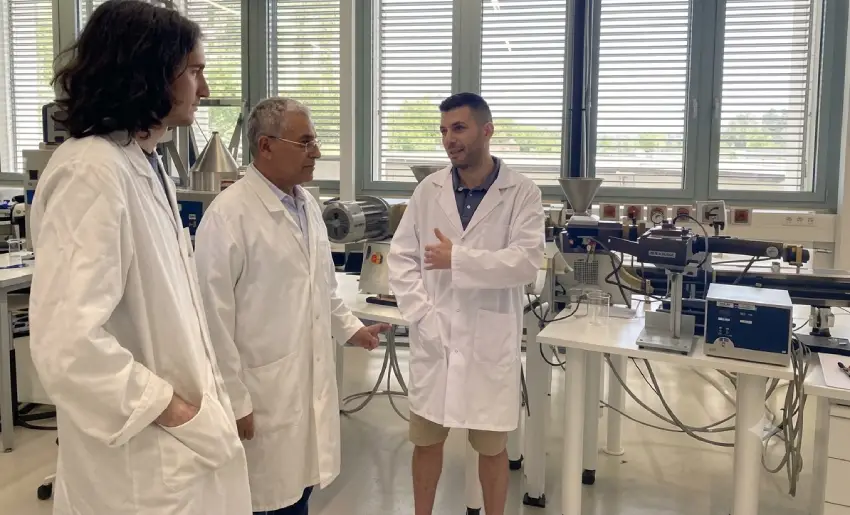
This academic synergy is currently being showcased through the work of Professor Ángel Tomás Pérez Rodríguez. A member of UHo’s Faculty of Natural and Agricultural Sciences. Who is undertaking a significant collaborative research stay at this Spanish institution. Located on the campus of the Polytechnic University of Catalonia (UPC) and the Barcelona East School of Engineering (EEBE). The CCP is an internationally renowned public center, led by the prestigious Dr. María Lluïsa Maspoch Rulduà. Professor in the Department of Materials Science and Engineering at the UPC.
The core of this collaboration is not the result of improvisation. Professor Pérez Rodríguez is currently working with the Materials and Environment Research Group at the University of UHo on a high-priority scientific and economic research line. The production and characterization of materials—specifically Polyamide 6,6—under tropical conditions.
Moreover the climate of our region poses severe challenges to the wear, durability, and behavior of polymers and plastics. Studying these variables using exposed and analyzed samples in state-of-the-art laboratories like those at the CCP allows for the collection of essential data for the design of future joint projects. Also the development of doctoral theses, the optimization of resources, and the creation of more resilient technologies.
In addition to technical trials, the Holguin professor’s agenda includes active participation in scientific exchange conferences. And the development of new funding platforms that will benefit both institutions.
This international cooperation is not new; it represents the culmination of a scientific partnership that dates back to 1998. For nearly three decades, the CCP and the University of Holguin have maintained joint projects ranging from academic exchange and faculty mobility to high-level postgraduate training.
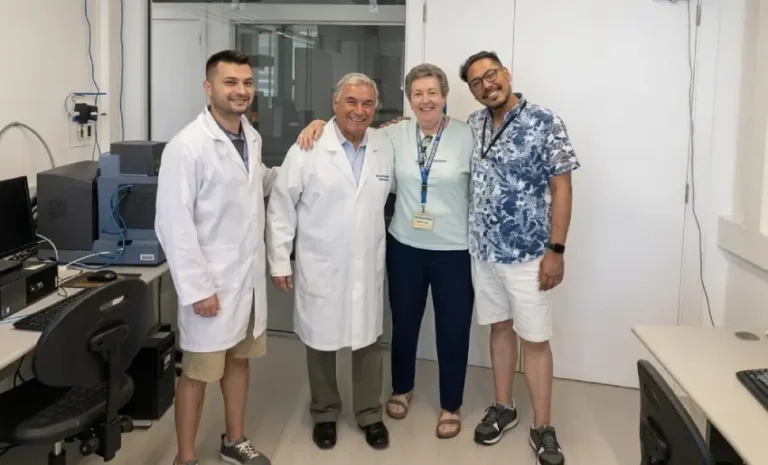
Previous initiatives—such as the international course on “Transformation Processes and Characterization Techniques of Plastic Materials.” Taught at the “Oscar Lucero Moya” campus by Dr. Maspoch herself. Along with Cuban specialists—have laid the groundwork for professionals in our province to successfully integrate into the dynamics of the circular economy, advanced polymer recycling, and materials science. With this new chapter, higher education in Holguin reaffirms its role as an active force at the forefront of knowledge. Demonstrating that, even in complex scenarios, Cuban scientific talent engages with the world on equal footing.
The alliance with the Catalan center is not an isolated event, but rather part of a robust institutional strategy that maintains more than 50 active research projects at the University of Holguin. These initiatives connect the talent of professors and students with the most urgent demands of society, industry, and local government. Consolidating the university as an essential pillar for the sustainable development of the province.
Among the areas with the greatest social impact is the close collaboration with the Center for Research and Rehabilitation of Hereditary Ataxias (CIRAH). In this field, UHo researchers lead cutting-edge biomechanical projects. Such as the optimized design of a lower limb exoskeleton and adaptive supports—wheelchairs and special canes. These domestically produced devices are designed to positively transform the quality of life of people affected by neurodegenerative diseases in the region.
Likewise, Holguin’s scientific vision transcends geographical boundaries through strong international cooperation alliances. Such as the recent project developed with higher education institutions in Belgium. This European synergy focuses on the co-design of self-sustaining and resilient smart service-based solutions. Conceived directly to accelerate progress and transformation processes at the municipal level.
All this scientific activity finds a dynamic catalyst today in the Holguin Science and Technology Park (NUCL3UM). Through this innovation hub, higher education is leading research in highly strategic areas ranging from energy efficiency, sustainable food production, and water management in rural communities. To process optimization in the crucial nickel industry in Moa. Demonstrating the value of shared science in service to the people.
By: Daimy Peña Guillén

- Holguin Health Sector Strengthens Ties with Adolescents and Youth - 1 de October de 2026
- Trump’s measures against Cuba: another step toward strangulation - 1 de October de 2026
- Cuba prioritizes respect and care for older adults - 1 de October de 2026