
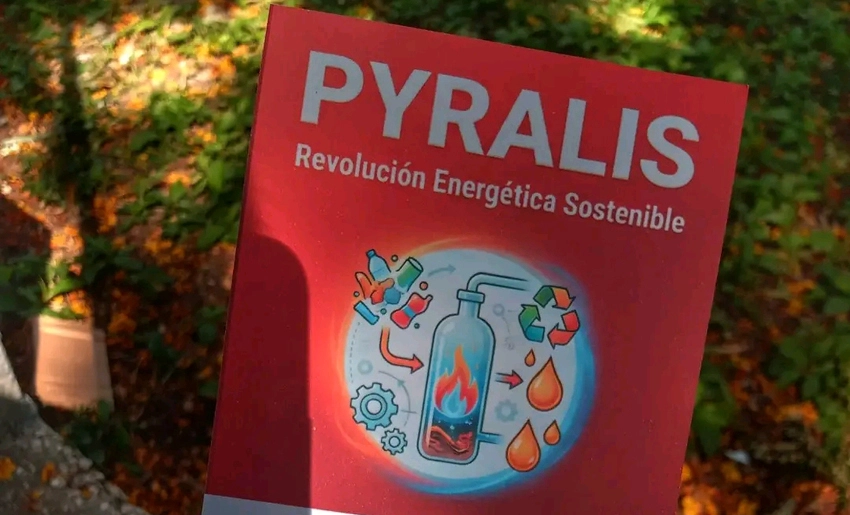
What until recently was an environmental problem that filled landfills and contaminated soil is now beginning to become a source of energy and development for the community. This is Pyralis, a pioneering innovation project in Cuba. Incubated within the ecosystem of the Holguin Science, Technology, and Business Park. Which is already taking its first steps toward achieving a closed-loop system for utilizing plastic waste.
Created by Alejandro Ortiz, a young man from Holguin with extensive experience in these areas. Pyralis presents itself as a tangible solution to the accumulation of waste. Its essence lies in a process of heating plastics in the absence of oxygen. Through which high-calorific-value fuels are obtained, ideal as a sustainable energy alternative.
On March 14th, the project moved beyond the laboratories and into the community. The Vista Alegre People’s Council Park was the site of its first pilot activity. Also where students from the Raúl Cepero Bonilla and Nicolás Guillén elementary schools shared learning spaces about nutrition and water conservation.
According to Eric Díaz González, president of the Youth Technical Brigades (BTJ) in Holguin. Pyralis has nine lines of work and is starting in the provincial capital, focusing on energy. “It can become a source of employment in the community,” he stated. Explaining that a collection point is already being organized at the old sugarcane juice factory, where waste will be collected for later processing.
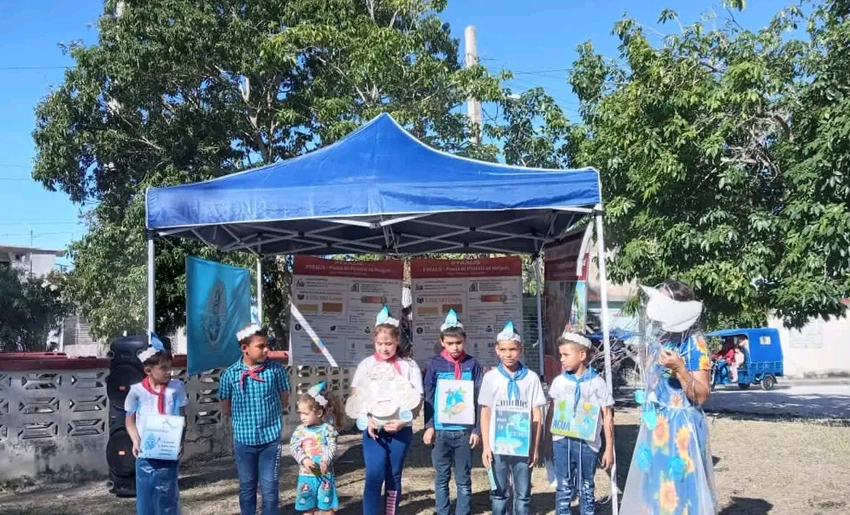
The production process is efficient: every 100 kilograms of plastic—mainly nylon bags and lids—generates 100 liters of pyrolytic oils. A raw material for producing gasoline and diesel. The plant that will allow this processing is currently being set up on the grounds of the emblematic Heroes of July 26 Mechanical Company.
In its initial phase, the fuel produced can be allocated to essential services, such as ambulances. Thus contributing to state resource savings and guaranteeing basic services for the population.
The impact will not only be energetic, but also aesthetic and social. Yohanis Santiesteban Sarmiento, the project’s public relations manager, explained to the residents of Vista Alegre that Pyralis aims to reward cleanliness. Neighborhoods that collect the most waste and demonstrate the greatest community participation will be eligible to receive benefits such as paint for their house facades and gardens.
“We want cleaner neighborhoods,” Santiesteban emphasized. Underscoring that community collaboration is key to the initiative’s success.
Although the project begins in the municipality of Holguin, its aspirations are greater: to reach the entire province. Subsequently, the rest of the country. To achieve this, Pyralis requires the support of the business sector. Especially entities like the Municipal Services Company.With whom strategic alliances are already being developed.
From within the Science Park itself, specialists value Pyralis’s management model. Highlighting that it not only contributes to the country’s economic and environmental development. Also it fosters collaborative ideas focused on connecting citizens with these innovative solutions.
Pyralis demonstrates that, with science, innovation, and community participation, it is possible to transform waste into an energy solution. Contributing to sustainable local development from the heart of Holguin.
By: Daimy Peña Guillén

- Putin states that BRICS has generated over 40 percent of global GDP - 12 de September de 2026
- Between the wind of the tenths and bottled art - 12 de September de 2026
- ETECSA Holguin Hosts Science and Technology Forum - 12 de September de 2026