
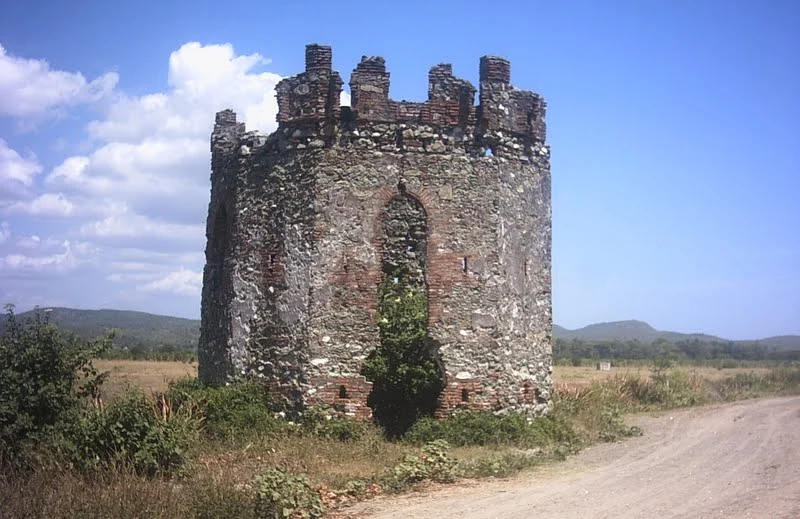
The opening of the port of Gibara in 1822 attracted a significant immigration of Spaniards, Canarians, and Balearic Islanders. They settled in the port and its economic zone of influence. When the war of 1868 broke out, this region became a center of fundamentalism.
Its residents defrayed the costs of the area’s defense by building forts. Preparing houses and villages to resist attacks. Forming volunteer companies and counterguerrilla groups. One of these projects was the construction of the Gibara Wall.
On October 10th, the people of Gibara celebrated the inauguration of the Punta Lucrecia lighthouse. A work of great importance for navigation in the area. Two days later, a telegram sent by the governor of the eastern department to the governor of Holguin warned him of the Céspedes uprising. He immediately notified the people of Gibara, who immediately began mobilizing to defend their interests against a mambi incursion.
In the final months of 1868, the mambises spread throughout much of the eastern department.
The major offensive organized by the Spanish state and led by the Count of Valmaseda completely changed the situation. The mambises were forced to resort to guerrilla warfare. Taking refuge in the forests and fields, they resorted to rapid raids on cultivated areas and settlements. As a way to supply themselves and harass the enemy.
The Spanish fortified their settlements by building barbed-wire fences and forts. But in Gibara, these measures reached unusual proportions for eastern Cuba.
The Gibara fundamentalists decided to build a wall. Construction began in the 1870s. Although it is claimed that it was built with the voluntary contributions of the port residents, the reality was different. The city council established a mandatory contribution.
Payment of the assigned amounts was required. For example, in the city council minutes of April 1875, the concern of that institution to meet the outstanding debts of delinquent fundamentalists in the town is reflected. On July 31st of that year, it is reiterated:
“So many times, at various times and in different ways, have these residents been required to pay during the year in which this collection was established. That only compulsory force will make them pay. Since persuasion and the most just observations to make them understand the necessity and obligation of payment have been exhausted to infinity.”(1)
In any case, a significant amount of capital was raised for the construction of the wall. This was truly an important work, as it was two thousand meters long, two meters high, and two feet thick. At certain points, it was reinforced by interior pillars to increase its solidity.
Five forts and two drums were built on the projecting angles. The wall had three gateways. At the end of the 1868 war, the wall was virtually abandoned. At the outbreak of the 1895 war, it was repaired and put back into service.
The total repair of the wall and forts amounted to 10,395 pesos. A significant figure for the time. During the Republic, the wall was demolished to facilitate the town’s urban development. However, three forts and a section of the wall survived, which have survived to this day.
Today, the conservation of these works is a challenge for the people of Gibara and Cubans, as they are part of our heritage.
NOTES
- THE GIBARA WALL AND ITS FORTS. Maria Hernández Medina and Maria Teresa Ruiz de Quevedo M. In “GIBARA,” a quarterly magazine published by the UNHIC Base Section in the city of Gibara. YEAR I JANUARY – APRIL 1999. No. 1
2.- We are grateful for the collaboration of Enrique Doimeadios Cuenca
BIBLIOGRAPHIC AND DOCUMENTARY SOURCES:
- Gibara City Council: Minutes of the Sessions for the period 1874-1877.
- Leyva Aguilera, Herminio: Gibara and its Jurisdiction. Martín Bim Printing Establishment, Gibara, 1894.
- THE GIBARA WALL AND ITS FORTS. María Hernández Medina and María Teresa Ruiz de Quevedo M. In “GIBARA,” a quarterly magazine published by the UNHIC Base Section in the city of Gibara. YEAR I JANUARY-APRIL 1999. No. 1.

- The Gibara Wall - 10 de October de 2025
- Néstor Salazar, from the microphone to the kitchen - 7 de October de 2024
- Did Henri Cartier-Bresson visit the city of Holguin? - 16 de September de 2024