
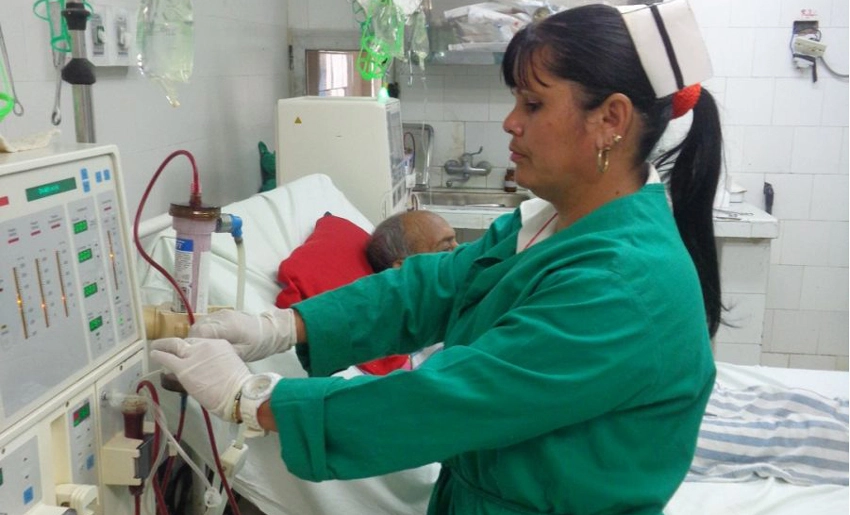
Hemodialysis is more than just a medical procedure. It is an invisible thread connecting the lives of those who courageously face the daily struggle against kidney disease. Each session—every hour spent connected to the machine—represents a renewed sense of hope, a sigh of relief for both body and soul.
It serves as a constant reminder of human fragility, yet also of an unyielding will to live. To continue sharing moments, laughter, and quiet times with loved ones.
For this reason, authorities in the municipality of Mayari (in the province of Holguin) have implemented a series of innovative measures to ensure that hemodialysis patients continue to receive their life-sustaining treatment, despite severe national fuel shortages. Exacerbated by the economic blockade imposed on Cuba by the United States.
These shortages have compelled the Public Health Department and the Municipal Administration Council. Also to seek creative, solidarity-based solutions to guarantee that care continues.
Anika Lao Texido, General Director of Public Health in Mayari, explained that six patients—hailing from various localities. Including Cueto, Levisa, and Mayari are currently receiving care.
Since the onset of the fuel crisis, the primary strategy has been to admit patients who lack their own means of transportation into the hospital. Thereby ensuring they remain on-site and their treatment continues without interruption.
Given the worsening situation, plans have been made to admit two patients from Cueto and one from Purio. This measure is intended to provide them with lodging and medical care for as long as necessary. Taking into account the complex nature of their condition.
Inter-institutional cooperation has been key. The company Pinares S.A. …has offered invaluable support by organizing the transport of two patients. One from La Pasa (in Levisa) and another from Río Grande (in Nicaro). This transport service operates on a regular schedule—Mondays, Wednesdays, and Fridays. Ensuring that patients and those accompanying them arrive at their appointments on time.
Meanwhile, a patient residing in Mayari continues to travel to the facility on their own, without requiring inpatient admission, explained Lao Texido.
The search for alternatives continues. Other local entities such as the Dairy Complex, the Electric Utility Company, and Etecsa. They have been called upon to join this solidarity effort by offering their available transport resources and logistical support.
Moreover this collaborative network is essential for overcoming the obstacles posed by fuel shortages. Which threaten the health and quality of life of these individuals.
The director emphasized that these efforts are being coordinated with the Municipal Administration Council. Under the leadership of Municipal Intendant Lixán Hidalgo Romero, with the primary goal of finding safe solutions and protecting the patients.
“While we haven’t yet managed to secure transport for 100 percent of the patients. We will continue our efforts to assess their treatment needs and transportation requirements. Ensuring they are able to receive their care,” stated Lao Texido.
Each trip represents a life, a family, and an urgent need that cannot wait. Underscoring the value of cooperation in times of adversity.
Hemodialysis allows for no interruptions. Behind every needle and every monitor lies a person, a story, and a family longing for a sense of normalcy—finding in this treatment a bridge toward the future. It serves as a reminder that life. Despite its many challenges, always finds a way to hold on and flourish.
By: Daimy Peña Guillén

- Hemodialysis Guaranteed for Mayari Patients Through Alternative Transport Arrangements - 6 de November de 2026
- State Department Announces New Unilateral Coercive Measures Against Cuba - 6 de November de 2026
- Lugdis Pineda Takes on New Challenge with Cuban National Baseball Team - 5 de November de 2026