
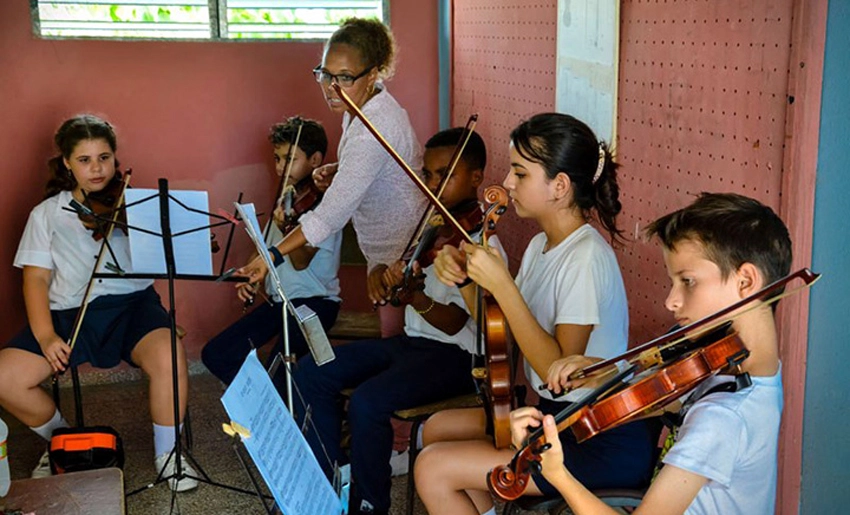
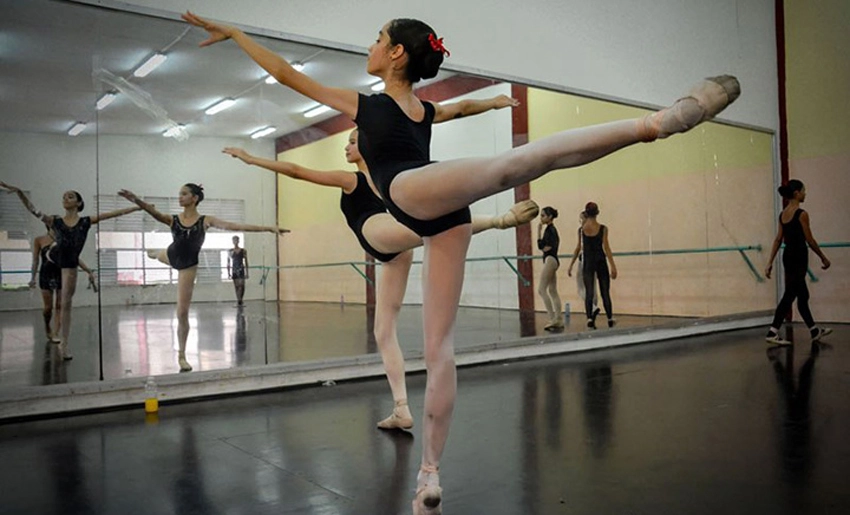
The Raúl Gómez García Elementary Art School trains over 300 students in music, dance, and vocal studies. With a mission to contribute—from the city of Holguin—to the cultural future of both the local region and the country.
Hirio Vera Martínez, the institution’s director, stated in an exclusive interview with the Cuban News Agency (CNA) that the school promotes an educational process. Based on the conviction that art allows people to connect with their essence, discover talents, and build confidence. This process recognizes the unique value of every voice and creative expression. While prioritizing the integration of culture and pedagogy.
To enhance technical training from a decolonizing perspective, the school employs methods such as the convergence of disciplines in complementary activities and classes. Fostering practical learning and active student participation.
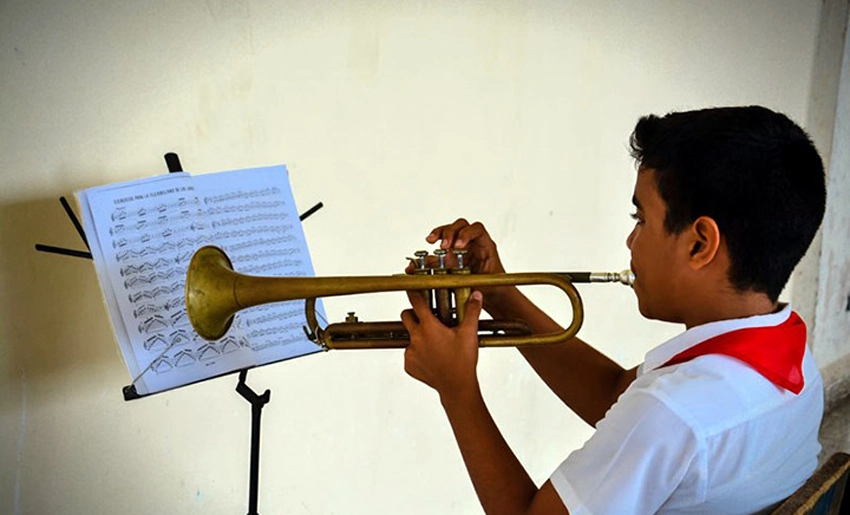
Vera Martínez noted that instruction goes beyond the mere transmission of knowledge. It must stimulate creativity, initiative, and a sense of active ownership among students regarding their own training process.
Another pillar of the school’s pedagogical work is consistent communication with families. Their support helps create an environment conducive to education, play, and the full development of children, he added.
Success in training young artists also depends on strengthening their bond with the school. Fostering a positive atmosphere during their time there—achieved through better classroom and living conditions. More dynamic activities, comfort for boarding students, and academic rigor, he commented.
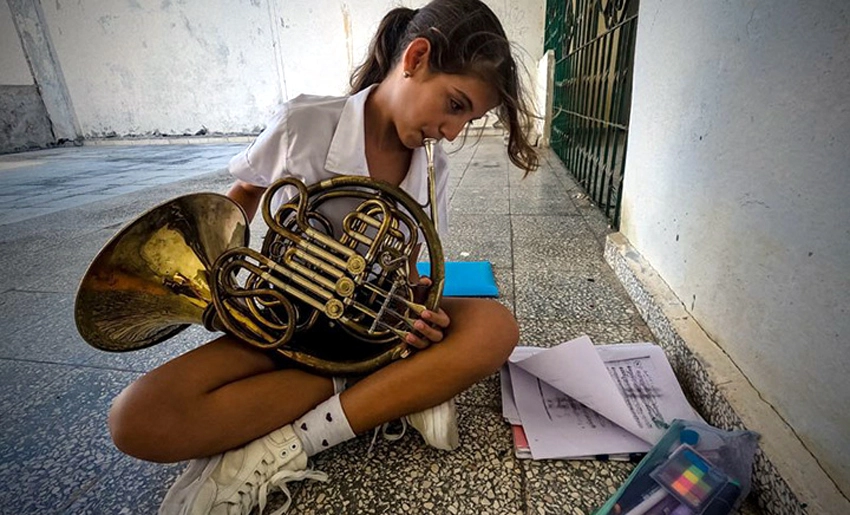
The institution is fully staffed with teaching personnel across almost all areas. Alongside support staff who ensure the smooth operation of educational processes, extracurricular activities, and the boarding program. Vera Martínez cited the lack of specialized dance equipment—such as dance shoes—and the limited influx of instruments in recent years. Aside from a few donations as key challenges affecting instruction.
Also the director added that, despite these obstacles, they find reasons to keep moving forward—especially through the students. When performing and fully engaging with their work, these students surprise and move audiences with the creativity and effort they pour into their art. Every day of learning stands as a testament to their resilience.
Maricela Tamayo Velázquez, a fifth-year violin student, stated that she enjoys attending the school because she learns what she loves and values the quality of instruction provided by her teachers.
Helen Leyva Montero, a second-year student in the same specialization, expressed her appreciation for studying at the school. Citing the personal attention she receives, her relationships with classmates, and the constant support provided by the faculty.
Arts education in Cuba comprises nearly 37 schools across elementary, intermediate, and higher education levels, with branches in every province. These institutions serve as academic hubs committed to the nation’s advancement, the training of artists, and its sociocultural outreach.
With information from CNA

- Holguin Health Sector Strengthens Ties with Adolescents and Youth - 1 de October de 2026
- Trump’s measures against Cuba: another step toward strangulation - 1 de October de 2026
- Cuba prioritizes respect and care for older adults - 1 de October de 2026