
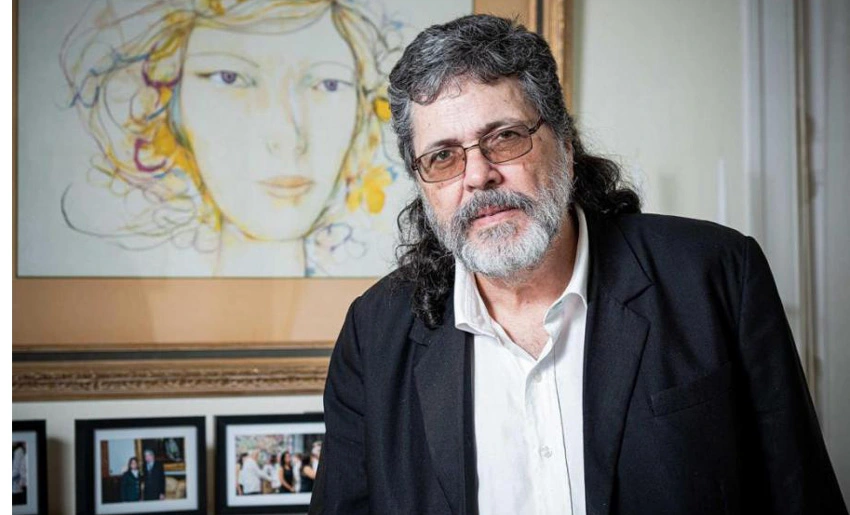
“The greatest privilege of my life was working with Fidel,” affirmed renowned Cuban intellectual Abel Prieto. Recalling the legacy of the man who immortalized his name in history with morality, nobility, and an unquestionable humanist vocation.
As time flies by amidst life’s vicissitudes, this man commands attention and headlines. Like a tribute to the centennial of one of the greatest political leaders of all time.
In an exclusive interview with Prensa Latina, the president of Casa de las Américas also spoke of the satisfaction of having been close to Commander-in-Chief Fidel Castro. “Listening to him, learning from him, participating in his truly unforgettable dialogues with Cuban and foreign intellectuals and artists.”
On the eve of his birthday, this August 13th, memories surface for all who are grateful for his work and his willingness to serve Cuba and humanity. Also remembered are his contributions to culture. Which he urged be preserved on more than one occasion as a path to human emancipation.
Culture was precisely the focus of his interventions in meetings with members of the Union of Writers and Artists of Cuba (UNEAC). And at the José Martí National Library in June 1961. Where the exchange proved valuable and respect for differing opinions prevailed.
From the Fourth UNEAC Congress onward, Fidel decided to participate in all the organization’s debates. In the National Councils, preparatory meetings, and plenary sessions of the Congresses, the writer recalled.
He recounted how Fidel listened attentively to the delegates’ speeches with infinite patience. Offered his opinions, asked questions, and always drew insightful conclusions.
I recall Graziella Pogolotti saying that Fidel “had moved to the UNEAC” during that period. Because he was convinced that socialism in the USSR and the countries of the socialist bloc had “collapsed”. Due to its defeat in the cultural war, he added.
“In those meetings, the persistence of racial prejudices among us was discussed. Fidel explained that both he and other comrades in the revolutionary leadership believed that by eliminating exclusive beaches, clubs, and schools, racism would disappear.”
The solution would obviously be slower because it was a cultural problem, Prieto explained, recalling the Commander-in-Chief’s words. That debate led to his most significant speech on the racial question, he asserted. Later, in the Battle of Ideas, it led to “the boldest programs to combat something as monstrous as racism. With art instructors, social workers, and the weapons of education and culture.”
He insisted that we had to break “the vicious cycle of marginalization.” Referring to children who grow up in violent family environments and tend to protect themselves in the worst way. With the marginal philosophy of the rogue, the intellectual commented.
Moreover the danger of creating a pseudo-culture for tourism, of ignorantly repeating the codes of cultural colonization with Yankee or Miami-style symbols. Also were among the topics of discussion in our meetings with him at the UNEAC (National Union of Writers and Artists of Cuba).
The historical leader of the Revolution became deeply involved in these discussions, he recounted. And never tried to cut them short, simplify them, or impose his own views.
“He reflected, as the astute intellectual he was, in search of paths to spiritual fulfillment and the emancipation of the people.”
“Without culture, there is no possible freedom,” he repeated many times. He did the same with Latin American, European, and North American friends. When the Network of Intellectuals, Artists, and Social Movements “In Defense of Humanity” was being formed in 2003.
One of his obsessions in those years remains highly relevant today: the painful idea of the right-wing poor, he explained. “The poor who vote for any fascist-leaning demagogue because they have been manipulated.”
The antidote, Abel Prieto opined, is “the urgent need to equip our people with a critical instinct. That allows them to defend themselves against the traps and manipulations that the Empire sets before us.”
“Today, faced with the rise of neo-fascism in the United States, in Europe, in Our America, we need Fidel, the Cuban people, and the peoples of the world more than ever.”
At the end, the intellectual invoked one of the ideas expressed by President Miguel Díaz-Canel in the National Assembly (Parliament): “Fidel grows larger and multiplies. He lives on and continues to wage battles for a better world.”
With information from Prensa Latina

- Holguin Health Sector Strengthens Ties with Adolescents and Youth - 1 de October de 2026
- Trump’s measures against Cuba: another step toward strangulation - 1 de October de 2026
- Cuba prioritizes respect and care for older adults - 1 de October de 2026