
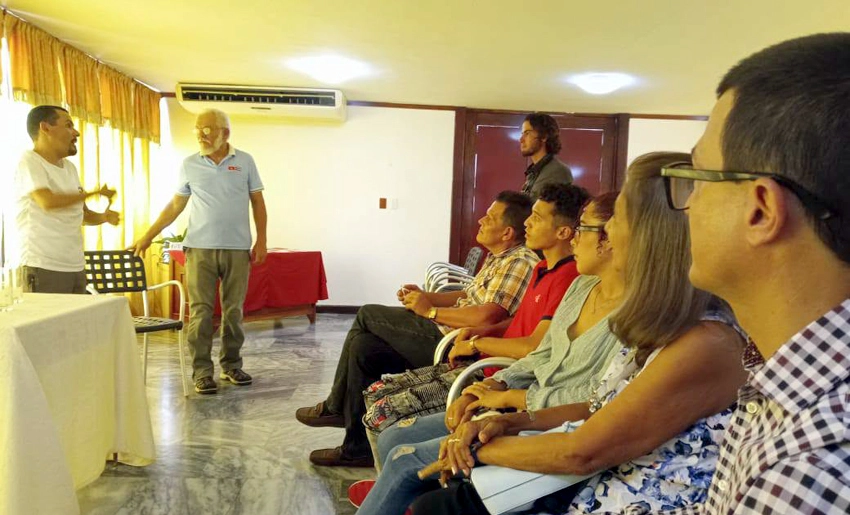
As part of the commemorative events for the centennial of Fidel Castro. The emblematic Plaza Mayor General Calixto García Íñiguez in Holguin became the main stage for a moving intergenerational dialogue.
The event brought together students and professors from the University of Holguin. Along with members of the Martí Youth Movement with the fundamental purpose of paying tribute to the historical leader of the Cuban Revolution. Exploring the indelible mark his political and social actions left on this region.
During the meeting, future journalism students presented various research projects. Focused on key aspects of Fidel’s thought related to the province.
Among the topics discussed were his commitment to the comprehensive care of children through the promotion of childcare centers. As well as the impact of the former School of Social Workers. An institution that emerged during the Battle of Ideas and which now houses the Celia Sánchez Manduley campus of the Holguin University of Higher Education.
The exchange provided a valuable forum for testimonies from prominent local figures. Such as Dr. Jorge Quiñones Aguilar, founder of the Henry Reeve International Contingent of Doctors Specialized in Disaster Situations and Serious Epidemics. The journalist Germán Veloz Placencia, and historian Víctor Aguilera Nonell.
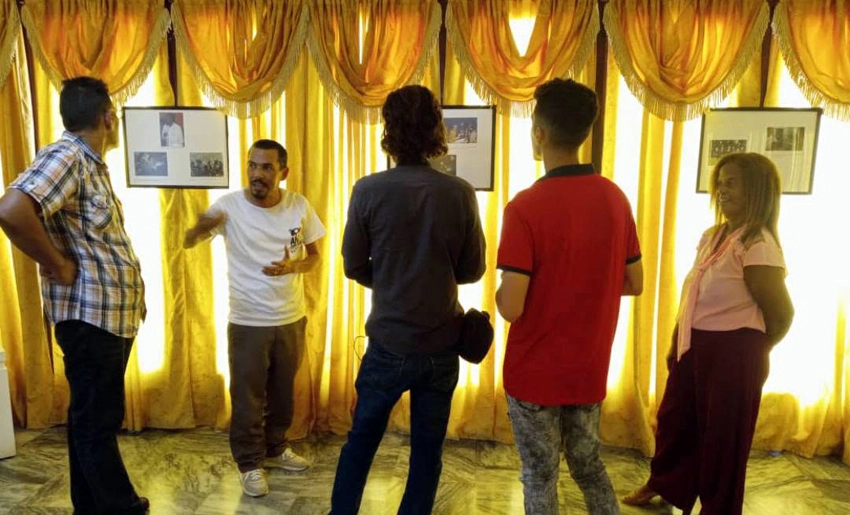
Through their presentations, the panelists evoked the many facets of the Commander-in-Chief. And reflected on the urgent need to preserve historical memory as a living tool for the political and ethical formation of youth.
Fidel Castro’s connection to the Holguin region runs deep. Dating back to his birth in the historic town of Biran, in the municipality of Cueto, on August 13th, 1926. Throughout the construction of the Cuban social project, he conceived and promoted transformations in the province. Aimed at socioeconomic development, industrialization, public health, and the expansion of higher education—pillars that continued to shape the region’s destiny.
Through the implementation of revolutionary programs such as universal healthcare, scientific development, and the humanistic training of professionals. Fidel Castro’s ideology became established in Holguin as a guide for daily political action. This tribute paid by the students and professors of the university reaffirms the continuity of the Cuban revolutionary . Also it reinforces the commitment of new generations to studying and preserving the legacy of the Revolution’s leader.
By: Daimy Peña Guillén

- Putin states that BRICS has generated over 40 percent of global GDP - 12 de September de 2026
- Between the wind of the tenths and bottled art - 12 de September de 2026
- ETECSA Holguin Hosts Science and Technology Forum - 12 de September de 2026