
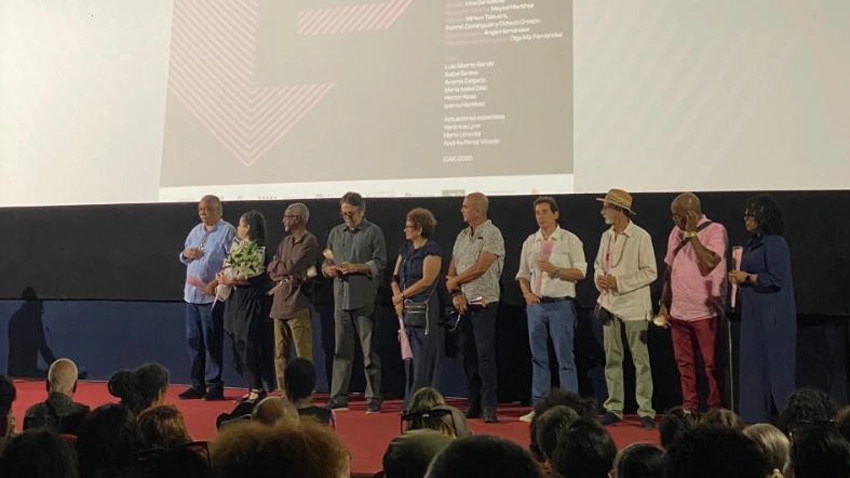
Cuban cinema, since Tomás Gutiérrez Alea’s “Death of a Bureaucrat” (1966), has been the most critical medium regarding Cuban reality. Different generations of directors have denounced the flaws of the social system and the daily struggles of the people.
It is in film archives, and not in press archives. That the revolutionary process is reflected as it truly was. It is its critical nature and documentary value that give significance to “Stress,” the latest film released by director Marilyn Solaya.
While it features two major figures in Cuban cinema. Isabel Santos and Luis Alberto García, whose careers we’ve watched age since films like *Clandestinos* (1987). *Adorables mentiras* (1991), and *Ya no es antes* (2016). The film’s defining characteristic is not their acting, but its documentary style.
Also the most noteworthy performances here are those of Verónica Lynch. A familiar face in recent Cuban films, and Iyaima Martínez. An actress making her debut in a compelling and heartbreaking role, despite its everyday nature.
It’s no longer the bureaucracy that Alea denounced in “Death of a Bureaucrat” or “Guantanamera.” It’s a society far more respectful and tolerant than that of “Strawberry and Chocolate.” More poignant than that of Fernando Pérez’s “Life Is to Whistle.” It’s Cuba in 2026 through Solaya’s lens.
It’s a lens that doesn’t show extremes, but rather the everyday: the stress of unresolved issues after long conversations. As in “Return to Ithaca” or his previous film, “Why Do My Friends Cry?” As a work of art, the film comes across as a “Stories of Another Day,” but with less creativity. There are no stellar performances despite the cast, no creative editing, and no spectacular soundtrack.
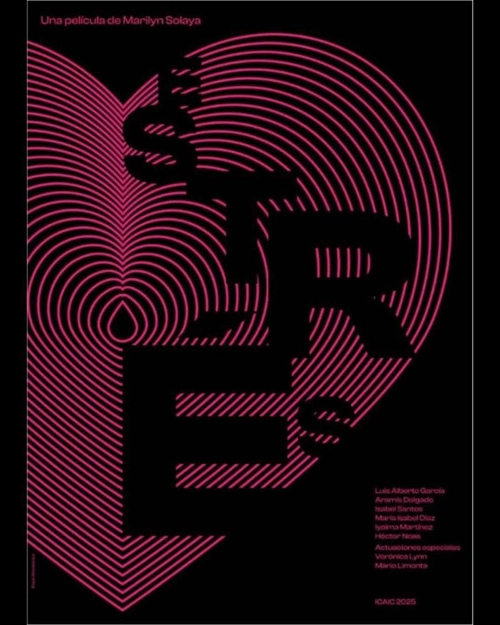
Photo: Courtesy of ICAIC
Also they keep enduring, despite delivering clear messages: “You can’t walk well, think well, love well, if you haven’t eaten well…”; … Dignity isn’t something you can eat… and … you can’t ask those here to take to the streets with sticks and stones if those who left didn’t…
The script doesn’t follow a traditional pattern, in the sense of classic cinema. Although it is one more in a list of Cuban films that don’t follow a main storyline. Instead showing that sometimes they connect and sometimes they don’t.
The different realities that Solaya shows are summarized in the scene where the son has given up on his dreams and walks back home with his elderly parents. A scene that ultimately symbolizes how we Cubans confront our reality.

- Stress: The Documentary Nature of a Cuban Film - 3 de April de 2026
- Holguin workers parade on May Day celebration - 1 de May de 2024
- Jibarama 2024 Environmental Film Festival begins in Gibara - 24 de April de 2024