
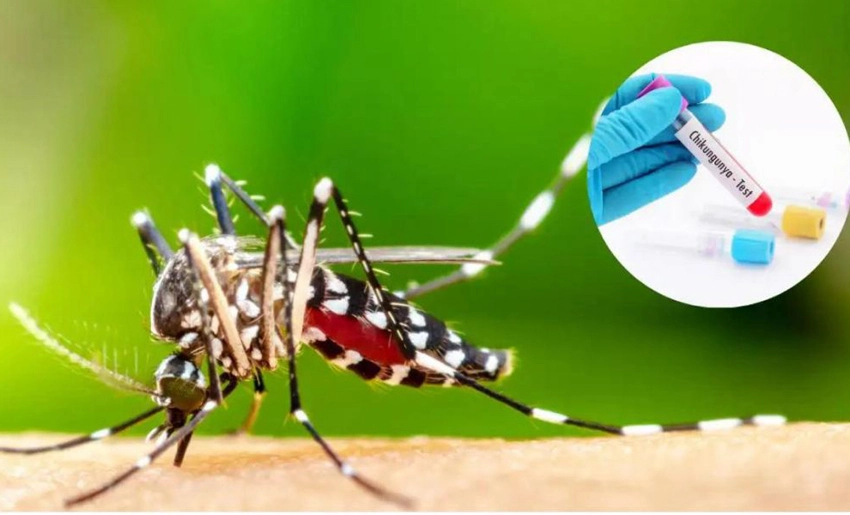
While several provinces across the country are waging an epidemiological battle against Chikungunya. A parallel phenomenon is emerging in Holguin as a symptom of the times. Advertisements on social media from individuals who, on their own initiative, charge the equivalent of a full month’s salary. Between four and five thousand pesos—to fumigate a house.
This practice, understandable given the desperation caused by the spread of the virus. It reveals the depth of the problem and how individual solutions are insufficient in the face of a threat of a collective nature.
Those who pay for this service rightly seek to protect their families. However, this solution is fragmented and of limited scope.
Also the Aedes aegypti and albopictus mosquitoes know no dividing walls or private property boundaries. They inhabit multiple houses and fly freely. This creates an illusion of security that shatters with the first buzzing sound from a neighboring house that has not been treated with adulticide.
Moreover this reality only reinforces a truth that health campaigns in Cuba have emphasized for years: vector control is, by its very nature, everyone’s responsibility.
For fumigation to be truly effective, it must be systematic, comprehensive, and simultaneous in large infected areas. Precisely the scale at which health authorities must operate with the greatest rigor. The existence of an informal fumigation market is a wake-up call regarding institutional actions.
Meanwhile, the Chikungunya virus—whose name in Makonde means “to be contorted by pain”—continues its course. Debilitating joint pain, fever, and skin rash affect residents of Holguin. Also who find their only immediate weapons in paracetamol and rest under mosquito nets. Given that there is no vaccine or specific treatment.
In this scenario, the work of family doctors becomes more crucial than ever. Their work on the ground, searching for potential cases in neighborhoods, is the backbone of the defense.
It is they who, with their community presence, can detect cases, guide the population, and, above all, organize the collective response. Their educational work is fundamental in explaining that the real battle is not won with isolated fumigation efforts. But by eliminating breeding grounds in every home, covering water tanks, and removing waste that collects liquids.
Cuban science is advancing, as demonstrated by the trial with Jusvinza for the chronic aftereffects of Chikungunya. But the fundamental solution will not come solely from the laboratory. The lifelong immunity conferred by the disease cannot be the strategy.
The victory against this “silent hurricane” in Holguin depends on a well-organized offensive. Where state fumigation is constant, citizens are consciously responsible, and the work of the family doctor in the community forms the axis that articulates a truly collective effort.
Health is a right, but also a social construct that commits us all.
By: Daimy Peña Guillén

- Holguin Health Sector Strengthens Ties with Adolescents and Youth - 1 de October de 2026
- Trump’s measures against Cuba: another step toward strangulation - 1 de October de 2026
- Cuba prioritizes respect and care for older adults - 1 de October de 2026