
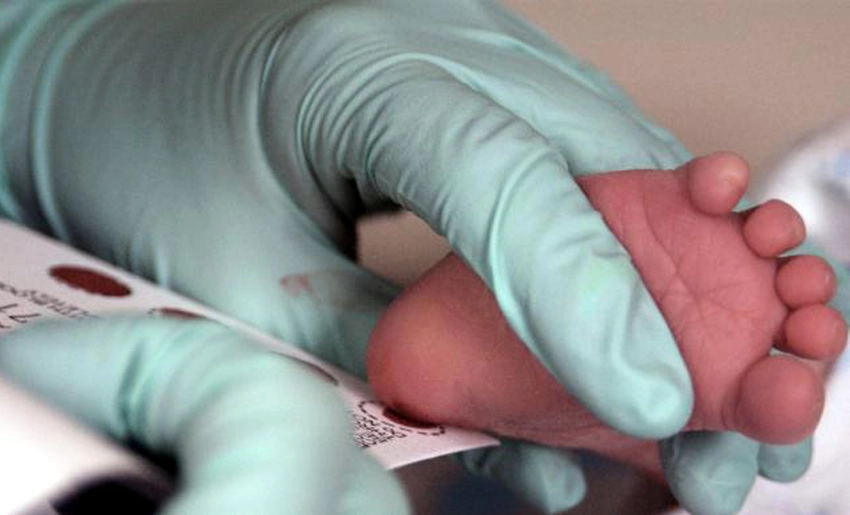
Currently, neonatal screening is a strength of the Cuban health system in the care of newborns. This test, performed on the fifth day of life by taking a dry blood sample on a filter panel, better known as the heel prick test, seeks, among other metabolic diseases, the detection of the congenital syndrome.

Dr. Dailin Molina Naranjo author of the research Early diagnosis of congenital hypothyroidism. Photo: Taken from Facebook
The first degree specialist in Endocrinology, Dailin Molina Naranjo, who works at the pediatric hospital Octavio de la Concepción de la Pedraja, has dedicated herself to investigate how the early diagnosis of this condition is very useful in the prevention of mental retardation.
35 years after the Neonatal Screening Program was put into operation in Holguin, how important is it to have it?
“Since 1989 the Neonatal Screening Program for Congenital Hypothyroidism began in Holguin province. A vital program because it prevents one of the diseases that causes mental retardation. In fact it is the only cause of reversible mental retardation. Therefore, an early diagnosis and adequate treatment is essential.
“Congenital hypothyroidism is a disease caused by dysfunction of the thyroid gland and is expressed in decreased metabolic activity. Hence, among the most frequent symptoms are delayed psychomotor development, short stature, hoarse crying, delay in dental eruption and in the closure of the fontanels”.
How is neonatal screening for the detection of congenital hypothyroidism carried out in Holguin?
“In the beginning, samples of H.S.T. from cord blood were taken with UMELISA for the SUMA system and since 2009 dried blood samples on a filter panel have been used, with the use of an automatic puncher.
In Cuba, this test has its antecedents in 1986 when a pilot plan began in the city of Havana. Two years later it was gradually extended to all Cuban provinces.
“It was not until 1989 when it began in the province of Holguin, with the sampling of 5,470 newborns in the municipalities of Banes, Moa and Holguin. In 1991, the research was decentralized to the municipality of Moa and in 2004 the SUMA laboratories were inaugurated in Mayari.
“In 2005, screening for five chronic diseases was carried out in heel blood on filter paper and it was not until 2009 when it was decentralized to the rest of the municipalities with the installation of a Specialized Center for Active and Integral Screening in the 14 municipalities.
What other achievements would you highlight?
“It is an achievement in our province that the presence of a Specialized Center for Active and Integral Screening has been extended to the 14 municipalities, even the smallest ones. Where the sample is taken and the early diagnosis of these diseases is made. Once the patient tests positive, he/she is referred to the centralized consultation at the provincial hospital, where we follow up these patients”.
Today we have 100 percent coverage of all live newborns in the province and no patient with congenital hypothyroidism is mentally or developmentally retarded. Likewise, all of them are covered for treatment and follow-up.
Newborns with this positive test are administered Levothyroxine, which is nothing more than synthetic thyroid hormone, as soon as the diagnosis is known, since this disease is the only cause of reversible mental retardation in pediatric ages.
The Greater Antilles is a pioneer in the region in implementing neonatal screening. This test is developed by means of the Ultramicro-Analytical System (SUMA) with a high degree of automation in the search for TSH levels, thyroid stimulating hormone. The screening also detects Congenital Adrenal Hyperplasia, Phenylketonuria, Galactosemia, Biotinidase Deficiency and Cystic Fibrosis.
Translated by Aliani Rojas Fernandez

- It’s Open the First Drugstore specializing in cosmeceuticals, hygiene, and personal care products - 9 de September de 2026
- Holguin Cardiologists Update Knowledge on Acute Myocardial Infarction - 8 de September de 2026
- Hospital discharge for triplets from Holguin - 15 de August de 2026