
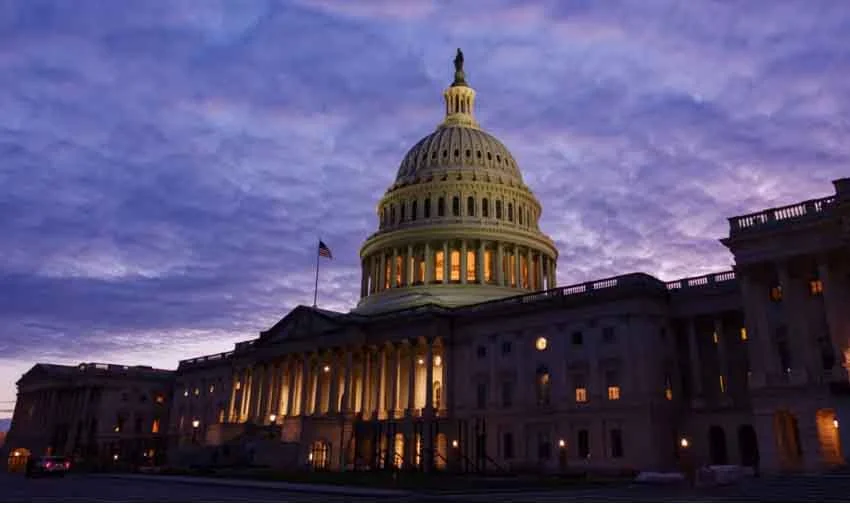
As the next United States Congress takes shape under Democratic control. Some members of Congress and media outlets are calling for an end to the Donald Trump administration’s policy of strangulation against the Cuban people.
On Friday, U.S. Congresswoman Rashida Tlaib reiterated her call to end the United States’ blockade against Cuba. Stating that the Trump administration is strangling the Cuban people.
Tlaib, a member of the House of Representatives from Michigan, urged the new Democratic majority. Following the midterm elections—to “act immediately to end Trump’s fuel blockade, prevent military action, and (…) put an end to the embargo (blockade). That has imposed an economic war against Cuba” for more than six decades.
Additionally, Representative James McGovern of Massachusetts denounced this week that the unilateral U.S. siege against Cuba. It is causing a humanitarian catastrophe similar to the one in Gaza, but “in slow motion.”
An article published in the *Los Angeles Times* by researcher Michael Galant, of the Center for Economic and Policy Research. Noted that the Democrats’ top priorities for the upcoming Congress will likely be accountability and the affordability of public healthcare.
However, the 120th Congress—which will convene on January 3rd, with both the House and the Senate under Democratic control. Also has the opportunity to address one of the Trump administration’s most disastrous foreign policy legacies. An avoidable humanitarian emergency caused by an illegal fuel blockade against Cuba, the expert warned. He stated that the U.S. embargo (blockade) “has stifled the Cuban economy for more than half a century.” And recalled that President Barack Obama (2009–2017) took historic and popular steps to ease sanctions and normalize relations with the island, with bipartisan support.
However, the first Trump administration quickly reversed these gains. It was only in his final days in office that Joe Biden (2021–2025) promoted some measures to provide relief.
The analyst noted the impact of the blockade during this “second Trump term—with the hardline Marco Rubio at the helm of foreign policy. Highlighted some of the key measures that reinforced this policy of collective punishment.
Then came a near-total blockade on fuel, enforced through tariffs, sanctions, and even the threat of using military force against the Caribbean nation. Also the broader blockade has been systematically and overwhelmingly condemned in 34 annual votes at the United Nations, Galant pointed out.
This fuel blockade is cruel. It is illegal. It is an act of war. It is unpopular, both internationally and among U.S. voters, the expert added.
“With the new balance of power, Congress has the tools to address it,” he suggested.
The first step Congress could take, he added, is to pass a War Powers Resolution prohibiting the unauthorized use of military force against Cuba—including the enforcement of the fuel blockade.
By 2027, the new Congress could pass this and other specific measures to help end this deprivation. Such as revoking the national emergency declaration from January, upon which many recent sanctions are based, he noted.
Another step, he added, would be to remove the baseless designation of Cuba as a “state sponsor of terrorism.” Which effectively isolates the country from the global financial system. Also to suspend the provisions of Title III of the Helms-Burton Act. Which allow third parties to sue those who traffic in property confiscated by the Cuban government.
“Any measure that manages to overcome a Trump veto would serve to reaffirm Congress’s position and deal a political blow to the Trump administration. Crucially, such measures could be included in ‘must-pass’ legislation, such as the annual defense authorization bill,” he wrote.
Democrats could also use ‘must-pass’ appropriations bills to restrict or place conditions on funding, he suggested. “It is high time to put an end to the embargo—a blockade that has, for more than 60 years, deliberately harmed the Cuban civilian population. In the past, bills aimed at repealing the core legal provisions that underpin the embargo were regularly introduced—with bipartisan support,” he added.
Although he acknowledged that “today, such initiatives might not survive a veto, they would serve to stake out a clear political position and lay the groundwork for a future Democratic president.”
It was warned that the situation could even “worsen over the next two years: given the new balance of power in Washington, Trump might opt for a more aggressive stance on the international stage. Where the executive branch enjoys greater room for maneuver.”
Precisely for this reason, Congress must act with speed and determination to put a check on this. The Cuban people are suffering the consequences of an illegal U.S. policy. Congress cannot shirk its responsibility to intervene, it concluded.
With information from Prensa Latina

- Medano Company in Holguín Promotes Care for Human Capital - 23 de November de 2026
- Calls for the Next U.S. Congress to Change Trump’s Policy Toward the Cuban People - 23 de November de 2026
- Mireya Luis Receives Top Volleyball Honor in the Dominican Republic - 23 de November de 2026