
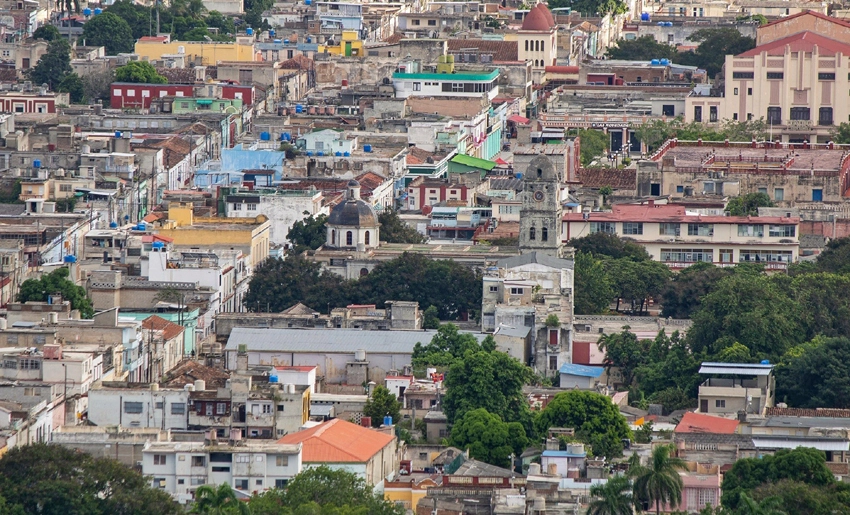
Housing has been, is, and will continue to be one of the most sensitive issues for Cubans. It is not just about a roof; it is about dignity, stability, and the future. For this reason, when a new Housing Law is announced, expectations run high. Yet, so does skepticism—and not without reason.
According to data presented on the recent television program *Cuadrando la Caja* by Delilah Díaz Fernández, General Director of Housing. Cuba has 4.1 million housing units, 35% of which are in fair or poor condition. The housing deficit stands at 831,151 units, 431,790 of which require rehabilitation. In other words, more than half the challenge is not building from scratch, but rather salvaging what already exists. And therein lies the first Gordian knot: how can rehabilitation take place when material and financial resources are so limited?
The new law as explained by Díaz Fernández; Onidia Cabrera Romero, Legal Director of the National Institute of Territorial Planning and Urbanism (INOTU). And Marvelis Velázquez Reyes, Director of Legal Affairs for Housing at the Ministry of Construction—introduces substantial changes. It also recognizes the participation of diverse economic actors. As MSMEs, cooperatives, and both state-owned and private enterprises in construction and rehabilitation efforts.
It enables mixed financing, the transfer of dilapidated or ruined properties, the creation of housing cooperatives, and even real estate activity which was previously prohibited. It also expands rights regarding rooftops and other premises. It empowers building management boards to lease out spaces, generating revenue to support the maintenance of the buildings. These are, without a doubt, necessary steps.
Yet, one question lingers, still lacking an answer as definitive as the subject demands: how will the availability of materials be guaranteed? The Director General of Housing herself acknowledges that the local production of materials is key. While also admitting that “in recent years, there has been a persistent shortage of material resources” and that the energy crisis has hampered production. In short, the Law opens doors, but the country does not yet possess the keys to open them fully.
Another critical element is implementation. As Velázquez Reyes aptly noted, “we cannot spend all our time legalizing what is illegal.” The Law expands both rights and obligations. And therein lies the Achilles’ heel: does the country have the institutional capacity to enforce urban planning regulations, collect taxes, oversee cooperatives, and ensure that land-use planning is respected? Cabrera Romero herself admitted that administrative procedures have been streamlined. But urban planning compliance remains an unresolved challenge.
The issue of pricing and cadastral value also warrants a critical look. Cabrera Romero explained that the cadastral value. Which serves as the tax base is lower than the market value, with coefficients that vary by zone. However, for a population whose wages fall short of covering the basic basket of goods, any price. Even one deemed “fair” from a technical standpoint may prove unaffordable.
Subsidies do exist, but they are granted on a case-by-case basis and depend on the fiscal capacity of individual municipalities. Is there any guarantee that the most vulnerable will truly gain access to a housing solution? The Law provides for it, but budgetary reality is another matter entirely.
One indisputable success: the Law incorporates an environmental perspective. Recognizing the importance of maintaining and preserving existing structures rather than resorting to demolition and new construction. This approach is well-aligned with the current era and the prevailing scarcity of resources. It is also positive that the role of municipal governments in housing management is being recognized. Though it remains to be seen whether this decentralization will be accompanied by actual resources and capabilities.
The new Housing Law is a more comprehensive legal instrument than its predecessor. With clear progress in expanding rights and diversifying the range of stakeholders involved. However, no law, on its own, can solve structural problems. As Díaz Fernández aptly put it: “No document is a magic wand.” The housing issue in Cuba will not be resolved merely by a more flexible legal framework. It will be resolved when there are materials, financing, and institutional structures in place. Above all, when individuals can exercise these rights without running into bureaucratic hurdles, shortages, or a lack of oversight.
Also the Law serves as a starting point. The path ahead, as is always the case in Cuba, will be long and arduous. But at least there is now a clearer map. The question is whether the necessary strength and resources will exist to navigate it.
By: Daimy Peña Guillén

- New Housing Law: Enough to Bridge the Gap Between Paper and Reality? - 10 de November de 2026
- “Yuli” Among the Highlights of the European Film Festival - 9 de November de 2026
- Begins the International Week of Science and Peace - 9 de November de 2026