
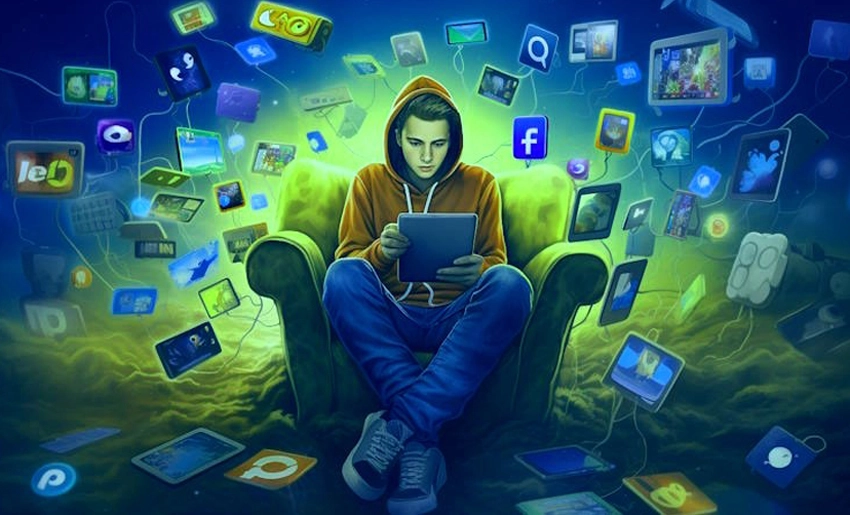
Young people have always sought out role models. In every era, adolescents and young adults find behavioral models. In music, television, social media, or within their own communities, that shape their aspirations. The problem arises when these role models reduce the concept of success to easy money, ostentation, sex, and popularity. While framing effort, study, and hard work as slow or unappealing paths.
Today, much of the content circulating on digital platforms presents a life built on appearances: luxury, consumerism, “perfect” bodies, fleeting relationships, and a form of happiness that seems to depend entirely on what one possesses and how much one shows off.
Some songs and music videos make explicit sexuality their primary focus. While simultaneously glorifying violent behavior, contempt for others, or the acquisition of material goods by any means necessary. The point is not to censor music or condemn an entire genre. But to recognize that the constant repetition of certain messages can influence how some young people interpret success, love, respect, and social coexistence.
In a context of scarcity and economic hardship, this pressure intensifies. Many young people see a reality of abundance on their screens that stands in stark contrast to their own daily circumstances. When a family cannot meet every material demand, it can lead to feelings of frustration, inferiority, or hopelessness. Furthermore, when young people are constantly told that their “worth” depends on wearing specific brands, having money, or emulating unattainable lifestyles, the temptation to seek shortcuts grows.
However, it would be unfair to claim that the media, artists, or social media platforms are the sole cause of drug use, violence, or criminal behavior. These phenomena are also driven by a lack of opportunities, family breakdown, a shortage of recreational spaces, school dropout, peer pressure, mental health issues, and insufficient communication between adults and young people. Screens can act as amplifiers, but they do not replace the responsibility of the family, the school, the community, and institutions.
The answer cannot simply be prohibition. Young people need guidance, dialogue, and alternatives. They need education on the responsible consumption of digital content, emotional support, and spaces where they can develop their abilities. Through sports, art, vocational training, entrepreneurship, community projects, and cultural activities. They also need real opportunities for employment and personal growth. It is difficult to ask them to choose the path of hard work when they find neither recognition nor prospects.
Also the family plays a decisive role. Listening to children without humiliating them, getting to know their friends, discussing sexuality, drugs, and violence, setting clear boundaries, and spotting behavioral changes early on can make all the difference. Schools, for their part, must help shape critical thinking rather than merely transmitting knowledge. Teaching students to interpret advertising messages, identify manipulation, and understand that an image on the internet does not always reflect the truth.
It is also up to the media to promote more diverse and responsible role models. There are talented, hardworking, caring, and creative young people who deserve visibility. Showcasing their stories does not mean ignoring difficulties, but rather demonstrating that other paths exist. Culture can entertain, but it also educates. Therefore, those who create and disseminate content must acknowledge that their messages have consequences.
We cannot allow a generation to be defined by the worst role models circulating on screens. Youth is not a problem to be condemned, but a force to be supported. If we want to prevent addiction, violence, and harmful behaviors, we must offer reasons to live differently: affection, opportunities, participation, knowledge, and hope.
Screens will continue to sell appearances. The challenge lies in society teaching us to look beyond these things. To understand that success is not measured by the money one flaunts, the body one puts on display, or the number of followers one has. But rather by the ability to build a life that is dignified, meaningful, and free.
By: Álvaro Raúl Suárez Leyva

- When Screens Sell the Wrong Path - 18 de October de 2026
- Russia Delivers 750 Tons of Vegetable Oil to Cuba - 17 de October de 2026
- Neurotic Anonymous Shows That Cinema in Cuba Is Alive and Shining - 17 de October de 2026