
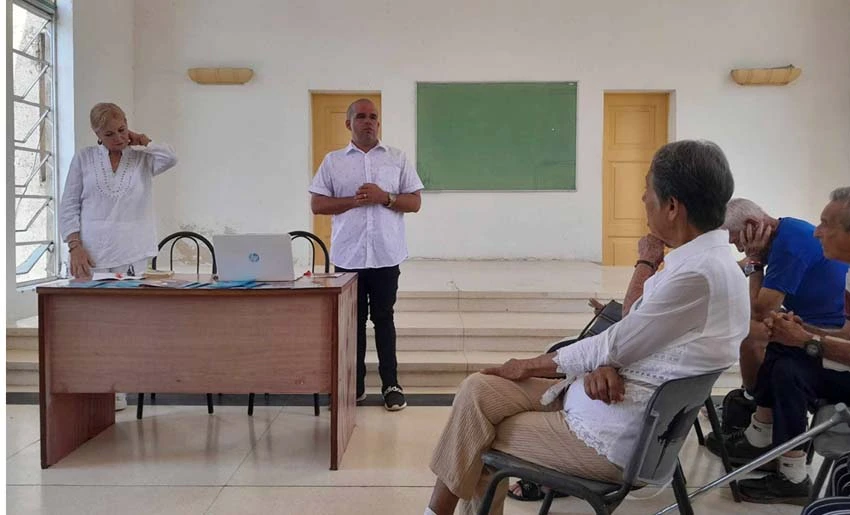
The headquarters of the Provincial Council of Scientific Health Societies hosted the “Dr. Ignacio Macías Castro” Ateneo on Non-Communicable Diseases (NCDs). The event focused on discussing dementia and its impact on individuals, families, and the community. It was held to coincide with the 28th anniversary of the passing of the distinguished public health specialist.
The gathering fostered multidisciplinary exchange among specialists in neurology, geriatrics, family medicine, psychiatry, and social work. As well as medical students and older adults. They addressed what constitutes a growing health issue. With an estimated 77 million people worldwide suffering from some form of cognitive impairment. Highlighting the need for a coordinated response.
Also this edition featured guest speaker M.Sc. Liana Feria Velázquez. Who is renowned for her work, teaching generations of students and psychiatry specialists.
Additionally, psychiatrist Delvis Cabrera Rodríguez and neurologist Pedro Enrique Labrada Aguilera served as keynote speakers. Presenting the results of a clinical trial involving the drug Neuroepo. Conducted between 2023 and 2025, the study evaluated over 1,760 patients in the region. Of these, 197 were potential candidates, with 16 patients in the mild-to-moderate stages of dementia ultimately being enrolled in the trial.
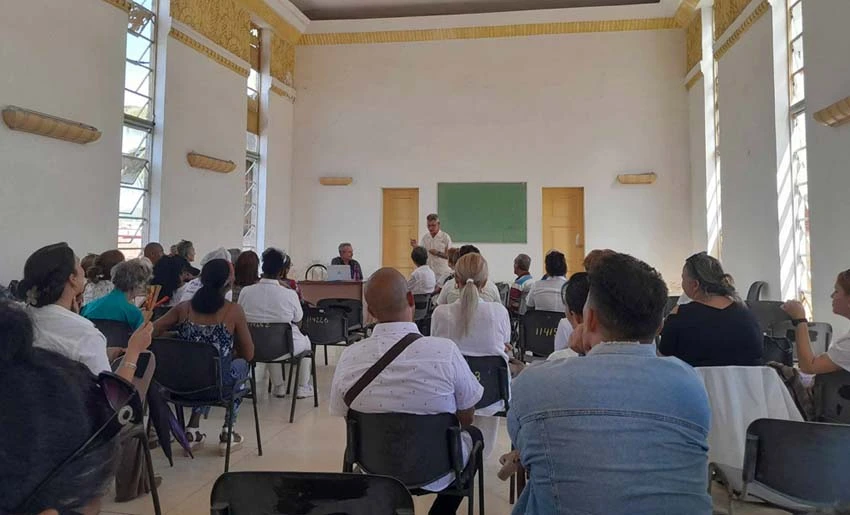
Discussions also focused on how the strategy for addressing dementia must involve health professionals, families, and society. A vital step in a region where the aging rate exceeds 21.6 percent. The dialogue emphasized the familial, social, and community dimensions of dementia. Consequently, the older adults present expressed their appreciation for the dedication shown in studying and addressing this issue. As well as for the importance of listening to the experiences of those living through the aging process firsthand.
The impact of this phenomenon does not fall solely on the person receiving the diagnosis. It extends to caregivers and the environments where the individual’s daily life unfolds.
Each forum held in the region serves as a diverse, collaborative space for gathering. Building scientific and social knowledge on how to organize efforts to tackle core issues such as the prevention of non-communicable diseases.

- Holguin: Hub for Hereditary Ataxia Research and Care in Cuba - 29 de September de 2026
- A multidisciplinary approach addressing dementia in Holguin - 29 de September de 2026
- It’s Open the First Drugstore specializing in cosmeceuticals, hygiene, and personal care products - 9 de September de 2026